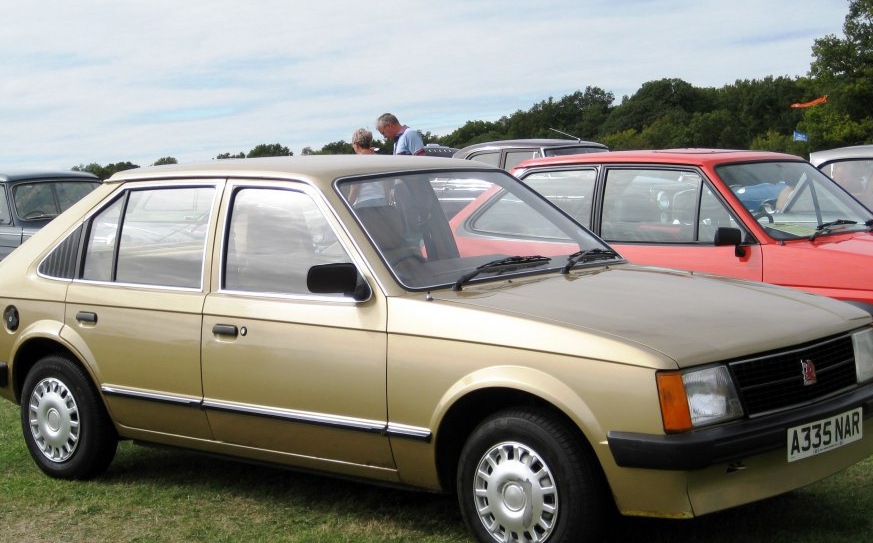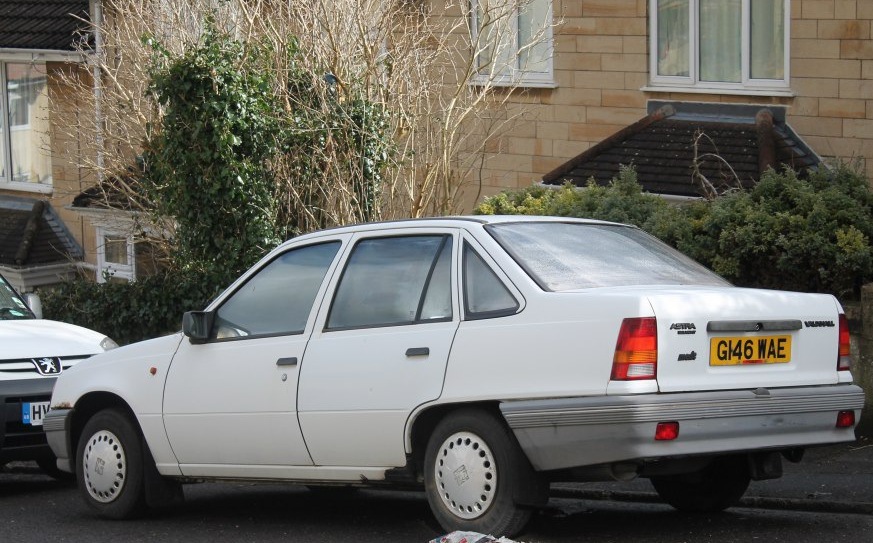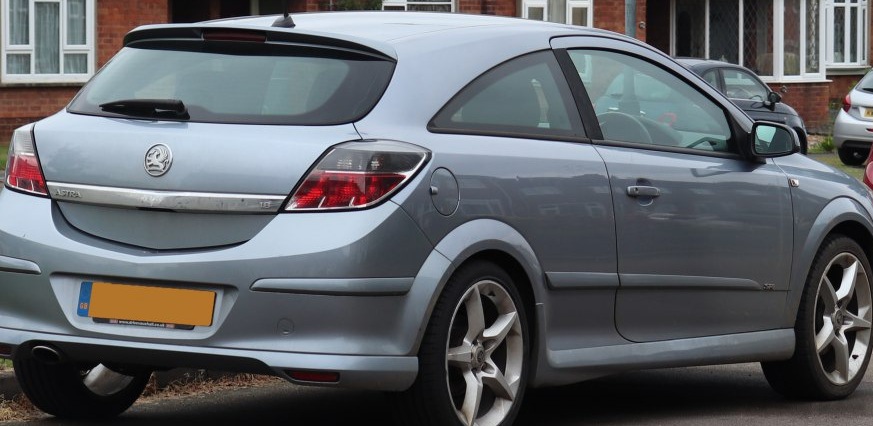
The Vauxhall Astra Mk V CC Sport Hatch 1.7 CDTi, produced between 2005 and 2010, represented an entry-level diesel offering within the broader Astra Mk V (H) range. Positioned as a fuel-efficient and affordable option, it catered to buyers seeking practicality and low running costs in the compact hatchback segment. This three-door variant, often referred to as the ‘Sport Hatch’ due to its styling, was a key component of Vauxhall’s strategy to offer a diverse lineup appealing to a wide range of customers. It was built on the GM Delta platform, shared with other Opel/Vauxhall and Chevrolet models, and aimed to compete with rivals like the Ford Focus, Volkswagen Golf, and Peugeot 308.
Technical Specifications
| Brand | Vauxhall |
| Model | Astra |
| Generation | Astra Mk V CC Sport Hatch |
| Type (Engine) | 1.7 CDTi (100 Hp) |
| Start of production | 2005 |
| End of production | 2010 |
| Powertrain Architecture | Internal Combustion engine |
| Body type | Hatchback |
| Seats | 5 |
| Doors | 3 |
| Fuel consumption (economy) – urban | 6.4 l/100 km (36.8 US mpg, 44.1 UK mpg, 15.6 km/l) |
| Fuel consumption (economy) – extra urban | 4.2 l/100 km (56 US mpg, 67.3 UK mpg, 23.8 km/l) |
| Fuel consumption (economy) – combined | 5 l/100 km (47 US mpg, 56.5 UK mpg, 20 km/l) |
| CO2 emissions | 135 g/km |
| Fuel Type | Diesel |
| Acceleration 0 – 100 km/h | 11.4 sec |
| Acceleration 0 – 62 mph | 11.4 sec |
| Acceleration 0 – 60 mph | 10.8 sec |
| Maximum speed | 182 km/h (113.09 mph) |
| Weight-to-power ratio | 13 kg/Hp, 77.1 Hp/tonne |
| Weight-to-torque ratio | 5.4 kg/Nm, 185 Nm/tonne |
| Power | 100 Hp @ 4400 rpm |
| Power per litre | 59.3 Hp/l |
| Torque | 240 Nm @ 2300 rpm (177.01 lb.-ft. @ 2300 rpm) |
| Engine layout | Front, Transverse |
| Engine Model/Code | Z17DTH |
| Engine displacement | 1686 cm3 (102.89 cu. in.) |
| Number of cylinders | 4 |
| Engine configuration | Inline |
| Cylinder Bore | 79 mm (3.11 in.) |
| Piston Stroke | 86 mm (3.39 in.) |
| Compression ratio | 18.4:1 |
| Number of valves per cylinder | 4 |
| Fuel injection system | Diesel Commonrail |
| Engine aspiration | Turbocharger, Intercooler |
| Engine oil capacity | 5 l (5.28 US qt | 4.4 UK qt) |
| Coolant | 6.8 l (7.19 US qt | 5.98 UK qt) |
| Kerb Weight | 1297 kg (2859.4 lbs.) |
| Max. weight | 1835 kg (4045.48 lbs.) |
| Max load | 538 kg (1186.09 lbs.) |
| Trunk (boot) space – minimum | 312 l (11.02 cu. ft.) |
| Fuel tank capacity | 52 l (13.74 US gal | 11.44 UK gal) |
| Permitted trailer load with brakes (12%) | 1000 kg (2204.62 lbs.) |
| Permitted trailer load without brakes | 605 kg (1333.8 lbs.) |
| Length | 4290 mm (168.9 in.) |
| Width | 1753 mm (69.02 in.) |
| Width including mirrors | 2033 mm (80.04 in.) |
| Height | 1415 mm (55.71 in.) |
| Wheelbase | 2614 mm (102.91 in.) |
| Front track | 1488 mm (58.58 in.) |
| Rear (Back) track | 1488 mm (58.58 in.) |
| Front overhang | 910 mm (35.83 in.) |
| Rear overhang | 766 mm (30.16 in.) |
| Ride height (ground clearance) | 130 mm (5.12 in.) |
| Drag coefficient (Cd) | 0.28 |
| Minimum turning circle (turning diameter) | 10 m (32.81 ft.) |
| Drivetrain Architecture | The Internal combustion engine (ICE) drives the front wheels of the vehicle. |
| Drive wheel | Front wheel drive |
| Number of gears and type of gearbox | 5 gears, manual transmission |
| Front brakes | Ventilated discs |
| Rear brakes | Disc |
| Assisting systems | ABS (Anti-lock braking system) |
| Steering type | Steering rack and pinion |
| Tires size | 205/55 R16 |
| Wheel rims size | 16 |
Powertrain & Engine Architecture
The heart of this Astra variant is the Z17DTH, a 1.7-liter inline-four cylinder diesel engine. This engine belongs to the Isuzu-derived family of diesel engines used extensively by General Motors in Europe. It features a common rail direct injection system, delivering fuel at extremely high pressure for improved combustion efficiency and reduced emissions. A turbocharger with an intercooler is employed to boost power output, overcoming the inherent limitations of a relatively small displacement engine. The engine produces 100 horsepower at 4400 rpm and 240 Nm (177 lb-ft) of torque at 2300 rpm. The five-speed manual transmission was the standard offering, chosen for its balance of cost and efficiency. The engine’s valvetrain utilizes two valves per cylinder (DOHC), a configuration common in diesel engines for durability and simplicity.
Driving Characteristics
The 1.7 CDTi engine, paired with the five-speed manual gearbox, provided adequate, though not exhilarating, performance. Acceleration from 0-60 mph took around 10.8 seconds, and top speed was approximately 113 mph. The engine’s torque peak at 2300 rpm meant that usable power was available from relatively low engine speeds, making it suitable for everyday driving. However, compared to higher-output Astra variants like the 1.9 CDTi or the petrol-powered 1.8, the 1.7 CDTi felt noticeably slower, particularly when fully loaded or tackling steep inclines. The gear ratios were tuned for fuel economy rather than outright performance, resulting in a slightly ‘stretched’ feeling at higher speeds. The manual transmission offered a precise shift action, but the relatively long throw could feel less engaging than some competitors.
Equipment & Trim Levels
The ‘Sport Hatch’ trim level, even in its base 1.7 CDTi configuration, offered a reasonable level of standard equipment. This typically included air conditioning, power steering, electric front windows, a CD player with radio, and ABS brakes. Safety features like driver and passenger airbags were also standard. Interior upholstery was typically cloth, with a functional, if somewhat basic, dashboard layout. Optional extras included alloy wheels, upgraded audio systems, and parking sensors. The Sport Hatch trim also featured subtle styling enhancements, such as a rear spoiler and sportier seat fabric, differentiating it from more basic Astra models.
Chassis & Braking
The Astra Mk V utilized a MacPherson strut front suspension and a torsion beam rear suspension. This setup provided a reasonable balance between ride comfort and handling. The front brakes were ventilated discs, offering good stopping power, while the rear brakes were solid discs. The steering was a rack and pinion system, providing accurate and responsive control. The 1.7 CDTi models typically featured a slightly softer suspension setup compared to higher-performance variants, prioritizing ride comfort over ultimate handling prowess. Stabilizer bars were fitted front and rear to reduce body roll during cornering.
Market Reception & Comparison
The Astra Mk V 1.7 CDTi was generally well-received as a practical and economical choice. Critics praised its fuel efficiency and low running costs, but noted its relatively modest performance. Compared to the 1.9 CDTi, the 1.7 offered significantly less power but boasted slightly better fuel economy. The petrol-powered 1.8 offered more responsive performance but at the expense of fuel efficiency. The 1.7 CDTi appealed to buyers prioritizing economy and practicality over driving excitement, making it a popular choice for fleet operators and private buyers alike.
Legacy
The Z17DTH engine, while generally reliable, is known to be susceptible to issues with the diesel particulate filter (DPF) if not driven on longer journeys regularly. Regular servicing and the use of quality diesel fuel are crucial for maintaining its longevity. Today, the Astra Mk V 1.7 CDTi can be found on the used car market at very affordable prices. Its fuel efficiency and relatively low maintenance costs continue to make it an attractive option for budget-conscious buyers. However, potential buyers should be aware of the potential DPF issues and ensure a thorough inspection before purchase.