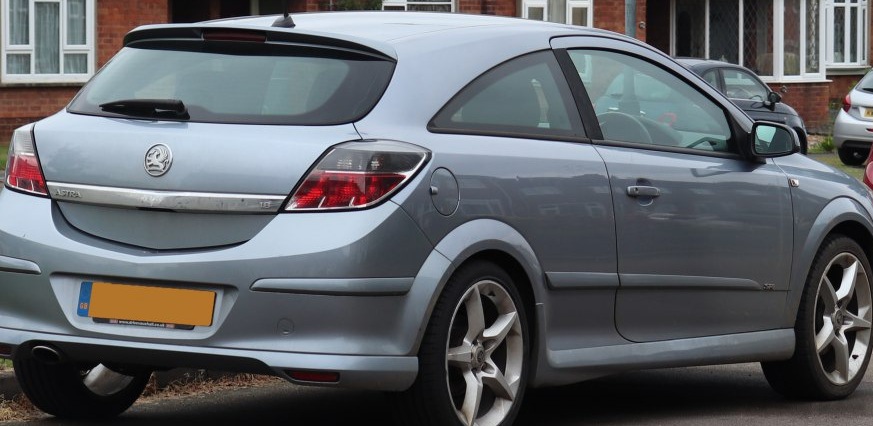
The Vauxhall Astra Mk V CC Sport Hatch 1.9 CDTi Automatic, produced between 2005 and 2010, represented a compelling offering in the British compact hatchback market. Positioned as a mid-range trim within the Mk V Astra lineup (designated 1HX0/A3 platform), it combined the fuel efficiency of a diesel engine with the convenience of an automatic transmission. This variant aimed to appeal to drivers seeking a balance between practicality, comfort, and reasonable performance. The “CC” designation signified a coupe-inspired three-door body style, differentiating it from the five-door hatchback and estate versions.
Technical Specifications
| Brand | Vauxhall |
| Model | Astra |
| Generation | Astra Mk V CC Sport Hatch |
| Type (Engine) | 1.9 CDTi (120 Hp) Automatic |
| Start of production | 2005 |
| End of production | 2010 |
| Powertrain Architecture | Internal Combustion engine |
| Body type | Hatchback |
| Seats | 5 |
| Doors | 3 |
| Fuel consumption (urban) | 8 l/100 km (29.4 US mpg, 35.3 UK mpg, 12.5 km/l) |
| Fuel consumption (extra urban) | 5.3 l/100 km (44.4 US mpg, 53.3 UK mpg, 18.9 km/l) |
| Fuel consumption (combined) | 6.1 l/100 km (38.6 US mpg, 46.3 UK mpg, 16.4 km/l) |
| CO2 emissions | 149 g/km |
| Fuel Type | Diesel |
| Acceleration 0 – 100 km/h | 11 sec |
| Acceleration 0 – 62 mph | 11 sec |
| Acceleration 0 – 60 mph | 10.5 sec |
| Maximum speed | 190 km/h (118.06 mph) |
| Weight-to-power ratio | 11.3 kg/Hp, 88.5 Hp/tonne |
| Weight-to-torque ratio | 4.8 kg/Nm, 207.2 Nm/tonne |
| Power | 120 Hp @ 3500 rpm |
| Power per litre | 62.8 Hp/l |
| Torque | 281 Nm @ 2000-2750 rpm (207.25 lb.-ft. @ 2000-2750 rpm) |
| Engine layout | Front, Transverse |
| Engine Model/Code | Z19DT |
| Engine displacement | 1910 cm3 (116.56 cu. in.) |
| Number of cylinders | 4 |
| Engine configuration | Inline |
| Cylinder Bore | 82 mm (3.23 in.) |
| Piston Stroke | 90.4 mm (3.56 in.) |
| Compression ratio | 17.5:1 |
| Number of valves per cylinder | 2 |
| Fuel injection system | Diesel Commonrail |
| Engine aspiration | Turbocharger, Intercooler |
| Engine oil capacity | 4.3 l (4.54 US qt | 3.78 UK qt) |
| Coolant | 7 l (7.4 US qt | 6.16 UK qt) |
| Kerb Weight | 1356 kg (2989.47 lbs.) |
| Max. weight | 1880 kg (4144.69 lbs.) |
| Max load | 524 kg (1155.22 lbs.) |
| Trunk (boot) space – minimum | 312 l (11.02 cu. ft.) |
| Fuel tank capacity | 52 l (13.74 US gal | 11.44 UK gal) |
| Permitted trailer load with brakes (12%) | 1500 kg (3306.93 lbs.) |
| Permitted trailer load without brakes | 680 kg (1499.14 lbs.) |
| Length | 4290 mm (168.9 in.) |
| Width | 1753 mm (69.02 in.) |
| Width including mirrors | 2033 mm (80.04 in.) |
| Height | 1415 mm (55.71 in.) |
| Wheelbase | 2614 mm (102.91 in.) |
| Front track | 1488 mm (58.58 in.) |
| Rear (Back) track | 1488 mm (58.58 in.) |
| Front overhang | 910 mm (35.83 in.) |
| Rear overhang | 766 mm (30.16 in.) |
| Ride height (ground clearance) | 130 mm (5.12 in.) |
| Drag coefficient (Cd) | 0.28 |
| Minimum turning circle (turning diameter) | 10 m (32.81 ft.) |
| Drivetrain Architecture | The Internal combustion engine (ICE) drives the front wheels of the vehicle. |
| Drive wheel | Front wheel drive |
| Number of gears and type of gearbox | 4 gears, automatic transmission |
| Front brakes | Ventilated discs |
| Rear brakes | Disc |
| Assisting systems | ABS (Anti-lock braking system) |
| Steering type | Steering rack and pinion |
| Tires size | 205/55 R16 |
| Wheel rims size | 16 |
Powertrain & Engine Architecture
The heart of this Astra variant was the Z19DT, a 1.9-liter inline-four cylinder diesel engine. This engine was a common sight in various Vauxhall/Opel and other General Motors vehicles of the era. It featured a common rail direct injection system, delivering fuel at extremely high pressure for improved combustion efficiency and reduced emissions. A turbocharger with an intercooler was employed to boost power output, providing 120 horsepower at 3500 rpm and a substantial 281 Nm (207 lb-ft) of torque between 2000 and 2750 rpm. The engine utilized a two-valve per cylinder (SOHC) valvetrain. The automatic transmission was a four-speed unit, designed to provide smooth shifts and ease of driving, particularly in urban environments. While not known for its sportiness, it was a reliable and widely used transmission.
Driving Characteristics
The 1.9 CDTi Automatic offered a comfortable and relaxed driving experience. Acceleration to 60 mph took around 10.5 seconds, and top speed was approximately 118 mph. Compared to the manual transmission version of the same engine, the automatic suffered a slight performance penalty due to transmission losses. However, the automatic’s gear ratios were optimized for fuel economy and everyday usability. The torque delivery was strong from low engine speeds, making it well-suited for overtaking and navigating hilly terrain. It wasn’t a particularly sporty car, but it provided adequate power for most driving situations. The four-speed automatic, while functional, lacked the refinement and efficiency of more modern transmissions with more gears.
Equipment & Trim Levels
The Sport Hatch trim level included features such as alloy wheels, air conditioning, electric front windows, and a CD stereo. Interior upholstery was typically cloth, with a sporty design. Optional extras included parking sensors, upgraded audio systems, and metallic paint finishes. The Astra Mk V offered a reasonable level of standard equipment for its price point, making it an attractive option for budget-conscious buyers. The three-door configuration emphasized a slightly more youthful and dynamic image compared to the five-door model.
Chassis & Braking
The Astra Mk V utilized a MacPherson strut front suspension and a torsion beam rear suspension. This setup provided a good balance between ride comfort and handling. The front brakes were ventilated discs, while the rear brakes were solid discs. Anti-lock Braking System (ABS) was standard. The suspension was tuned for comfort, prioritizing a smooth ride over sharp handling. Stabilizer bars were fitted to both the front and rear axles to reduce body roll during cornering.
Market Reception & Comparison
The Astra Mk V 1.9 CDTi Automatic was generally well-received by automotive critics. It was praised for its fuel efficiency, comfortable ride, and reasonable price. However, the automatic transmission was sometimes criticized for being somewhat sluggish and lacking the responsiveness of the manual gearbox. Compared to the 1.8-liter petrol versions, the 1.9 CDTi offered significantly better fuel economy and more torque, making it a more practical choice for drivers covering long distances. The 1.9 CDTi also offered a more refined driving experience than the smaller 1.4-liter petrol engine.
Legacy
The Z19DT engine, when properly maintained, proved to be a durable and reliable unit. The four-speed automatic transmission, while not cutting-edge, also demonstrated reasonable longevity. Today, used examples of the Astra Mk V 1.9 CDTi Automatic are relatively affordable and can be found in good condition. Common issues include wear and tear on suspension components and potential problems with the diesel particulate filter (DPF) if the vehicle has been primarily used for short journeys. Overall, this variant remains a practical and economical choice for those seeking a reliable and fuel-efficient compact hatchback.