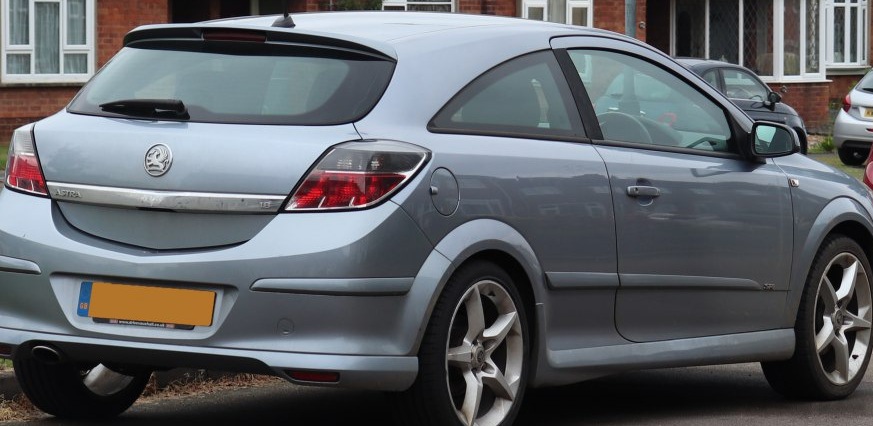
The Vauxhall Astra Mk V CC Sport Hatch 2.0i, produced between 2005 and 2010, represented a performance-oriented variant within the broader Astra Mk V (H) range. Positioned as a sporty coupe-hatchback, the “CC” designation signified its distinct styling and focus on driver engagement. This model was primarily marketed in Europe, leveraging the Astra’s established reputation for practicality and affordability while offering a more dynamic driving experience. It sat at the top end of the performance spectrum for the Mk V Astra, offering a significant power upgrade over the more common naturally aspirated and diesel engine options.
Technical Specifications
| Brand | Vauxhall |
| Model | Astra |
| Generation | Astra Mk V CC Sport Hatch |
| Type (Engine) | 2.0i (240 Hp) |
| Start of production | 2005 |
| End of production | 2010 |
| Powertrain Architecture | Internal Combustion engine |
| Body type | Hatchback |
| Seats | 5 |
| Doors | 3 |
| Fuel consumption (urban) | 13 l/100 km (18.1 US mpg, 21.7 UK mpg, 7.7 km/l) |
| Fuel consumption (extra urban) | 7 l/100 km (33.6 US mpg, 40.4 UK mpg, 14.3 km/l) |
| Fuel consumption (combined) | 9.2 l/100 km (25.6 US mpg, 30.7 UK mpg, 10.9 km/l) |
| CO2 emissions | 221 g/km |
| Fuel Type | Petrol (Gasoline) |
| Acceleration 0 – 100 km/h | 6.2 sec |
| Acceleration 0 – 62 mph | 6.2 sec |
| Acceleration 0 – 60 mph | 5.9 sec |
| Maximum speed | 245 km/h (152.24 mph) |
| Weight-to-power ratio | 5.8 kg/Hp, 172.3 Hp/tonne |
| Weight-to-torque ratio | 4.4 kg/Nm, 229.7 Nm/tonne |
| Power | 240 Hp @ 5600 rpm |
| Power per litre | 120.1 Hp/l |
| Torque | 320 Nm @ 1950 rpm (236.02 lb.-ft. @ 1950 rpm) |
| Engine layout | Front, Transverse |
| Engine Model/Code | Z20LEH |
| Engine displacement | 1998 cm3 (121.93 cu. in.) |
| Number of cylinders | 4 |
| Engine configuration | Inline |
| Cylinder Bore | 86 mm (3.39 in.) |
| Piston Stroke | 86 mm (3.39 in.) |
| Compression ratio | 8.8:1 |
| Number of valves per cylinder | 4 |
| Fuel injection system | Multi-port manifold injection |
| Engine aspiration | Turbocharger, Intercooler |
| Valvetrain | DOHC |
| Engine oil capacity | 5 l (5.28 US qt | 4.4 UK qt) |
| Coolant | 7.7 l (8.14 US qt | 6.78 UK qt) |
| Kerb Weight | 1393 kg (3071.04 lbs.) |
| Max. weight | 1860 kg (4100.6 lbs.) |
| Max load | 467 kg (1029.56 lbs.) |
| Trunk (boot) space – minimum | 312 l (11.02 cu. ft.) |
| Fuel tank capacity | 52 l (13.74 US gal | 11.44 UK gal) |
| Length | 4290 mm (168.9 in.) |
| Width | 1753 mm (69.02 in.) |
| Width including mirrors | 2033 mm (80.04 in.) |
| Height | 1415 mm (55.71 in.) |
| Wheelbase | 2614 mm (102.91 in.) |
| Front track | 1488 mm (58.58 in.) |
| Rear (Back) track | 1488 mm (58.58 in.) |
| Front overhang | 910 mm (35.83 in.) |
| Rear overhang | 766 mm (30.16 in.) |
| Ride height (ground clearance) | 130 mm (5.12 in.) |
| Drag coefficient (Cd) | 0.28 |
| Minimum turning circle | 10 m (32.81 ft.) |
| Drivetrain Architecture | ICE, Front wheel drive |
| Drive wheel | Front wheel drive |
| Number of gears | 6 |
| Type of gearbox | Manual transmission |
| Front brakes | Ventilated discs |
| Rear brakes | Disc |
| Assisting systems | ABS (Anti-lock braking system) |
| Steering type | Steering rack and pinion |
| Tires size | 225/40 R18 |
| Wheel rims size | 18 |
Powertrain & Engine Architecture
The heart of the Astra Mk V CC Sport Hatch 2.0i was the Z20LEH engine, a 1.998-liter, turbocharged inline-four cylinder gasoline engine. This engine was a member of Vauxhall/Opel’s “Ecotec” family, known for its relatively lightweight construction and focus on efficiency. The Z20LEH featured a cast iron block and an aluminum cylinder head with a double overhead camshaft (DOHC) valvetrain operating four valves per cylinder. Fuel delivery was managed by a multi-port fuel injection system. The turbocharger, coupled with an intercooler, significantly boosted power output. The engine’s 320 Nm (236 lb-ft) of torque, available from a low 1950 rpm, provided strong acceleration. The engine was paired exclusively with a six-speed manual transmission, prioritizing driver control and engagement. This transmission featured relatively short gear ratios, contributing to the car’s sporty feel.
Driving Characteristics
The 240 horsepower and 320 Nm of torque delivered by the Z20LEH engine transformed the Astra into a genuinely quick hatchback. Acceleration from 0 to 62 mph (0-100 km/h) took approximately 6.2 seconds, making it competitive with more expensive performance cars of the era. The turbocharger did exhibit some lag at lower engine speeds, but once spooled up, the power delivery was strong and linear. The six-speed manual transmission allowed drivers to keep the engine in its optimal power band. Compared to the naturally aspirated 1.8-liter versions of the Astra, the 2.0i Turbo offered a significantly more exhilarating driving experience. While the 1.8L models prioritized fuel economy, the 2.0i focused on performance. The suspension was tuned to be firmer than the standard Astra, providing better body control during cornering, though this came at the expense of some ride comfort.
Equipment & Trim Levels
The CC Sport Hatch 2.0i typically came well-equipped, reflecting its position as the performance flagship of the Astra Mk V range. Standard features included sports seats with unique upholstery, air conditioning, alloy wheels (typically 18-inch), a CD stereo system, and electric windows and mirrors. Optional extras included leather upholstery, a sunroof, and upgraded audio systems. The interior featured a sporty design with aluminum trim accents. The three-door body style further emphasized the car’s coupe-like appearance.
Chassis & Braking
The Astra Mk V utilized a MacPherson strut front suspension and a torsion beam rear suspension. The Sport Hatch variant often featured a thicker front stabilizer bar to reduce body roll. Braking duties were handled by ventilated disc brakes at the front and solid discs at the rear. Anti-lock Braking System (ABS) was standard. The steering was a rack and pinion system, providing precise and responsive handling. The 225/40 R18 tires offered good grip in both dry and wet conditions.
Market Reception & Comparison
The Astra Mk V CC Sport Hatch 2.0i was generally well-received by automotive critics. It was praised for its strong performance, engaging handling, and stylish design. However, some reviewers noted the turbo lag and the relatively firm ride. Compared to rivals like the Ford Focus ST and Volkswagen Golf GTI, the Astra offered a compelling combination of performance and value. Fuel economy, while respectable for a performance car, was lower than the more economical Astra variants. Reliability was generally good, although turbocharger issues could occasionally arise with higher mileage examples.
Legacy
The Astra Mk V CC Sport Hatch 2.0i remains a popular choice among enthusiasts seeking an affordable and enjoyable performance hatchback. The Z20LEH engine, while not without its quirks, is known to be relatively durable when properly maintained. Today, well-maintained examples are becoming increasingly collectible. The car represents a significant step up in performance compared to earlier Astra models and helped establish the Astra as a credible contender in the hot hatch segment. The combination of a turbocharged engine, manual transmission, and sporty styling continues to appeal to drivers who prioritize driving enjoyment.