Technical Specifications
| Brand | Vauxhall |
| Model | Astra |
| Generation | Astra Mk V Estate |
| Type (Engine) | 1.9 CDTi (120 Hp) |
| Start of production | 2004 |
| End of production | 2011 |
| Powertrain Architecture | Internal Combustion engine |
| Body type | Station wagon (estate) |
| Seats | 5 |
| Doors | 5 |
| Fuel consumption (urban) | 7.5 l/100 km (31.4 US mpg) |
| Fuel consumption (extra urban) | 5 l/100 km (47 US mpg) |
| Fuel consumption (combined) | 5.9 l/100 km (39.9 US mpg) |
| CO2 emissions | 159 g/km |
| Fuel Type | Diesel |
| Acceleration 0 – 100 km/h | 10 sec |
| Acceleration 0 – 62 mph | 10 sec |
| Acceleration 0 – 60 mph | 9.5 sec |
| Maximum speed | 193 km/h (119.92 mph) |
| Weight-to-power ratio | 11.7 kg/Hp |
| Weight-to-torque ratio | 5 kg/Nm |
| Power | 120 Hp @ 3500 rpm |
| Torque | 279 Nm @ 2375 rpm (205.78 lb.-ft. @ 2375 rpm) |
| Engine layout | Front, Transverse |
| Engine Model/Code | Z19DT |
| Engine displacement | 1910 cm3 (116.56 cu. in.) |
| Number of cylinders | 4 |
| Engine configuration | Inline |
| Cylinder Bore | 82 mm (3.23 in.) |
| Piston Stroke | 90.4 mm (3.56 in.) |
| Compression ratio | 18:1 |
| Number of valves per cylinder | 2 |
| Fuel injection system | Diesel Commonrail |
| Engine aspiration | Turbocharger, Intercooler |
| Engine oil capacity | 4.3 l (4.54 US qt | 3.78 UK qt) |
| Coolant capacity | 7 l (7.4 US qt | 6.16 UK qt) |
| Kerb Weight | 1402 kg (3090.88 lbs.) |
| Max. weight | 1990 kg (4387.2 lbs.) |
| Max load | 588 kg (1296.32 lbs.) |
| Trunk (boot) space – minimum | 500 l (17.66 cu. ft.) |
| Fuel tank capacity | 52 l (13.74 US gal | 11.44 UK gal) |
| Length | 4515 mm (177.76 in.) |
| Width | 1753 mm (69.02 in.) |
| Width including mirrors | 2033 mm (80.04 in.) |
| Height | 1496 mm (58.9 in.) |
| Wheelbase | 2703 mm (106.42 in.) |
| Front track | 1488 mm (58.58 in.) |
| Rear track | 1488 mm (58.58 in.) |
| Front overhang | 871 mm (34.29 in.) |
| Rear overhang | 941 mm (37.05 in.) |
| Ride height (ground clearance) | 140 mm (5.51 in.) |
| Drag coefficient (Cd) | 0.32 |
| Drivetrain Architecture | Front wheel drive |
| Number of gears | 6 |
| Gearbox type | Manual transmission |
| Front brakes | Ventilated discs |
| Rear brakes | Disc |
| Tires size | 205/55 R16 |
| Wheel rims size | 16 |
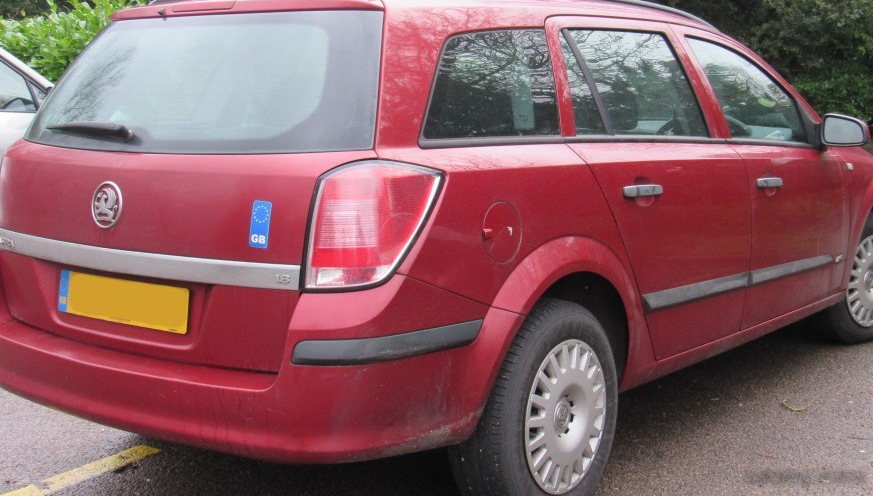
The Vauxhall Astra Mk V Estate 1.9 CDTi, launched in 2004, was a key component of Vauxhall’s (and Opel’s) strategy to offer a comprehensive range of practical and efficient vehicles. Built on the GM Delta platform (internally known as the 1HX0), the Mk V Astra represented a significant step forward in terms of interior quality and refinement compared to the Mk IV. The estate version, in particular, appealed to families and those requiring additional cargo space. The 1.9 CDTi engine, a mainstay of the range, provided a good balance of performance and fuel economy, making this variant a popular choice for long-distance drivers and those seeking lower running costs.
Powertrain & Engine Architecture
The heart of the Astra Mk V Estate 1.9 CDTi is the Z19DT engine, a 1.9-liter, four-cylinder diesel. This engine is a common rail direct injection (CDI) unit, meaning fuel is delivered directly into the cylinders at very high pressure for optimized combustion. The Z19DT utilizes a turbocharger with an intercooler to boost power and torque. The engine’s valvetrain features two valves per cylinder (DOHC). The 120 horsepower output is achieved at 3500 rpm, while the substantial 279 Nm (205.78 lb-ft) of torque is available from 2375 rpm, providing strong pulling power at lower engine speeds. The engine’s design prioritized fuel efficiency and reduced emissions, aligning with increasingly stringent European regulations. The six-speed manual transmission was the standard offering for this variant, providing a good spread of gears for both economy and performance.
Driving Characteristics
The 1.9 CDTi engine, paired with the six-speed manual gearbox, offered a surprisingly capable driving experience. While not a sports car, the Astra Estate 1.9 CDTi provided ample power for everyday driving and overtaking maneuvers. The torque-rich engine meant that minimal gear changes were required, especially on motorways. Compared to the lower-powered 1.4-liter petrol versions, the 1.9 CDTi felt significantly more responsive. However, it didn’t offer the same level of outright performance as the more expensive 2.0-liter Turbo models. The gear ratios were well-chosen, providing a balance between acceleration and fuel economy. The estate body style did add some weight compared to the hatchback, but the extra torque helped to mitigate this. The steering felt precise enough for confident handling, and the suspension did a good job of absorbing bumps in the road.
Equipment & Trim Levels
The Astra Mk V Estate 1.9 CDTi was typically offered in several trim levels, including Life, Design, and Sri. The base ‘Life’ trim included features such as air conditioning, electric front windows, and a CD stereo. The ‘Design’ trim added alloy wheels, front fog lights, and upgraded interior trim. The ‘Sri’ trim, positioned as the sportier option, featured a lowered suspension, sports seats, and more aggressive styling cues. Optional extras included parking sensors, a sunroof, and a navigation system. Interior upholstery was typically cloth, with leather options available on higher trim levels. The dashboard layout was functional and well-designed, with clear instrumentation. The Sri trim also often included features like a leather-wrapped steering wheel and aluminum pedal caps.
Chassis & Braking
The Astra Mk V Estate utilized a MacPherson strut front suspension and a semi-independent torsion beam rear suspension. This setup provided a comfortable ride quality, although it wasn’t as sophisticated as the fully independent suspension found on some competitors. Braking was handled by ventilated discs on the front wheels and solid discs on the rear. Anti-lock Braking System (ABS) was standard. The steering was hydraulic, providing a reasonably direct feel. Stabilizer bars were fitted to both the front and rear axles to reduce body roll during cornering. The suspension was tuned to prioritize comfort and stability, making it a suitable vehicle for long journeys. The braking system, while adequate, wasn’t particularly powerful, and drivers needing to make frequent emergency stops might find it lacking.
Market Reception & Comparison
The Astra Mk V Estate 1.9 CDTi was generally well-received by automotive critics. It was praised for its fuel efficiency, spacious interior, and comfortable ride. However, some critics noted that the engine could be a little noisy under hard acceleration. Compared to rivals such as the Ford Focus Estate and the Volkswagen Golf Estate, the Astra offered a competitive package in terms of price and equipment. The 1.9 CDTi engine proved to be reliable, although regular servicing was essential. Fuel economy figures consistently hovered around 40 mpg in real-world driving, making it an attractive option for cost-conscious buyers. The Astra Estate offered a good amount of cargo space, comparable to its main rivals, and the 1.9 CDTi engine provided a good balance between performance and economy.
Legacy
The Astra Mk V Estate 1.9 CDTi remains a popular choice in the used car market today. The Z19DT engine is known for its durability, provided it has been well-maintained. Common issues include turbocharger wear and potential problems with the diesel particulate filter (DPF). However, these issues are relatively rare and can often be prevented with regular servicing. The Astra Mk V Estate 1.9 CDTi represents a practical and affordable option for those seeking a spacious and fuel-efficient estate car. Its blend of comfort, economy, and reliability has ensured its continued popularity among used car buyers. Finding a well-maintained example with a full service history is key to avoiding potential issues, and these cars continue to offer good value for money.