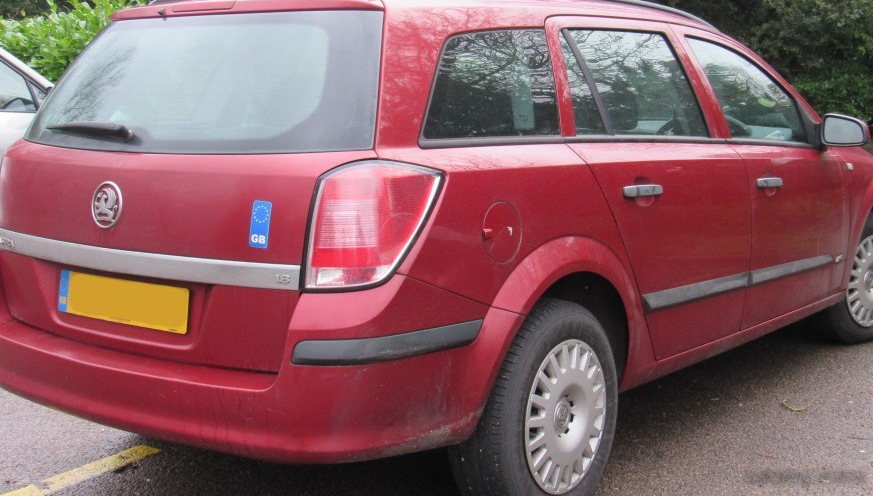
The Vauxhall Astra Mk V Estate 1.9 CDTi Automatic, produced between 2004 and 2011, represented a practical and fuel-efficient option within the broader Astra Mk V range. Positioned as a mid-range offering, it catered to buyers seeking the versatility of a station wagon with the convenience of an automatic transmission and the economy of a diesel engine. This variant was part of the H-series Astra, known internally as the Mk V, and built upon the GM Delta platform. It aimed to provide a balance between practicality, comfort, and running costs, appealing to families and individuals needing a spacious vehicle for both everyday transport and longer journeys.
Technical Specifications
| Brand | Vauxhall |
| Model | Astra |
| Generation | Astra Mk V Estate |
| Type (Engine) | 1.9 CDTi (120 Hp) Automatic |
| Start of production | 2004 |
| End of production | 2011 |
| Powertrain Architecture | Internal Combustion engine |
| Body type | Station wagon (estate) |
| Seats | 5 |
| Doors | 5 |
| Fuel consumption (urban) | 8 l/100 km (29.4 US mpg, 35.3 UK mpg, 12.5 km/l) |
| Fuel consumption (extra urban) | 4.8 l/100 km (49 US mpg, 58.9 UK mpg, 20.8 km/l) |
| Fuel consumption (combined) | 5.5 l/100 km (42.8 US mpg, 51.4 UK mpg, 18.2 km/l) |
| CO2 emissions | 163 g/km |
| Fuel Type | Diesel |
| Acceleration 0 – 100 km/h | 10.6 sec |
| Acceleration 0 – 62 mph | 10.6 sec |
| Acceleration 0 – 60 mph | 10.1 sec |
| Maximum speed | 195 km/h (121.17 mph) |
| Weight-to-power ratio | 11.8 kg/Hp, 85.1 Hp/tonne |
| Weight-to-torque ratio | 5.1 kg/Nm, 197.9 Nm/tonne |
| Power | 120 Hp @ 3500 rpm |
| Power per litre | 62.8 Hp/l |
| Torque | 279 Nm @ 2375 rpm (205.78 lb.-ft. @ 2375 rpm) |
| Engine layout | Front, Transverse |
| Engine Model/Code | Z19DT |
| Engine displacement | 1910 cm3 (116.56 cu. in.) |
| Number of cylinders | 4 |
| Engine configuration | Inline |
| Cylinder Bore | 82 mm (3.23 in.) |
| Piston Stroke | 90.4 mm (3.56 in.) |
| Compression ratio | 18:1 |
| Number of valves per cylinder | 2 |
| Fuel injection system | Diesel Commonrail |
| Engine aspiration | Turbocharger, Intercooler |
| Engine oil capacity | 4.3 l (4.54 US qt | 3.78 UK qt) |
| Coolant | 7 l (7.4 US qt | 6.16 UK qt) |
| Kerb Weight | 1410 kg (3108.52 lbs.) |
| Max. weight | 1990 kg (4387.2 lbs.) |
| Max load | 580 kg (1278.68 lbs.) |
| Trunk (boot) space – minimum | 500 l (17.66 cu. ft.) |
| Fuel tank capacity | 52 l (13.74 US gal | 11.44 UK gal) |
| Length | 4515 mm (177.76 in.) |
| Width | 1753 mm (69.02 in.) |
| Width including mirrors | 2033 mm (80.04 in.) |
| Height | 1496 mm (58.9 in.) |
| Wheelbase | 2703 mm (106.42 in.) |
| Front track | 1488 mm (58.58 in.) |
| Rear (Back) track | 1488 mm (58.58 in.) |
| Front overhang | 871 mm (34.29 in.) |
| Rear overhang | 941 mm (37.05 in.) |
| Ride height (ground clearance) | 140 mm (5.51 in.) |
| Drag coefficient (Cd) | 0.32 |
| Drivetrain Architecture | The Internal combustion engine (ICE) drives the front wheels of the vehicle. |
| Drive wheel | Front wheel drive |
| Number of gears and type of gearbox | 6 gears, automatic transmission |
| Front brakes | Ventilated discs |
| Rear brakes | Disc |
| Tires size | 205/55 R16 |
| Wheel rims size | 16 |
Powertrain & Engine Architecture
The heart of this Astra Estate variant is the Z19DT, a 1.9-liter inline-four cylinder diesel engine. This engine is a member of the GM/Fiat family of diesel engines, known for its robust construction and relatively simple design. It utilizes a common rail direct injection system, delivering fuel at extremely high pressure for improved combustion efficiency and reduced emissions. A turbocharger with an intercooler is employed to boost power output, providing 120 horsepower at 3500 rpm and a substantial 279 Nm (205.78 lb-ft) of torque at 2375 rpm. The engine features two valves per cylinder and a compression ratio of 18:1. The automatic transmission is a six-speed unit, designed to provide smooth gear changes and optimize fuel economy. While not known for being particularly sporty, it was a reliable and well-matched transmission for the engine’s characteristics.
Driving Characteristics
The 1.9 CDTi Automatic offered a comfortable and relaxed driving experience. Acceleration, while not brisk, was adequate for most everyday driving situations. The 0-60 mph time of around 10.1 seconds reflects its focus on fuel efficiency rather than outright performance. The automatic transmission, while smooth, could sometimes feel hesitant during quick overtaking maneuvers. Compared to the manual transmission versions of the same engine, the automatic offered less driver engagement but greater convenience. Higher-output versions of the Astra Mk V, such as those equipped with the 2.0-liter turbocharged petrol engine, provided significantly more performance but at the cost of increased fuel consumption. The gear ratios were tuned for economy, meaning the engine often operated at lower RPMs during cruising, contributing to its good fuel economy figures.
Equipment & Trim Levels
The 1.9 CDTi Automatic typically came equipped with a reasonable level of standard features. These included air conditioning, electric front windows, central locking, and an audio system. Higher trim levels, such as the Design or SE, added features like alloy wheels, upgraded upholstery, cruise control, and a multi-function steering wheel. Interior upholstery was generally cloth, with options for leather available on higher-spec models. The dashboard layout was functional and straightforward, prioritizing usability over aesthetic flair. Optional extras included a sunroof, parking sensors, and a CD changer.
Chassis & Braking
The Astra Mk V Estate featured independent suspension at the front, typically utilizing MacPherson struts, and a semi-independent torsion beam suspension at the rear. This setup provided a comfortable ride quality, although it wasn’t particularly sporty in handling. Braking was handled by ventilated discs at the front and solid discs at the rear. Anti-lock Braking System (ABS) was standard. The 1.9 CDTi Automatic, due to its added weight compared to lower-spec models, often benefited from slightly thicker stabilizer bars to reduce body roll during cornering.
Market Reception & Comparison
The Astra Mk V Estate 1.9 CDTi Automatic was generally well-received by critics as a practical and economical family car. Its fuel economy was a major selling point, particularly in Europe where diesel engines were highly popular. Compared to petrol-powered Astra Estates, the 1.9 CDTi offered significantly better fuel efficiency. However, some reviewers noted that the automatic transmission could feel sluggish at times. Reliability was generally good, although common diesel engine issues such as injector problems and turbocharger wear could occur with higher mileage. The combination of estate practicality, diesel economy, and automatic convenience made it a popular choice for those seeking a versatile and affordable vehicle.
Legacy
The Z19DT engine, while now aging, remains a relatively reliable unit when properly maintained. Used examples of the Astra Mk V Estate 1.9 CDTi Automatic are still readily available on the used car market, often at affordable prices. Common maintenance items include regular oil changes, filter replacements, and occasional injector cleaning. The automatic transmission, if serviced regularly, is generally durable. While not a performance icon, this variant represents a solid and practical choice for those seeking a dependable and economical estate car. Its blend of space, fuel efficiency, and convenience continues to appeal to budget-conscious buyers today.