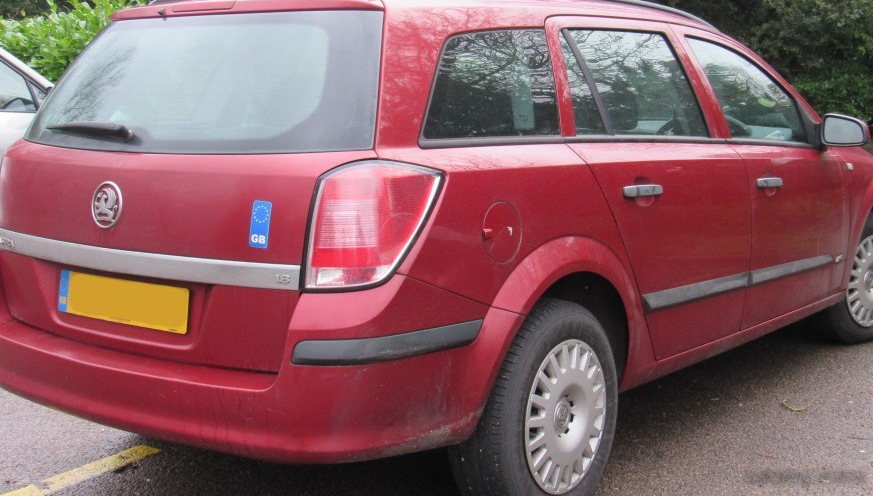
The Vauxhall Astra Mk V Estate 1.9 CDTi, produced between 2004 and 2011, represented a practical and efficient offering within the competitive European station wagon segment. This variant, powered by the 1.9-liter turbodiesel engine producing 150 horsepower, occupied a mid-range position in the Mk V Astra Estate lineup, appealing to buyers seeking a balance between fuel economy, performance, and cargo capacity. It was a key model for Vauxhall (the British brand of Stellantis) in the UK and broader European markets, offering a compelling alternative to rivals like the Ford Focus Estate and Volkswagen Golf Estate. The Mk V Astra Estate, built on the GM Delta platform, aimed to provide a more refined and spacious experience compared to its predecessor.
Technical Specifications
| Brand | Vauxhall |
| Model | Astra |
| Generation | Astra Mk V Estate |
| Type (Engine) | 1.9 CDTi (150 Hp) |
| Start of production | 2004 |
| End of production | 2011 |
| Powertrain Architecture | Internal Combustion engine |
| Body type | Station wagon (estate) |
| Seats | 5 |
| Doors | 5 |
| Fuel consumption (urban) | 7.4 l/100 km (31.8 US mpg) |
| Fuel consumption (extra urban) | 5 l/100 km (47 US mpg) |
| Fuel consumption (combined) | 5.9 l/100 km (39.9 US mpg) |
| CO2 emissions | 159 g/km |
| Fuel Type | Diesel |
| Acceleration 0 – 100 km/h | 8.6 sec |
| Acceleration 0 – 62 mph | 8.6 sec |
| Acceleration 0 – 60 mph | 8.2 sec |
| Maximum speed | 208 km/h (129.25 mph) |
| Weight-to-power ratio | 9.4 kg/Hp |
| Weight-to-torque ratio | 4.5 kg/Nm |
| Power | 150 Hp @ 4000 rpm |
| Torque | 315 Nm @ 2000 rpm (232.33 lb.-ft. @ 2000 rpm) |
| Engine layout | Front, Transverse |
| Engine Model/Code | Z19DTH |
| Engine displacement | 1910 cm3 (116.56 cu. in.) |
| Number of cylinders | 4 |
| Engine configuration | Inline |
| Cylinder Bore | 82 mm (3.23 in.) |
| Piston Stroke | 90.4 mm (3.56 in.) |
| Compression ratio | 18:1 |
| Number of valves per cylinder | 2 |
| Fuel injection system | Diesel Commonrail |
| Engine aspiration | Turbocharger, Intercooler |
| Engine oil capacity | 4.3 l (4.54 US qt | 3.78 UK qt) |
| Coolant capacity | 7 l (7.4 US qt | 6.16 UK qt) |
| Kerb Weight | 1403 kg (3093.09 lbs.) |
| Max. weight | 1990 kg (4387.2 lbs.) |
| Max load | 587 kg (1294.11 lbs.) |
| Trunk (boot) space – minimum | 500 l (17.66 cu. ft.) |
| Fuel tank capacity | 52 l (13.74 US gal | 11.44 UK gal) |
| Length | 4515 mm (177.76 in.) |
| Width | 1753 mm (69.02 in.) |
| Width including mirrors | 2033 mm (80.04 in.) |
| Height | 1496 mm (58.9 in.) |
| Wheelbase | 2703 mm (106.42 in.) |
| Front track | 1488 mm (58.58 in.) |
| Rear track | 1488 mm (58.58 in.) |
| Front overhang | 871 mm (34.29 in.) |
| Rear overhang | 941 mm (37.05 in.) |
| Ride height (ground clearance) | 140 mm (5.51 in.) |
| Drag coefficient (Cd) | 0.32 |
| Drivetrain Architecture | Front wheel drive |
| Number of gears | 6 |
| Gearbox type | Manual transmission |
| Front brakes | Ventilated discs |
| Rear brakes | Disc |
| Tires size | 205/55 R16 |
| Wheel rims size | 16 |
Powertrain & Engine Architecture
The heart of the Astra Mk V Estate 1.9 CDTi was the Z19DTH engine, a 1.9-liter inline-four cylinder diesel. This engine was a product of Fiat’s JTD (Jet Turbo Diesel) technology, licensed to and further developed by General Motors for use in various European Opel and Vauxhall models. The Z19DTH featured a common rail direct injection system, delivering fuel at extremely high pressure for improved combustion efficiency and reduced emissions. A turbocharger with an intercooler boosted power output, providing 150 horsepower at 4000 rpm and a substantial 315 Nm (232 lb-ft) of torque at just 2000 rpm. The engine utilized a single overhead camshaft (SOHC) design with two valves per cylinder. The six-speed manual transmission was the standard offering for this variant, providing a good balance between fuel economy and driver control. The gear ratios were tuned to maximize the engine’s torque, offering strong acceleration in everyday driving situations.
Driving Characteristics
The 1.9 CDTi engine, paired with the six-speed manual gearbox, provided a surprisingly capable driving experience for an estate car. While not a performance-oriented model, the ample torque made overtaking and highway cruising effortless. The gear ratios were well-matched, allowing the engine to remain in its optimal power band for most driving scenarios. Compared to the lower-powered 1.7 CDTi variant, the 1.9 CDTi offered noticeably more punch, while remaining more economical than the 2.0 Turbo petrol models. The suspension, tuned for comfort, provided a reasonably compliant ride, although it wasn’t as sporty as some rivals. The steering was light and precise, making the car easy to maneuver in urban environments.
Equipment & Trim Levels
The 1.9 CDTi trim level typically included features such as air conditioning, electric front windows, a CD stereo system, and alloy wheels. Higher trim levels, such as Design and SRi, added features like climate control, rear parking sensors, cruise control, and upgraded interior trim. Interior upholstery was generally cloth, with options for leather available on higher-spec models. The dashboard layout was functional and straightforward, with easy-to-read instrumentation. Optional extras included a panoramic sunroof, satellite navigation, and upgraded audio systems.
Chassis & Braking
The Astra Mk V Estate featured independent suspension at the front, typically utilizing MacPherson struts, and a semi-independent torsion beam suspension at the rear. The braking system consisted of ventilated disc brakes at the front and solid disc brakes at the rear. Anti-lock Braking System (ABS) was standard. The suspension setup was geared towards providing a comfortable ride, prioritizing stability and handling over outright sportiness. Stabilizer bars were fitted to both the front and rear axles to reduce body roll during cornering.
Market Reception & Comparison
The Astra Mk V Estate 1.9 CDTi was generally well-received by automotive critics. It was praised for its fuel efficiency, spacious interior, and comfortable ride. However, some reviewers noted that the interior plastics felt somewhat low-rent compared to some rivals. Compared to the 1.7 CDTi, the 1.9 CDTi offered a significant performance upgrade, justifying the higher price tag for drivers who frequently carried passengers or cargo. Against competitors like the Ford Focus Estate and Volkswagen Golf Estate, the Astra offered a competitive package, often at a slightly lower price point.
Legacy
The Z19DTH engine, while generally reliable, is known to be susceptible to issues with the turbocharger and fuel injectors if not properly maintained. Regular oil changes and the use of high-quality fuel are crucial for ensuring longevity. Today, the Astra Mk V Estate 1.9 CDTi represents a relatively affordable and practical used car option. Its fuel efficiency and spaciousness continue to appeal to buyers seeking a versatile family vehicle. While not a collector’s item, well-maintained examples are still relatively common on the used car market, offering a good balance of value and practicality.