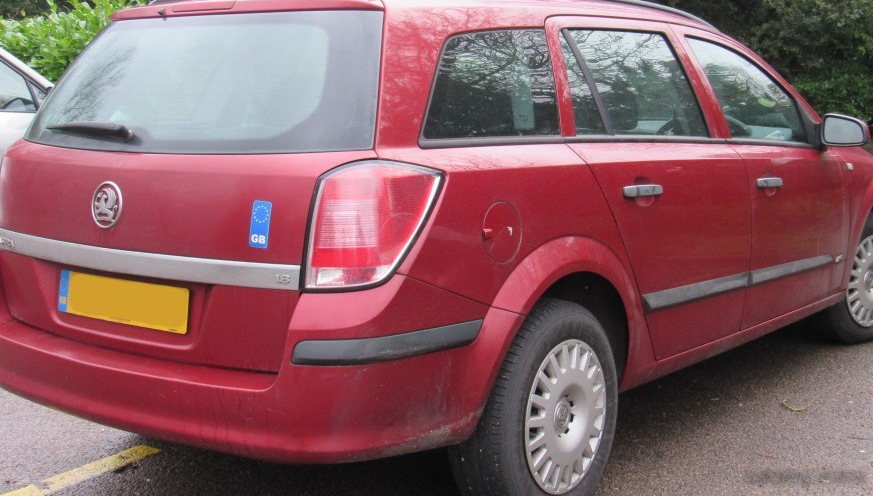
The Vauxhall Astra Mk V Estate 2.0, produced between 2004 and 2011, represented a practical and relatively sporty offering within the Astra Mk V range. Positioned as a mid-to-upper trim level, this variant combined the versatility of a station wagon body style with a turbocharged 2.0-liter gasoline engine producing 170 horsepower. It was a key model for Vauxhall in the UK and European markets, appealing to families and individuals needing both space and reasonable performance. The Mk V Astra Estate, built on the GM Delta platform, aimed to provide a more refined and modern alternative to older estate car designs.
Technical Specifications
| Brand | Vauxhall |
| Model | Astra |
| Generation | Astra Mk V Estate |
| Type (Engine) | 2.0 (170 Hp) |
| Start of production | 2004 |
| End of production | 2011 |
| Powertrain Architecture | Internal Combustion engine |
| Body type | Station wagon (estate) |
| Seats | 5 |
| Doors | 5 |
| Fuel consumption (urban) | 12.9 l/100 km (18.2 US mpg, 21.9 UK mpg, 7.8 km/l) |
| Fuel consumption (extra urban) | 6.9 l/100 km (34.1 US mpg, 40.9 UK mpg, 14.5 km/l) |
| Fuel consumption (combined) | 9.1 l/100 km (25.8 US mpg, 31 UK mpg, 11 km/l) |
| CO2 emissions | 218 g/km |
| Fuel Type | Petrol (Gasoline) |
| Acceleration 0 – 100 km/h | 8.3 sec |
| Acceleration 0 – 62 mph | 8.3 sec |
| Acceleration 0 – 60 mph | 7.9 sec |
| Maximum speed | 217 km/h (134.84 mph) |
| Weight-to-power ratio | 8.6 kg/Hp, 116.3 Hp/tonne |
| Weight-to-torque ratio | 5.9 kg/Nm, 170.3 Nm/tonne |
| Power | 170 Hp @ 5200 rpm |
| Power per litre | 85.1 Hp/l |
| Torque | 249 Nm @ 1950 rpm (183.65 lb.-ft. @ 1950 rpm) |
| Engine layout | Front, Transverse |
| Engine Model/Code | Z20LEL |
| Engine displacement | 1998 cm3 (121.93 cu. in.) |
| Number of cylinders | 4 |
| Engine configuration | Inline |
| Fuel injection system | Multi-port manifold injection |
| Engine aspiration | Turbocharger, Intercooler |
| Engine oil capacity | 4.3 l (4.54 US qt | 3.78 UK qt) |
| Coolant capacity | 7.7 l (8.14 US qt | 6.78 UK qt) |
| Kerb Weight | 1462 kg (3223.16 lbs) |
| Max. weight | 1950 kg (4299.01 lbs) |
| Max load | 488 kg (1075.86 lbs) |
| Trunk (boot) space – minimum | 500 l (17.66 cu. ft.) |
| Fuel tank capacity | 52 l (13.74 US gal | 11.44 UK gal) |
| Length | 4515 mm (177.76 in) |
| Width | 1753 mm (69.02 in) |
| Width including mirrors | 2033 mm (80.04 in) |
| Height | 1496 mm (58.9 in) |
| Wheelbase | 2703 mm (106.42 in) |
| Front track | 1488 mm (58.58 in) |
| Rear track | 1488 mm (58.58 in) |
| Front overhang | 871 mm (34.29 in) |
| Rear overhang | 941 mm (37.05 in) |
| Ride height (ground clearance) | 140 mm (5.51 in) |
| Drag coefficient (Cd) | 0.32 |
| Drivetrain Architecture | Front wheel drive |
| Number of gears | 6 |
| Gearbox type | Manual transmission |
| Front brakes | Ventilated discs |
| Rear brakes | Disc |
| Tires size | 215/45 R17 |
| Wheel rims size | 17 |
Powertrain & Engine Architecture
The heart of the Astra Mk V Estate 2.0 was the Z20LEL engine, a 1.998-liter, inline-four cylinder gasoline engine. This engine was part of Vauxhall/Opel’s ‘Ecotec’ family, known for its focus on efficiency and refinement. The Z20LEL featured a cast iron block and an aluminum cylinder head, incorporating multi-port fuel injection and a low-inertia turbocharger with an intercooler. This combination allowed for a good balance of power and responsiveness. The turbocharger boosted the engine’s output significantly, providing 170 horsepower and 249 Nm (183.65 lb-ft) of torque. The engine’s torque curve was relatively flat, offering usable power across a wide rev range. The six-speed manual transmission was well-matched to the engine’s characteristics, providing precise shifts and allowing the driver to effectively utilize the available power.
Driving Characteristics
The 2.0-liter turbocharged engine transformed the driving experience of the Astra Estate compared to lower-powered variants. Acceleration from 0-60 mph took approximately 7.9 seconds, making it a relatively quick estate car for its time. The turbocharger provided a noticeable surge of power in the mid-range, making overtaking maneuvers easy and confident. The six-speed gearbox allowed for efficient cruising on motorways, while also providing enough gears for spirited driving on twisty roads. Compared to the naturally aspirated 1.8-liter models, the 2.0-liter offered significantly more performance. While not as economical as the diesel options, the 2.0-liter provided a more engaging driving experience for those prioritizing performance over fuel efficiency. The suspension was tuned to provide a comfortable ride, but also offered reasonable body control in corners.
Equipment & Trim Levels
The 2.0-liter Astra Estate typically came with a generous level of standard equipment. This included air conditioning, electric front windows, a CD stereo, alloy wheels, and ABS brakes. Higher trim levels, such as the ‘Design’ or ‘SRi’, added features like climate control, rear parking sensors, upgraded upholstery, and a multi-function steering wheel. Interior upholstery was typically cloth, but leather options were available. The dashboard layout was functional and well-designed, with clear instrumentation. Optional extras included a sunroof, satellite navigation, and upgraded sound systems.
Chassis & Braking
The Astra Mk V Estate featured independent suspension at the front, typically using MacPherson struts, and a semi-independent torsion beam suspension at the rear. The front brakes were ventilated discs, providing good stopping power, while the rear brakes were solid discs. The steering was power-assisted, offering a light and precise feel. The chassis was well-balanced, providing a stable and predictable handling experience. Stabilizer bars were fitted to both the front and rear axles to reduce body roll during cornering.
Market Reception & Comparison
The Astra Mk V Estate 2.0 received generally positive reviews from automotive critics. It was praised for its spacious interior, comfortable ride, and strong performance. However, some critics noted that the fuel economy was not as good as that of the diesel models. Compared to rivals such as the Ford Focus Estate and Volkswagen Passat Estate, the Astra offered a competitive package in terms of price, performance, and practicality. The 2.0-liter engine was seen as a good compromise between performance and fuel efficiency, appealing to drivers who wanted a bit more power without sacrificing too much economy.
Legacy
The Z20LEL engine, while generally reliable, is known to require regular maintenance, particularly regarding oil changes. Turbocharger failure can occur if the engine is not properly maintained. The Astra Mk V Estate 2.0 remains a popular choice on the used car market, offering a good balance of practicality, performance, and affordability. Parts availability is generally good, and the car is relatively easy to maintain. However, potential buyers should be aware of the potential for turbocharger issues and ensure that the car has been well-maintained throughout its life. The model represents a solid, if not spectacular, example of early 21st-century European estate car design.