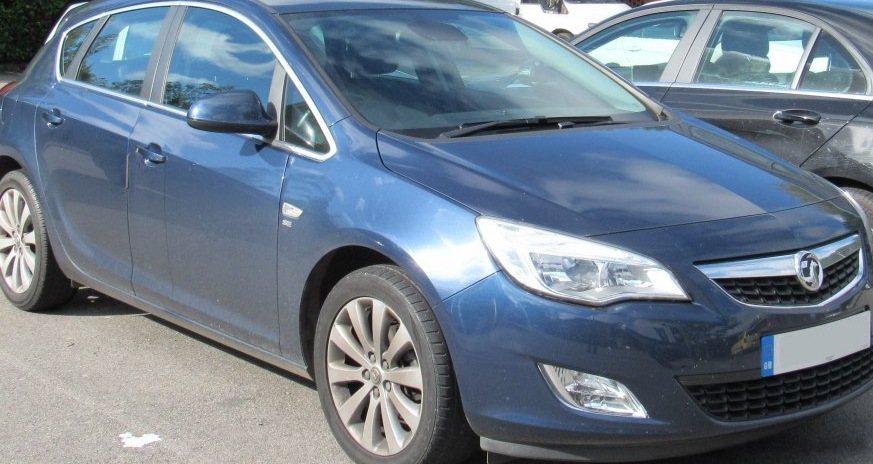
The Vauxhall Astra Mk VI CC 1.7 CDTi, produced between 2009 and 2015, represented a significant offering in the British compact car market. Part of the Astra J series (Mk VI), the “CC” designation signified the Coupe-Cabriolet body style, offering open-top motoring with the practicality of a hatchback. This particular variant, powered by the 1.7-liter CDTi diesel engine producing 110 horsepower, was positioned as an economy-focused option within the Astra range, appealing to buyers prioritizing fuel efficiency and lower running costs. It sat below the more powerful petrol and diesel variants, and offered a more affordable entry point into Astra ownership compared to the higher-specification trims.
Technical Specifications
| Brand | Vauxhall |
| Model | Astra |
| Generation | Astra Mk VI CC |
| Type (Engine) | 1.7 CDTi (110 Hp) |
| Start of production | 2009 |
| End of production | 2015 |
| Powertrain Architecture | Internal Combustion engine |
| Body type | Hatchback |
| Seats | 5 |
| Doors | 5 |
| Fuel consumption (urban) | 5.7 l/100 km (41.3 US mpg, 49.6 UK mpg, 17.5 km/l) |
| Fuel consumption (extra urban) | 4.2 l/100 km (56 US mpg, 67.3 UK mpg, 23.8 km/l) |
| Fuel consumption (combined) | 4.7 l/100 km (50 US mpg, 60.1 UK mpg, 21.3 km/l) |
| CO2 emissions | 125 g/km |
| Fuel Type | Diesel |
| Acceleration 0 – 100 km/h | 12.5 sec |
| Acceleration 0 – 62 mph | 12.5 sec |
| Acceleration 0 – 60 mph | 11.9 sec |
| Maximum speed | 188 km/h (116.82 mph) |
| Emission standard | Euro 5 |
| Weight-to-power ratio | 12.8 kg/Hp, 78.4 Hp/tonne |
| Weight-to-torque ratio | 5.4 kg/Nm, 185.3 Nm/tonne |
| Power | 110 Hp @ 3800 rpm |
| Power per litre | 65.2 Hp/l |
| Torque | 260 Nm @ 1800 rpm (191.77 lb.-ft. @ 1800 rpm) |
| Engine layout | Front, Transverse |
| Engine Model/Code | A17DTJ |
| Engine displacement | 1686 cm3 (102.89 cu. in.) |
| Number of cylinders | 4 |
| Engine configuration | Inline |
| Fuel injection system | Diesel Commonrail |
| Engine aspiration | Turbocharger, Intercooler |
| Engine oil capacity | 5.4 l (5.71 US qt | 4.75 UK qt) |
| Coolant | 7.1 l (7.5 US qt | 6.25 UK qt) |
| Kerb Weight | 1403 kg (3093.09 lbs.) |
| Max. weight | 2020 kg (4453.34 lbs.) |
| Max load | 617 kg (1360.25 lbs.) |
| Trunk (boot) space – minimum | 370 l (13.07 cu. ft.) |
| Trunk (boot) space – maximum | 1235 l (43.61 cu. ft.) |
| Fuel tank capacity | 56 l (14.79 US gal | 12.32 UK gal) |
| Permitted trailer load with brakes (12%) | 1400 kg (3086.47 lbs.) |
| Permitted trailer load without brakes | 730 kg (1609.37 lbs.) |
| Length | 4419 mm (173.98 in.) |
| Width | 1814 mm (71.42 in.) |
| Width including mirrors | 2013 mm (79.25 in.) |
| Height | 1510 mm (59.45 in.) |
| Wheelbase | 2685 mm (105.71 in.) |
| Front track | 1542 mm (60.71 in.) |
| Rear (Back) track | 1557 mm (61.3 in.) |
| Ride height (ground clearance) | 150 mm (5.91 in.) |
| Drag coefficient (Cd) | 0.30 |
| Minimum turning circle (turning diameter) | 11.4 m (37.4 ft.) |
| Drivetrain Architecture | The Internal combustion engine (ICE) drives the front wheels of the vehicle. |
| Drive wheel | Front wheel drive |
| Number of gears and type of gearbox | 6 gears, manual transmission |
| Front brakes | Ventilated discs |
| Rear brakes | Disc |
| Assisting systems | ABS (Anti-lock braking system) |
| Steering type | Steering rack and pinion |
| Power steering | Electric Steering |
| Tires size | 215/60 R16 |
| Wheel rims size | 16 |
Powertrain & Engine Architecture
The heart of this Astra variant is the A17DTJ engine, a 1.7-liter inline-four cylinder diesel. This engine is part of Vauxhall/Opel’s family of small-capacity diesel engines, known for their fuel efficiency. The A17DTJ utilizes a common rail direct injection system, delivering fuel directly into the combustion chamber at extremely high pressure. This, combined with a turbocharger and intercooler, allows for a good balance of power and economy. The engine features a single overhead camshaft (SOHC) operating two valves per cylinder. The 6-speed manual transmission was the standard offering, chosen for its efficiency and affordability. The gearbox ratios were geared towards maximizing fuel economy, with a relatively long final drive.
Driving Characteristics
The 1.7 CDTi with the manual transmission provided adequate, though not exhilarating, performance. Acceleration from 0-60 mph took around 11.9 seconds, and top speed was approximately 116 mph. The engine’s 192 lb-ft of torque, available from 1800 rpm, provided reasonable pulling power for everyday driving and overtaking. However, compared to the more powerful 1.9 CDTi or petrol variants, the 1.7 felt noticeably slower. The gear ratios were spaced to prioritize fuel economy, meaning the engine often needed to be revved to access its full potential. The clutch was light and easy to operate, making it suitable for urban driving. Overall, the driving experience was geared towards practicality and efficiency rather than sporty performance.
Equipment & Trim Levels
The 1.7 CDTi typically came equipped with a reasonable level of standard equipment. This included air conditioning, electric front windows, a CD/radio stereo, and ABS brakes. Higher trim levels, such as Excite or Sportive, added features like alloy wheels, cruise control, and upgraded interior trim. Interior upholstery was typically cloth, with a functional and durable design. Optional extras included parking sensors, a sunroof (on the Coupe-Cabriolet), and a more advanced audio system.
Chassis & Braking
The Astra Mk VI CC utilized a MacPherson strut front suspension and a torsion beam rear suspension. This setup provided a comfortable ride quality, although it wasn’t particularly sporty. The front brakes were ventilated discs, while the rear brakes were solid discs. ABS was standard, providing enhanced braking performance in emergency situations. The steering was electrically assisted, offering light and precise control. The suspension was tuned for comfort, prioritizing ride quality over handling precision.
Market Reception & Comparison
The Astra Mk VI CC 1.7 CDTi was generally well-received by critics as a sensible and economical choice. It offered a good balance of fuel efficiency, practicality, and affordability. However, it was often criticized for its lack of outright performance compared to other engines in the range. Compared to the 1.9 CDTi, the 1.7 offered significantly lower fuel economy but also considerably less power. The petrol variants provided more responsive performance but at the cost of increased fuel consumption. The 1.7 CDTi appealed to buyers who prioritized running costs and fuel efficiency over driving excitement.
Legacy
The A17DTJ engine, while not known for being particularly groundbreaking, proved to be a relatively reliable unit. Common issues included diesel particulate filter (DPF) problems, particularly on vehicles used primarily for short journeys. Regular servicing and the use of quality diesel fuel were crucial for maintaining the engine’s longevity. Today, the Astra Mk VI CC 1.7 CDTi represents an affordable entry point into the used car market. Its fuel efficiency and relatively low maintenance costs continue to make it an attractive option for budget-conscious buyers. However, potential buyers should be aware of the potential for DPF issues and ensure the vehicle has been properly maintained.