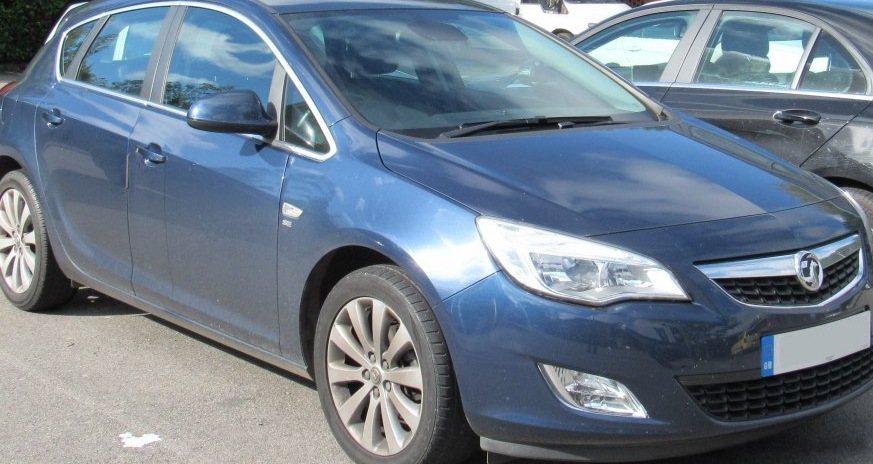
The Vauxhall Astra Mk VI CC 1.7 CDTi Automatic, produced between 2009 and 2015, represented a significant offering in the British compact car market. Part of the Astra J series (Mk VI), the “CC” designation denoted the Coupe Cabriolet body style, a folding hardtop convertible. This particular variant, powered by a 1.7-liter turbocharged diesel engine producing 160 horsepower and paired with a six-speed automatic transmission, aimed to provide a blend of fuel efficiency, reasonable performance, and open-air driving enjoyment. It occupied a mid-range position within the Astra CC lineup, offering a step up in power and refinement compared to lower-spec diesel models while remaining more accessible than the petrol-powered versions.
Technical Specifications
| Brand | Vauxhall |
| Model | Astra |
| Generation | Astra Mk VI CC |
| Type (Engine) | 1.7 CDTi (160 Hp) Automatic |
| Start of production | 2009 |
| End of production | 2015 |
| Powertrain Architecture | Internal Combustion engine |
| Body type | Hatchback |
| Seats | 5 |
| Doors | 5 |
| Fuel consumption (urban) | 7.9 l/100 km (29.8 US mpg, 35.8 UK mpg, 12.7 km/l) |
| Fuel consumption (extra urban) | 4.6 l/100 km (51.1 US mpg, 61.4 UK mpg, 21.7 km/l) |
| Fuel consumption (combined) | 5.8 l/100 km (40.6 US mpg, 48.7 UK mpg, 17.2 km/l) |
| CO2 emissions | 154 g/km |
| Fuel Type | Diesel |
| Acceleration 0 – 100 km/h | 9.2 sec |
| Acceleration 0 – 62 mph | 9.2 sec |
| Acceleration 0 – 60 mph | 8.7 sec |
| Maximum speed | 209 km/h (129.87 mph) |
| Weight-to-power ratio | 9.3 kg/Hp, 107.4 Hp/tonne |
| Weight-to-torque ratio | 4.3 kg/Nm, 234.9 Nm/tonne |
| Power | 160 Hp @ 4000 rpm |
| Power per litre | 94.9 Hp/l |
| Torque | 350 Nm @ 1750 rpm (258.15 lb.-ft. @ 1750 rpm) |
| Engine layout | Front, Transverse |
| Engine Model/Code | A20DTH |
| Engine displacement | 1686 cm3 (102.89 cu. in.) |
| Number of cylinders | 4 |
| Engine configuration | Inline |
| Fuel injection system | Diesel Commonrail |
| Engine aspiration | Turbocharger, Intercooler |
| Engine oil capacity | 4.5 l (4.76 US qt | 3.96 UK qt) |
| Coolant capacity | 6.9 l (7.29 US qt | 6.07 UK qt) |
| Kerb Weight | 1490 kg (3284.89 lbs.) |
| Max. weight | 2065 kg (4552.55 lbs.) |
| Max load | 575 kg (1267.66 lbs.) |
| Trunk (boot) space – minimum | 370 l (13.07 cu. ft.) |
| Trunk (boot) space – maximum | 1235 l (43.61 cu. ft.) |
| Fuel tank capacity | 56 l (14.79 US gal | 12.32 UK gal) |
| Permitted trailer load with brakes (12%) | 1020 kg (2248.72 lbs.) |
| Length | 4419 mm (173.98 in.) |
| Width | 1814 mm (71.42 in.) |
| Width including mirrors | 2013 mm (79.25 in.) |
| Height | 1510 mm (59.45 in.) |
| Wheelbase | 2685 mm (105.71 in.) |
| Front track | 1542 mm (60.71 in.) |
| Rear (Back) track | 1557 mm (61.3 in.) |
| Ride height (ground clearance) | 150 mm (5.91 in.) |
| Drag coefficient (Cd) | 0.30 |
| Minimum turning circle (turning diameter) | 11.4 m (37.4 ft.) |
| Drivetrain Architecture | The Internal combustion engine (ICE) drives the front wheels of the vehicle. |
| Drive wheel | Front wheel drive |
| Number of gears and type of gearbox | 6 gears, automatic transmission |
| Front brakes | Ventilated discs |
| Rear brakes | Disc |
| Assisting systems | ABS (Anti-lock braking system) |
| Steering type | Steering rack and pinion |
| Power steering | Electric Steering |
| Tires size | 225/50 R17 |
| Wheel rims size | 17 |
Powertrain & Engine Architecture
The heart of this Astra CC variant is the A20DTH engine, a 1.7-liter inline-four cylinder diesel. This engine is a member of the GM/Fiat family of diesel engines, known for its relatively compact size and efficiency. It utilizes a common rail direct injection system, delivering fuel at extremely high pressure for optimized combustion. A turbocharger with an intercooler further enhances performance by forcing more air into the cylinders. The engine produces 160 horsepower at 4000 rpm and a substantial 350 Nm (258 lb-ft) of torque at just 1750 rpm. This torque output is a key characteristic of modern turbo-diesel engines, providing strong pulling power at low engine speeds. The six-speed automatic transmission, while offering convenience, was a traditional torque converter type, not a dual-clutch system, and was chosen for its smoothness and reliability.
Driving Characteristics
The 1.7 CDTi Automatic Astra CC offered a comfortable and relaxed driving experience. The automatic transmission, while not particularly sporty, provided smooth gear changes and made city driving effortless. The engine’s strong low-end torque meant that brisk acceleration was readily available without needing to rev the engine high. Compared to the manual transmission versions, the automatic felt slightly less responsive, and the 0-60 mph time of around 8.7 seconds was a bit slower. Against higher-output Astra CC models, such as those with petrol engines, the diesel lacked the outright pace but compensated with significantly better fuel economy. The gear ratios were tuned for fuel efficiency and cruising comfort rather than outright performance.
Equipment & Trim Levels
The 1.7 CDTi Automatic typically came equipped with a reasonable level of standard features. These included air conditioning, electric front windows, a CD/radio system, alloy wheels, and ABS brakes. Higher trim levels, such as SE or SRi, added features like climate control, upgraded upholstery, parking sensors, and a more comprehensive infotainment system. The Astra CC’s folding hardtop was a key feature, providing the security and weather protection of a coupe with the open-air experience of a convertible. Interior upholstery was typically cloth, with leather options available as an upgrade.
Chassis & Braking
The Astra CC utilized a MacPherson strut front suspension and a torsion beam rear suspension. This setup provided a good balance between ride comfort and handling. The front brakes were ventilated discs, offering good stopping power, while the rear brakes were solid discs. Electric power steering provided light and easy steering, although it lacked the feel of a hydraulic system. The chassis was reinforced compared to the standard Astra hatchback to compensate for the loss of structural rigidity caused by the folding hardtop mechanism.
Market Reception & Comparison
The Astra CC 1.7 CDTi Automatic was generally well-received by critics as a practical and stylish convertible. It was praised for its fuel efficiency and comfortable ride. However, some reviewers noted that the automatic transmission could feel a bit sluggish, and the interior quality wasn’t quite as refined as some of its rivals. Compared to other trims in the Astra CC lineup, the 1.7 CDTi Automatic offered a compelling balance of performance, economy, and price. It was a popular choice for buyers who wanted a convertible without sacrificing practicality or running costs.
Legacy
The A20DTH engine, while generally reliable, is known to have potential issues with the diesel particulate filter (DPF) if not driven on longer journeys regularly. The automatic transmission, if properly maintained with regular fluid changes, is also considered relatively durable. Today, the Astra CC 1.7 CDTi Automatic represents an affordable entry point into the world of convertible motoring. Its fuel efficiency and relatively low maintenance costs make it an attractive option for those seeking a stylish and practical open-top car. However, potential buyers should be aware of the potential DPF issues and ensure that the car has been well-maintained.