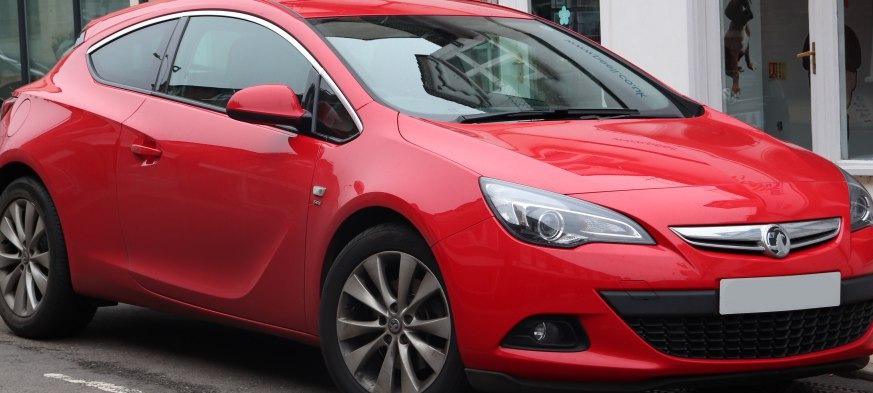
The Vauxhall Astra Mk VI GTC 1.7 CDTi, produced from 2011 to 2015, represented a key offering in the Astra’s sixth generation (Astra J), specifically the three-door coupe (GTC) body style. Positioned as a fuel-efficient and relatively affordable option within the GTC lineup, it catered to buyers seeking a stylish hatchback with lower running costs. This variant utilized a diesel engine paired with a manual transmission, aiming for a balance between performance and economy. It was part of the broader Astra J range, which was a significant model for Vauxhall (and its Opel counterpart) in the European market, competing with rivals like the Ford Focus, Volkswagen Golf, and Peugeot 308.
Technical Specifications
| Brand | Vauxhall |
| Model | Astra |
| Generation | Astra Mk VI GTC |
| Type (Engine) | 1.7 CDTi (110 Hp) |
| Start of production | 2011 |
| End of production | 2015 |
| Powertrain Architecture | Internal Combustion engine |
| Body type | Hatchback |
| Seats | 5 |
| Doors | 3 |
| Fuel consumption (urban) | 5.2 l/100 km (45.2 US mpg, 54.3 UK mpg, 19.2 km/l) |
| Fuel consumption (extra urban) | 4.1 l/100 km (57.4 US mpg, 68.9 UK mpg, 24.4 km/l) |
| Fuel consumption (combined) | 4.5 l/100 km (52.3 US mpg, 62.8 UK mpg, 22.2 km/l) |
| CO2 emissions | 119 g/km |
| Fuel Type | Diesel |
| Acceleration 0 – 100 km/h | 11.9 sec |
| Acceleration 0 – 62 mph | 11.9 sec |
| Acceleration 0 – 60 mph | 11.3 sec |
| Maximum speed | 182 km/h (113.09 mph) |
| Weight-to-power ratio | 12 kg/Hp, 83.3 Hp/tonne |
| Weight-to-torque ratio | 4.7 kg/Nm, 212.7 Nm/tonne |
| Power | 110 Hp @ 4000 rpm |
| Power per litre | 65.2 Hp/l |
| Torque | 281 Nm @ 1750-2500 rpm (207.25 lb.-ft. @ 1750-2500 rpm) |
| Engine layout | Front, Transverse |
| Engine Model/Code | A17DTC |
| Engine displacement | 1686 cm3 (102.89 cu. in.) |
| Number of cylinders | 4 |
| Engine configuration | Inline |
| Number of valves per cylinder | 4 |
| Fuel injection system | Diesel Commonrail |
| Engine aspiration | Turbocharger, Intercooler |
| Valvetrain | DOHC |
| Engine oil capacity | 5.4 l (5.71 US qt | 4.75 UK qt) |
| Coolant capacity | 7.1 l (7.5 US qt | 6.25 UK qt) |
| Kerb Weight | 1321 kg (2912.31 lbs.) |
| Max. weight | 1881 kg (4146.9 lbs.) |
| Max load | 560 kg (1234.59 lbs.) |
| Trunk (boot) space – minimum | 371 l (13.1 cu. ft.) |
| Fuel tank capacity | 56 l (14.79 US gal | 12.32 UK gal) |
| Length | 4466 mm (175.83 in.) |
| Width | 1840 mm (72.44 in.) |
| Width including mirrors | 2020 mm (79.53 in.) |
| Height | 1489 mm (58.62 in.) |
| Wheelbase | 2695 mm (106.1 in.) |
| Front track | 1585 mm (62.4 in.) |
| Rear track | 1588 mm (62.52 in.) |
| Minimum turning circle | 11.4 m (37.4 ft.) |
| Drivetrain | Front wheel drive |
| Number of gears | 6 |
| Gearbox type | Manual transmission |
| Front brakes | Ventilated discs |
| Rear brakes | Disc |
| Assisting systems | ABS (Anti-lock braking system) |
| Steering type | Steering rack and pinion |
| Power steering | Electric |
Powertrain & Engine Architecture
The heart of the Astra Mk VI GTC 1.7 CDTi is the A17DTC engine, a 1.7-liter inline-four cylinder diesel. This engine belongs to Vauxhall/Opel’s family of small-displacement diesel engines, known for their efficiency. It features a common rail direct injection system, delivering fuel directly into the combustion chamber at extremely high pressure for optimized combustion. A turbocharger with an intercooler is employed to boost power output, overcoming the inherent limitations of a small-displacement engine. The engine utilizes a Double Overhead Camshaft (DOHC) valvetrain with four valves per cylinder, enhancing breathing and contributing to improved performance. The six-speed manual transmission was the standard offering for this variant, providing drivers with control over gear selection and contributing to the car’s fuel efficiency. The transmission’s gear ratios were tuned to maximize the engine’s torque output, providing reasonable acceleration and good cruising ability.
Driving Characteristics
The 110 horsepower and 281 Nm (207 lb-ft) of torque delivered by the 1.7 CDTi engine provided adequate, though not exhilarating, performance. Acceleration from 0-60 mph took around 11.3 seconds, and the top speed was approximately 113 mph. Compared to higher-output versions of the Astra GTC, such as those equipped with the 2.0-liter CDTi engine, the 1.7 CDTi felt noticeably less powerful, particularly during overtaking maneuvers. However, the engine’s strong low-end torque made it well-suited for everyday driving, providing ample pulling power for navigating city streets and climbing hills. The manual transmission allowed for precise gear changes, and the relatively long gearing contributed to good fuel economy. The driving experience was generally comfortable, with the GTC’s suspension providing a good balance between ride quality and handling.
Equipment & Trim Levels
The 1.7 CDTi variant typically came with a reasonable level of standard equipment. This generally included air conditioning, electric front windows, a CD/MP3 stereo system, and alloy wheels. Safety features such as ABS, electronic stability control, and multiple airbags were also standard. Higher trim levels, such as Sport or SRi, added features like upgraded upholstery, a multi-function steering wheel, cruise control, and parking sensors. Optional extras included a panoramic sunroof, leather seats, and a more advanced infotainment system.
Chassis & Braking
The Astra GTC 1.7 CDTi featured a MacPherson strut front suspension and a torsion beam rear suspension. This setup provided a good compromise between ride comfort and handling. The front brakes were ventilated discs, while the rear brakes were solid discs. The steering was electrically assisted, providing light and precise steering feel. The suspension was tuned to provide a comfortable ride, but it also offered decent body control during cornering. The braking system was adequate for the car’s weight and performance, providing sufficient stopping power in most situations.
Market Reception & Comparison
The Astra Mk VI GTC 1.7 CDTi was generally well-received by critics as a practical and economical choice. It was praised for its fuel efficiency, comfortable ride, and stylish design. However, some reviewers noted that the engine lacked outright power, particularly when compared to its rivals. Compared to the petrol-powered Astra GTC variants, the 1.7 CDTi offered significantly better fuel economy, but at the expense of performance. Against competitors like the Ford Focus 1.6 TDCi, the Astra GTC 1.7 CDTi offered a similar level of performance and economy, but the Astra was often considered to have a more refined interior.
Legacy
The A17DTC engine, while generally reliable, is known to have some potential issues, including problems with the diesel particulate filter (DPF) and the turbocharger. Regular maintenance, including oil changes and DPF regeneration, is crucial for ensuring the engine’s longevity. In the used car market, the Astra Mk VI GTC 1.7 CDTi remains a popular choice for buyers seeking an affordable and fuel-efficient hatchback. Its relatively low running costs and stylish design continue to appeal to a wide range of drivers. However, potential buyers should be aware of the potential issues with the DPF and turbocharger and ensure that the car has been properly maintained.