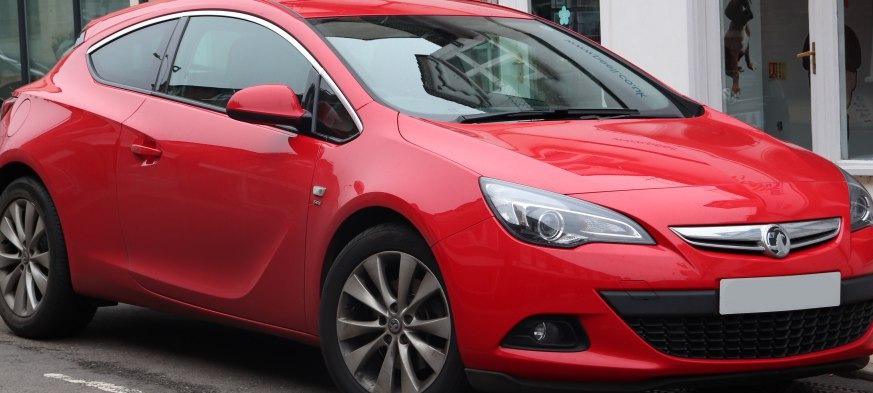
The Vauxhall Astra Mk VI GTC 2.0 CDTi Automatic, produced between 2011 and 2015, represented a sporty and efficient offering within the Astra GTC (Gran Turismo Coupe) range. Positioned as a mid-to-high trim level, it combined the practicality of a hatchback with a more dynamic driving experience and a fuel-efficient diesel engine. This three-door coupe variant aimed to appeal to buyers seeking a stylish and economical vehicle without sacrificing performance. It was part of the Mk VI Astra generation (2009-2015), built on the GM Delta II platform, also known internally as the 1HX0/A3 platform, and shared components with other Opel/Vauxhall and Chevrolet models.
Technical Specifications
| Brand | Vauxhall |
| Model | Astra |
| Generation | Astra Mk VI GTC |
| Type (Engine) | 2.0 CDTi (165 Hp) Automatic |
| Start of production | 2011 |
| End of production | 2015 |
| Powertrain Architecture | Internal Combustion engine |
| Body type | Hatchback |
| Seats | 5 |
| Doors | 3 |
| Fuel consumption (urban) | 5.7 l/100 km (41.3 US mpg, 49.6 UK mpg, 17.5 km/l) |
| Fuel consumption (extra urban) | 4.3 l/100 km (54.7 US mpg, 65.7 UK mpg, 23.3 km/l) |
| Fuel consumption (combined) | 4.8 l/100 km (49 US mpg, 58.9 UK mpg, 20.8 km/l) |
| CO2 emissions | 127 g/km |
| Fuel Type | Diesel |
| Acceleration 0 – 100 km/h | 8.9 sec |
| Acceleration 0 – 62 mph | 8.9 sec |
| Acceleration 0 – 60 mph | 8.5 sec |
| Maximum speed | 209 km/h (129.87 mph) |
| Weight-to-power ratio | 8 kg/Hp, 124.9 Hp/tonne |
| Weight-to-torque ratio | 3.8 kg/Nm, 265 Nm/tonne |
| Power | 165 Hp @ 4000 rpm |
| Power per litre | 84.4 Hp/l |
| Torque | 350 Nm @ 1750-2500 rpm (258.15 lb.-ft. @ 1750-2500 rpm) |
| Engine layout | Front, Transverse |
| Engine Model/Code | A20DTH |
| Engine displacement | 1956 cm3 (119.36 cu. in.) |
| Number of cylinders | 4 |
| Engine configuration | Inline |
| Number of valves per cylinder | 4 |
| Fuel injection system | Diesel Commonrail |
| Engine aspiration | Turbocharger, Intercooler |
| Valvetrain | DOHC |
| Engine oil capacity | 4.5 l (4.76 US qt | 3.96 UK qt) |
| Coolant capacity | 6.9 l (7.29 US qt | 6.07 UK qt) |
| Kerb Weight | 1321 kg (2912.31 lbs.) |
| Max. weight | 1881 kg (4146.9 lbs.) |
| Max load | 560 kg (1234.59 lbs.) |
| Trunk (boot) space – minimum | 371 l (13.1 cu. ft.) |
| Fuel tank capacity | 56 l (14.79 US gal | 12.32 UK gal) |
| Length | 4466 mm (175.83 in.) |
| Width | 1840 mm (72.44 in.) |
| Width including mirrors | 2020 mm (79.53 in.) |
| Height | 1489 mm (58.62 in.) |
| Wheelbase | 2695 mm (106.1 in.) |
| Front track | 1585 mm (62.4 in.) |
| Rear track | 1588 mm (62.52 in.) |
| Minimum turning circle | 11.4 m (37.4 ft.) |
| Drivetrain Architecture | Front wheel drive |
| Number of gears | 6 |
| Gearbox type | Automatic transmission |
| Front brakes | Ventilated discs |
| Rear brakes | Disc |
| Assisting systems | ABS (Anti-lock braking system) |
| Steering type | Steering rack and pinion |
| Power steering | Electric Steering |
Powertrain & Engine Architecture
The heart of the Astra GTC 2.0 CDTi Automatic is the A20DTH engine, a 1.956-liter inline-four cylinder diesel. This engine is a member of the GM/Fiat family of common rail direct injection diesels. It features a turbocharger with an intercooler to boost power and efficiency. The engine utilizes a double overhead camshaft (DOHC) valvetrain with four valves per cylinder, optimizing gas flow for improved performance. The common rail direct injection system, operating at very high pressures, ensures precise fuel delivery and contributes to the engine’s relatively low emissions. Paired with this engine is a six-speed automatic transmission, providing smooth gear changes and enhancing the car’s usability in everyday driving conditions. This transmission was designed to balance fuel economy with acceptable performance, though it wasn’t known for particularly sporty shifts.
Driving Characteristics
The 165 horsepower and 350 Nm (258 lb-ft) of torque delivered by the 2.0 CDTi engine provided a respectable level of performance for the Astra GTC. Acceleration from 0-60 mph took around 8.5 seconds, and the car felt adequately powered for overtaking maneuvers on the highway. However, compared to the more powerful petrol variants (like the 2.0 Turbo), the diesel felt less eager to rev. The automatic transmission, while convenient, did contribute to a slight reduction in responsiveness. Gear ratios were tuned for fuel efficiency, meaning the engine didn’t always feel like it was in its optimal power band. The focus was on providing a comfortable and economical driving experience rather than outright performance.
Equipment & Trim Levels
The Astra GTC 2.0 CDTi Automatic typically came with a good level of standard equipment. This included air conditioning, electric front windows, a CD/MP3 stereo system, alloy wheels, and ABS brakes. Higher trim levels, often denoted by ‘SE’ or ‘Elite’ designations, added features such as climate control, parking sensors, rain-sensing wipers, and upgraded interior trim. Interior upholstery was generally cloth, with leather options available as an extra cost. The dashboard layout was functional and modern for its time, with a focus on ergonomics. Optional extras included a panoramic sunroof, satellite navigation, and a more powerful audio system.
Chassis & Braking
The Astra GTC featured independent suspension at the front, typically a MacPherson strut setup, and a semi-independent torsion beam suspension at the rear. This configuration provided a good balance between ride comfort and handling. The front brakes were ventilated discs, offering good stopping power, while the rear brakes were solid discs. Electric power steering was standard, providing a lighter steering feel, particularly at low speeds. Stabilizer bars were fitted to both the front and rear axles to reduce body roll during cornering. The suspension tuning was generally geared towards comfort, but the GTC’s shorter wheelbase and stiffer chassis compared to the five-door Astra provided a more engaging driving experience.
Market Reception & Comparison
The Astra GTC 2.0 CDTi Automatic was generally well-received by automotive critics. It was praised for its fuel efficiency, comfortable ride, and stylish design. However, some reviewers noted that the automatic transmission could feel a little sluggish, and the engine lacked the excitement of the petrol alternatives. Compared to other diesel-powered hatchbacks in its class, such as the Ford Focus and Volkswagen Golf, the Astra GTC offered a competitive package in terms of price, equipment, and fuel economy. The 1.8L petrol versions were cheaper to buy but offered significantly less torque, while the more powerful 2.0 Turbo diesel was more expensive and aimed at a different buyer.
Legacy
The A20DTH engine, when properly maintained, proved to be a relatively reliable unit. Common issues included diesel particulate filter (DPF) clogging, particularly on vehicles used primarily for short journeys, and occasional turbocharger failures. The six-speed automatic transmission was generally robust, but regular fluid changes were essential to prevent issues. Today, the Astra GTC 2.0 CDTi Automatic represents a reasonably affordable and economical used car option. Its combination of style, practicality, and fuel efficiency continues to appeal to buyers looking for a comfortable and reliable hatchback. However, potential buyers should be aware of the potential DPF issues and ensure the car has been well-maintained.