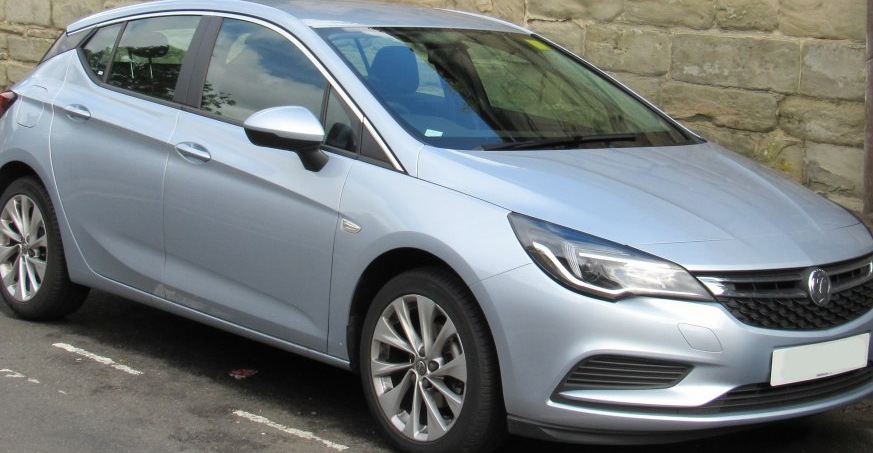
The Vauxhall Astra Mk VII 1.0 EcoTec (105 hp) ecoFLEX start&stop represents an entry-level offering within the seventh generation of the Astra, produced from 2015 to 2019. Positioned as a fuel-efficient option, this variant aimed to appeal to buyers prioritizing economy and lower running costs. It utilized a downsized turbocharged engine paired with a manual transmission, a configuration designed to meet increasingly stringent European emissions standards and consumer demand for smaller, more efficient vehicles. The Mk VII Astra, built on the General Motors Delta platform, was a significant model for Vauxhall in the UK market, competing directly with rivals like the Ford Focus and Volkswagen Golf.
Technical Specifications
| Brand | Vauxhall |
| Model | Astra |
| Generation | Astra Mk VII |
| Type (Engine) | 1.0 EcoTec (105 Hp) ecoFLEX start&stop |
| Start of production | 2015 |
| End of production | 2019 |
| Powertrain Architecture | Internal Combustion engine |
| Body type | Hatchback |
| Seats | 5 |
| Doors | 5 |
| Fuel consumption (urban) | 5.2-5.1 l/100 km (45.2 – 46.1 US mpg, 54.3 – 55.4 UK mpg, 19.2 – 19.6 km/l) |
| Fuel consumption (extra urban) | 3.9-3.8 l/100 km (60.3 – 61.9 US mpg, 72.4 – 74.3 UK mpg, 25.6 – 26.3 km/l) |
| Fuel consumption (combined) | 4.4-4.3 l/100 km (53.5 – 54.7 US mpg, 64.2 – 65.7 UK mpg, 22.7 – 23.3 km/l) |
| CO2 emissions | 102-99 g/km |
| Fuel Type | Petrol (Gasoline) |
| Acceleration 0 – 100 km/h | 11.2 sec |
| Acceleration 0 – 62 mph | 11.2 sec |
| Acceleration 0 – 60 mph | 10.6 sec |
| Maximum speed | 200 km/h (124.27 mph) |
| Emission standard | Euro 6 |
| Weight-to-power ratio | 11.4 kg/Hp, 87.6 Hp/tonne |
| Weight-to-torque ratio | 7 kg/Nm, 141.9 Nm/tonne |
| Power | 105 Hp @ 5500 rpm |
| Power per litre | 105.1 Hp/l |
| Torque | 170 Nm @ 1800-4250 rpm (125.39 lb.-ft. @ 1800-4250 rpm) |
| Engine layout | Front, Transverse |
| Engine Model/Code | B10XFL |
| Engine displacement | 999 cm3 (60.96 cu. in.) |
| Number of cylinders | 3 |
| Engine configuration | Inline |
| Cylinder Bore | 74 mm (2.91 in.) |
| Piston Stroke | 77.4 mm (3.05 in.) |
| Compression ratio | 10.5:1 |
| Number of valves per cylinder | 4 |
| Fuel injection system | Direct injection |
| Engine aspiration | Turbocharger, Intercooler |
| Engine oil capacity | 4 l (4.23 US qt | 3.52 UK qt) |
| Kerb Weight | 1198 kg (2641.14 lbs.) |
| Max. weight | 1780 kg (3924.23 lbs.) |
| Max load | 582 kg (1283.09 lbs.) |
| Trunk (boot) space – minimum | 370 l (13.07 cu. ft.) |
| Trunk (boot) space – maximum | 1210 l (42.73 cu. ft.) |
| Fuel tank capacity | 48 l (12.68 US gal | 10.56 UK gal) |
| Permitted trailer load with brakes (12%) | 1220 kg (2689.64 lbs.) |
| Permitted trailer load without brakes | 610 kg (1344.82 lbs.) |
| Length | 4370 mm (172.05 in.) |
| Width | 1809 mm (71.22 in.) |
| Width with mirrors folded | 1871 mm (73.66 in.) |
| Width including mirrors | 2042 mm (80.39 in.) |
| Height | 1485 mm (58.46 in.) |
| Wheelbase | 2662 mm (104.8 in.) |
| Front track | 1544 mm (60.79 in.) |
| Rear (Back) track | 1558 mm (61.34 in.) |
| Front overhang | 960 mm (37.8 in.) |
| Rear overhang | 748 mm (29.45 in.) |
| Ride height (ground clearance) | 150 mm (5.91 in.) |
| Drag coefficient (Cd) | 0.31 |
| Minimum turning circle (turning diameter) | 11.05 m (36.25 ft.) |
| Drivetrain Architecture | The Internal combustion engine (ICE) drives the front wheels of the vehicle. |
| Drive wheel | Front wheel drive |
| Number of gears and type of gearbox | 5 gears, manual transmission |
| Front brakes | Ventilated discs |
| Rear brakes | Disc |
| Assisting systems | ABS (Anti-lock braking system) |
| Steering type | Steering rack and pinion |
| Tires size | 205/55 R16 |
| Wheel rims size | 6 J x 15 |
Powertrain & Engine Architecture
The heart of the Astra Mk VII 1.0 EcoTec is the B10XFL engine, a 999cc three-cylinder turbocharged petrol unit. This engine is part of General Motors’ Small Engine Family (SEF), designed for fuel efficiency and reduced emissions. It features direct fuel injection, a single scroll turbocharger, and variable valve timing. The engine’s compact size and lightweight construction contribute to the vehicle’s overall efficiency. The five-speed manual transmission was the standard offering for this variant, providing a balance between fuel economy and driver engagement. The transmission’s gear ratios were tuned to maximize the engine’s torque output at lower speeds, aiding in everyday drivability.
Driving Characteristics
The 105 hp output of the 1.0 EcoTec engine, coupled with the five-speed manual gearbox, resulted in a driving experience focused on economy rather than outright performance. Acceleration from 0-60 mph took around 10.6 seconds, making it adequate for typical commuting and urban driving. The turbocharger provides a noticeable boost in power, but the engine’s small displacement means it needs to be revved to access its full potential. Compared to higher-powered Astra variants, such as those equipped with the 1.6-liter diesel or larger petrol engines, this version felt less responsive and required more gear changes during overtaking maneuvers. However, the lighter engine weight contributed to improved handling and a more nimble feel.
Equipment & Trim Levels
The 1.0 EcoTec (105 hp) ecoFLEX start&stop typically served as the entry-level trim for the Astra Mk VII. Standard equipment generally included air conditioning, electric front windows, a basic audio system with USB connectivity, and stability control. Higher trim levels, such as Tech Line, Energy, and Elite, added features like alloy wheels, a touchscreen infotainment system, cruise control, and parking sensors. The interior upholstery was typically cloth, with a functional but relatively basic design. Optional extras included upgraded audio systems, satellite navigation, and leather upholstery.
Chassis & Braking
The Astra Mk VII utilized a MacPherson strut front suspension and a torsion beam rear suspension. This setup provided a reasonable balance between ride comfort and handling. The 1.0 EcoTec variant, being lighter than its more powerful counterparts, benefited from a slightly more responsive feel. Braking duties were handled by ventilated discs at the front and solid discs at the rear. Anti-lock Braking System (ABS) was standard, providing enhanced stopping power and control. The suspension tuning was geared towards comfort, prioritizing a smooth ride over sporty handling.
Market Reception & Comparison
The Astra Mk VII 1.0 EcoTec (105 hp) ecoFLEX start&stop was generally well-received by critics for its fuel efficiency and low running costs. However, some reviewers noted that the engine could feel strained when fully loaded or driving uphill. Compared to the 1.6-liter diesel variants, the 1.0 EcoTec offered lower torque but a more refined driving experience. Against competitors like the Ford Focus 1.0 EcoBoost, the Astra offered a similar level of fuel economy and performance, but the Focus was often praised for its more engaging handling. The Astra’s ecoFLEX technology, including start&stop functionality, helped to reduce emissions and improve fuel consumption.
Legacy
The B10XFL engine, while not known for exceptional longevity, has proven to be reasonably reliable in the Astra Mk VII. Common issues include turbocharger wear and occasional problems with the direct injection system. However, with regular maintenance and careful driving, these engines can provide many years of service. In the used car market, the 1.0 EcoTec variant remains an affordable option for buyers seeking a fuel-efficient and practical hatchback. Its low running costs and relatively simple mechanical design make it an attractive choice for first-time drivers or those on a budget. The Astra Mk VII, as a whole, established itself as a competitive and popular model in the UK market, and the 1.0 EcoTec variant played a key role in attracting environmentally conscious buyers.