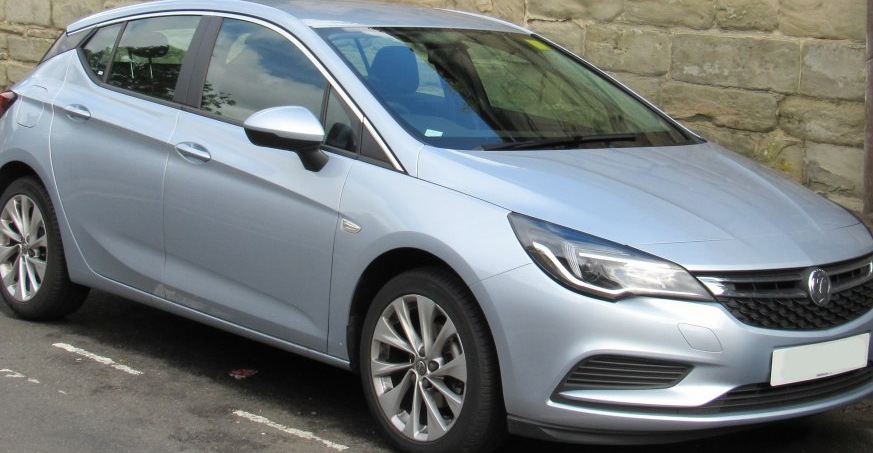
The Vauxhall Astra Mk VII 1.4 (100 hp) represents an entry-level offering within the seventh generation of the Astra, produced between 2015 and 2019. Positioned as a fuel-efficient and affordable option, this variant played a significant role in attracting budget-conscious buyers to the Astra lineup. Built on the General Motors Delta platform (also known as 1HX0/A3), the Mk VII Astra aimed to improve upon its predecessor with enhanced styling, technology, and driving dynamics. The 1.4-liter engine paired with a five-speed manual transmission was a common choice for those prioritizing economy over outright performance.
Technical Specifications
| Brand | Vauxhall |
| Model | Astra |
| Generation | Astra Mk VII |
| Type (Engine) | 1.4 (100 Hp) |
| Start of production | 2015 |
| End of production | 2019 |
| Powertrain Architecture | Internal Combustion engine |
| Body type | Hatchback |
| Seats | 5 |
| Doors | 5 |
| Fuel consumption (urban) | 7.1 l/100 km (33.1 US mpg, 39.8 UK mpg, 14.1 km/l) |
| Fuel consumption (extra urban) | 4.4 l/100 km (53.5 US mpg, 64.2 UK mpg, 22.7 km/l) |
| Fuel consumption (combined) | 5.3 l/100 km (44.4 US mpg, 53.3 UK mpg, 18.9 km/l) |
| CO2 emissions | 124 g/km |
| Fuel Type | Petrol (Gasoline) |
| Acceleration 0 – 100 km/h | 12.3 sec |
| Acceleration 0 – 62 mph | 12.3 sec |
| Acceleration 0 – 60 mph | 11.7 sec |
| Maximum speed | 185 km/h (114.95 mph) |
| Emission standard | Euro 6 |
| Weight-to-power ratio | 11.7 kg/Hp, 85.5 Hp/tonne |
| Weight-to-torque ratio | 9 kg/Nm, 111.2 Nm/tonne |
| Power | 100 Hp @ 6000 rpm |
| Power per litre | 71.5 Hp/l |
| Torque | 130 Nm @ 4400 rpm (95.88 lb.-ft. @ 4400 rpm) |
| Engine layout | Front, Transverse |
| Engine Model/Code | B14XE |
| Engine displacement | 1399 cm3 (85.37 cu. in.) |
| Number of cylinders | 4 |
| Engine configuration | Inline |
| Cylinder Bore | 74 mm (2.91 in.) |
| Piston Stroke | 81.3 mm (3.2 in.) |
| Compression ratio | 10.6:1 |
| Number of valves per cylinder | 4 |
| Fuel injection system | Multi-port manifold injection |
| Engine aspiration | Naturally aspirated engine |
| Engine oil capacity | 4 l (4.23 US qt | 3.52 UK qt) |
| Kerb Weight | 1169 kg (2577.2 lbs.) |
| Max. weight | 1760 kg (3880.14 lbs.) |
| Max load | 591 kg (1302.93 lbs.) |
| Trunk (boot) space – minimum | 370 l (13.07 cu. ft.) |
| Trunk (boot) space – maximum | 1210 l (42.73 cu. ft.) |
| Fuel tank capacity | 48 l (12.68 US gal | 10.56 UK gal) |
| Max. roof load | 75 kg (165.35 lbs.) |
| Permitted trailer load with brakes (12%) | 900 kg (1984.16 lbs.) |
| Permitted trailer load without brakes | 600 kg (1322.77 lbs.) |
| Length | 4370 mm (172.05 in.) |
| Width | 1809 mm (71.22 in.) |
| Width with mirrors folded | 1871 mm (73.66 in.) |
| Width including mirrors | 2042 mm (80.39 in.) |
| Height | 1485 mm (58.46 in.) |
| Wheelbase | 2662 mm (104.8 in.) |
| Front track | 1544 mm (60.79 in.) |
| Rear (Back) track | 1558 mm (61.34 in.) |
| Front overhang | 960 mm (37.8 in.) |
| Rear overhang | 748 mm (29.45 in.) |
| Ride height (ground clearance) | 150 mm (5.91 in.) |
| Drag coefficient (Cd) | 0.31 |
| Minimum turning circle (turning diameter) | 11.05 m (36.25 ft.) |
| Drivetrain Architecture | The Internal combustion engine (ICE) drives the front wheels of the vehicle. |
| Drive wheel | Front wheel drive |
| Number of gears and type of gearbox | 5 gears, manual transmission |
| Front brakes | Ventilated discs |
| Rear brakes | Disc |
| Assisting systems | ABS (Anti-lock braking system) |
| Steering type | Steering rack and pinion |
| Tires size | 205/55 R16 |
| Wheel rims size | 6 J x 16 |
INTRODUCTION
The Vauxhall Astra Mk VII 1.4 (100 hp) was a key component of the seventh-generation Astra range, launched in 2015. This model aimed to provide a balance between affordability, fuel efficiency, and practicality for the everyday driver. The 1.4-liter engine, designated the B14XE, was a naturally aspirated unit designed to meet Euro 6 emissions standards. Within the Mk VII lineup, this variant served as the entry point, appealing to buyers seeking a reliable and economical hatchback. It was a popular choice in the UK and European markets, where compact hatchbacks are highly sought after.
Powertrain & Engine Architecture
The heart of the Astra Mk VII 1.4 is the B14XE engine, a 1399cc inline-four cylinder petrol engine. This engine utilizes multi-point fuel injection and a single overhead camshaft (SOHC) valvetrain with four valves per cylinder. The engine’s design prioritizes fuel efficiency and smooth operation over outright power. The 100 hp output is achieved at 6000 rpm, while peak torque of 130 Nm (95.88 lb-ft) arrives at 4400 rpm. The five-speed manual transmission was the standard pairing, offering a relatively conventional gear ratio spread. The transmission’s ratios were tuned for economy, with a taller final drive contributing to lower fuel consumption at cruising speeds. The engine’s architecture is relatively simple, contributing to its reliability and ease of maintenance.
Driving Characteristics
The Astra 1.4 (100 hp) delivers a driving experience focused on comfort and efficiency rather than sporty performance. Acceleration from 0-60 mph takes around 11.7 seconds, and the top speed is 185 km/h (114.95 mph). The engine feels adequate for everyday driving, providing sufficient power for urban commutes and highway cruising. However, overtaking maneuvers require careful planning, and the engine can feel strained when fully loaded or climbing hills. Compared to higher-output Astra variants, such as the 1.6 Turbo or diesel models, the 1.4 feels noticeably less responsive. The five-speed gearbox is precise, but the relatively long gearing can make the engine feel sluggish at lower speeds. The suspension is tuned for comfort, providing a compliant ride over most road surfaces.
Equipment & Trim Levels
The Astra Mk VII 1.4 (100 hp) typically came equipped with a reasonable level of standard features. These included air conditioning, electric front windows, a basic audio system with USB connectivity, and ABS brakes. Safety features such as stability control and multiple airbags were also standard. Interior upholstery was typically cloth, with a functional but not luxurious design. Optional extras included alloy wheels, upgraded audio systems, parking sensors, and cruise control. Trim levels varied depending on the market, but generally offered progressively more features as you moved up the range. The base trim focused on providing essential features at an affordable price point.
Chassis & Braking
The Astra Mk VII 1.4 utilizes a MacPherson strut front suspension and a torsion beam rear suspension. This setup provides a good balance between ride comfort and handling. The front brakes are ventilated discs, while the rear brakes are solid discs. ABS (Anti-lock Braking System) is standard, providing enhanced braking performance in emergency situations. The steering is rack and pinion, offering precise and responsive control. The relatively lightweight nature of the 1.4 variant contributes to its agility, although it doesn’t offer the same level of dynamic performance as more powerful Astra models. The standard tire size is 205/55 R16, providing adequate grip in most conditions.
Market Reception & Comparison
The Astra Mk VII 1.4 (100 hp) received generally positive reviews for its fuel efficiency and affordability. Critics praised its comfortable ride and practical interior. However, some reviewers noted its lack of outright performance and somewhat basic interior trim. Compared to other trims in the Astra lineup, the 1.4 offered the lowest running costs but also the least exciting driving experience. The 1.6 Turbo variants provided significantly more power and performance, while the diesel models offered even better fuel economy. Against competitors such as the Ford Focus and Volkswagen Golf, the Astra 1.4 held its own in terms of value for money and practicality.
Legacy
The B14XE engine, while not known for being particularly groundbreaking, has proven to be a relatively reliable unit. Common issues are generally minor and often related to routine maintenance items. On the used car market, the Astra Mk VII 1.4 (100 hp) remains an affordable and practical option for buyers seeking a reliable hatchback. Its fuel efficiency and low running costs continue to be attractive features. While it may not be the most exciting car to drive, it represents a sensible and dependable choice for everyday transportation. Parts availability is good, and maintenance costs are generally reasonable, making it a popular choice for first-time car buyers and those on a budget.