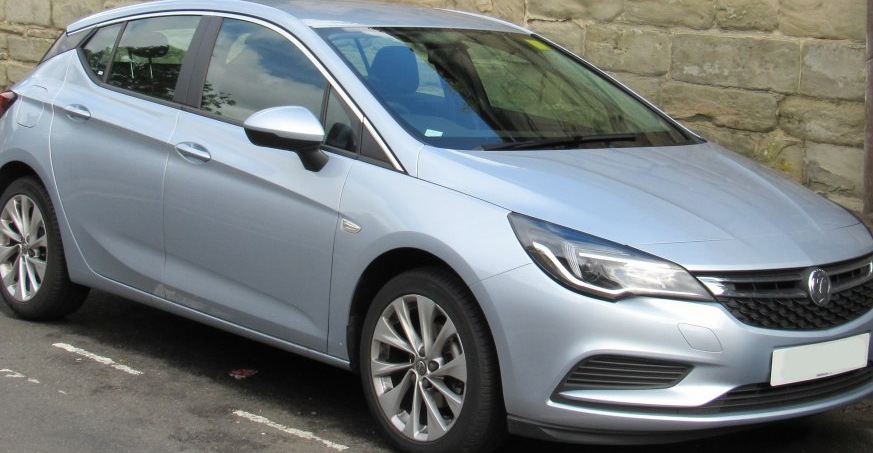
The Vauxhall Astra Mk VII 1.6 CDTi (136 hp) start&stop, produced from 2015 to 2019, represented a significant offering in the British market’s compact hatchback segment. Positioned as a fuel-efficient and practical option within the broader Mk VII Astra range (introduced in 2015 as part of the J platform generation, internally designated as the ‘P’ platform), this variant aimed to appeal to drivers prioritizing economy and lower running costs. It slotted into the mid-range of the Astra lineup, offering a balance between the lower-powered diesel options and the more performance-oriented petrol variants. The Mk VII Astra was a crucial model for Vauxhall, building upon the success of its predecessors and incorporating updated technology and styling.
Technical Specifications
| Brand | Vauxhall |
| Model | Astra |
| Generation | Astra Mk VII |
| Type (Engine) | 1.6 CDTi (136 Hp) start&stop |
| Start of production | 2015 |
| End of production | 2019 |
| Powertrain Architecture | Internal Combustion engine |
| Body type | Hatchback |
| Seats | 5 |
| Doors | 5 |
| Fuel consumption (urban) | 4.5 l/100 km (52.3 US mpg, 62.8 UK mpg, 22.2 km/l) |
| Fuel consumption (extra urban) | 3.5 l/100 km (67.2 US mpg, 80.7 UK mpg, 28.6 km/l) |
| Fuel consumption (combined) | 3.9 l/100 km (60.3 US mpg, 72.4 UK mpg, 25.6 km/l) |
| CO2 emissions | 103 g/km |
| Fuel Type | Diesel |
| Acceleration 0 – 100 km/h | 9.6 sec |
| Acceleration 0 – 62 mph | 9.6 sec |
| Acceleration 0 – 60 mph | 9.1 sec |
| Maximum speed | 204 km/h (126.76 mph) |
| Emission standard | Euro 6 |
| Weight-to-power ratio | 9.9 kg/Hp, 100.7 Hp/tonne |
| Weight-to-torque ratio | 4.2 kg/Nm, 237 Nm/tonne |
| Power | 136 Hp @ 3500-4000 rpm |
| Power per litre | 85.1 Hp/l |
| Torque | 320 Nm @ 2000-2500 rpm (236.02 lb.-ft. @ 2000-2500 rpm) |
| Engine layout | Front, Transverse |
| Engine Model/Code | B16DTH |
| Engine displacement | 1598 cm3 (97.52 cu. in.) |
| Number of cylinders | 4 |
| Engine configuration | Inline |
| Cylinder Bore | 79.7 mm (3.14 in.) |
| Piston Stroke | 80.1 mm (3.15 in.) |
| Compression ratio | 16:1 |
| Fuel injection system | Diesel Commonrail |
| Engine aspiration | Turbocharger, Intercooler |
| Engine oil capacity | 5 l (5.28 US qt | 4.4 UK qt) |
| Kerb Weight | 1350 kg (2976.24 lbs.) |
| Max. weight | 1875 kg (4133.67 lbs.) |
| Max load | 525 kg (1157.43 lbs.) |
| Trunk (boot) space – minimum | 370 l (13.07 cu. ft.) |
| Trunk (boot) space – maximum | 1210 l (42.73 cu. ft.) |
| Fuel tank capacity | 48 l (12.68 US gal | 10.56 UK gal) |
| Max. roof load | 75 kg (165.35 lbs.) |
| Permitted trailer load with brakes (12%) | 750 kg (1653.47 lbs.) |
| Permitted trailer load without brakes | 620 kg (1366.87 lbs.) |
| Length | 4370 mm (172.05 in.) |
| Width | 1809 mm (71.22 in.) |
| Width with mirrors folded | 1871 mm (73.66 in.) |
| Width including mirrors | 2042 mm (80.39 in.) |
| Height | 1485 mm (58.46 in.) |
| Wheelbase | 2662 mm (104.8 in.) |
| Front track | 1548 mm (60.94 in.) |
| Rear (Back) track | 1565 mm (61.61 in.) |
| Front overhang | 960 mm (37.8 in.) |
| Rear overhang | 748 mm (29.45 in.) |
| Ride height (ground clearance) | 150 mm (5.91 in.) |
| Drag coefficient (Cd) | 0.31 |
| Minimum turning circle (turning diameter) | 11.05 m (36.25 ft.) |
| Drivetrain Architecture | The Internal combustion engine (ICE) drives the front wheels of the vehicle. |
| Drive wheel | Front wheel drive |
| Number of gears and type of gearbox | 6 gears, manual transmission |
| Front brakes | Ventilated discs |
| Rear brakes | Disc |
| Assisting systems | ABS (Anti-lock braking system) |
| Steering type | Steering rack and pinion |
| Tires size | 205/55 R16 |
| Wheel rims size | 6 J x 15 |
INTRODUCTION
The Vauxhall Astra Mk VII 1.6 CDTi (136 hp) start&stop, launched in 2015, was a key component of Vauxhall’s strategy to offer a broad range of efficient and practical vehicles. Built on the General Motors ‘P’ platform (also known as the 1HX0/A3 platform), the Mk VII Astra represented a significant step forward in terms of design, technology, and refinement compared to its predecessor. The 1.6 CDTi engine, a diesel unit developed in collaboration with Isuzu, was a central part of this effort, providing a balance of performance and fuel economy. The ‘start&stop’ system further enhanced its efficiency, automatically shutting off the engine when the vehicle was stationary, reducing fuel consumption and emissions.
Powertrain & Engine Architecture
The heart of this Astra variant is the 1.6-liter (1598 cc) inline-four cylinder diesel engine, designated B16DTH. This engine utilizes a common-rail direct injection system, delivering fuel at extremely high pressure for optimized combustion. The engine is turbocharged and intercooled, boosting power output and improving torque delivery. The B16DTH engine features a variable geometry turbocharger (VGT) which adjusts the turbine vanes to optimize boost pressure across the engine’s rev range. The engine’s head incorporates four valves per cylinder (DOHC – Double Overhead Camshaft), contributing to efficient gas exchange. The 136 hp variant was paired with a six-speed manual transmission, delivering power to the front wheels. The start&stop system, controlled by the engine management unit, seamlessly shuts down and restarts the engine to minimize fuel waste during city driving.
Driving Characteristics
The 1.6 CDTi 136 hp Astra offered a comfortable and refined driving experience, prioritizing fuel efficiency over outright performance. Acceleration from 0-60 mph took approximately 9.1 seconds, making it suitable for everyday driving but not particularly sporty. The engine’s 320 Nm (236 lb-ft) of torque, available from 2000-2500 rpm, provided adequate pulling power for overtaking and navigating hills. The six-speed manual transmission was well-matched to the engine’s characteristics, offering smooth gear changes and allowing drivers to keep the engine within its optimal torque band. Compared to the higher-output diesel variants (like the 1.6 CDTi 160 hp), this version felt less eager to rev, but it offered superior fuel economy. The steering was light and precise, making it easy to maneuver in urban environments.
Equipment & Trim Levels
The 1.6 CDTi 136 hp Astra typically came equipped with a reasonable level of standard features. These included air conditioning, electric front windows, a CD/MP3 stereo system with USB connectivity, and alloy wheels. Safety features such as ABS, electronic stability control, and multiple airbags were also standard. Higher trim levels, such as ‘Tech Line’ or ‘Sportive’, added features like cruise control, rear parking sensors, a touchscreen infotainment system, and upgraded interior trim. Interior upholstery was typically cloth, with options for leather seats available on higher-spec models. The dashboard layout was functional and well-designed, with clear instrumentation and intuitive controls.
Chassis & Braking
The Astra Mk VII utilized a MacPherson strut front suspension and a torsion beam rear suspension. This setup provided a good balance between ride comfort and handling. The front brakes were ventilated discs, while the rear brakes were solid discs, providing adequate stopping power for the vehicle’s weight and performance. The steering system employed a rack and pinion setup, offering precise and responsive steering feel. Stabilizer bars were fitted to both the front and rear axles to reduce body roll during cornering. The suspension tuning was geared towards comfort, making it a pleasant vehicle for long journeys.
Market Reception & Comparison
The Vauxhall Astra Mk VII 1.6 CDTi (136 hp) start&stop was generally well-received by automotive critics. It was praised for its fuel efficiency, comfortable ride, and refined engine. However, some reviewers noted that the performance was not particularly exciting. Compared to the 1.6 CDTi 160 hp variant, the 136 hp version offered slightly lower performance but significantly better fuel economy. Against competitors like the Ford Focus, Volkswagen Golf, and Peugeot 308, the Astra offered a competitive package in terms of price, features, and running costs. The start&stop system was seen as a valuable addition, further enhancing its appeal to environmentally conscious buyers.
Legacy
The B16DTH engine, while generally reliable, has been known to exhibit issues with the diesel particulate filter (DPF) if not driven on longer journeys regularly. Regular servicing and the use of quality diesel fuel are crucial for maintaining the engine’s longevity. On the used car market, the Astra Mk VII 1.6 CDTi (136 hp) start&stop remains a popular choice for buyers seeking a fuel-efficient and practical hatchback. Its relatively low running costs and comfortable driving experience continue to make it an attractive option, and parts availability is generally good. The Mk VII Astra, and this variant in particular, represents a solid and dependable choice in the compact hatchback segment.