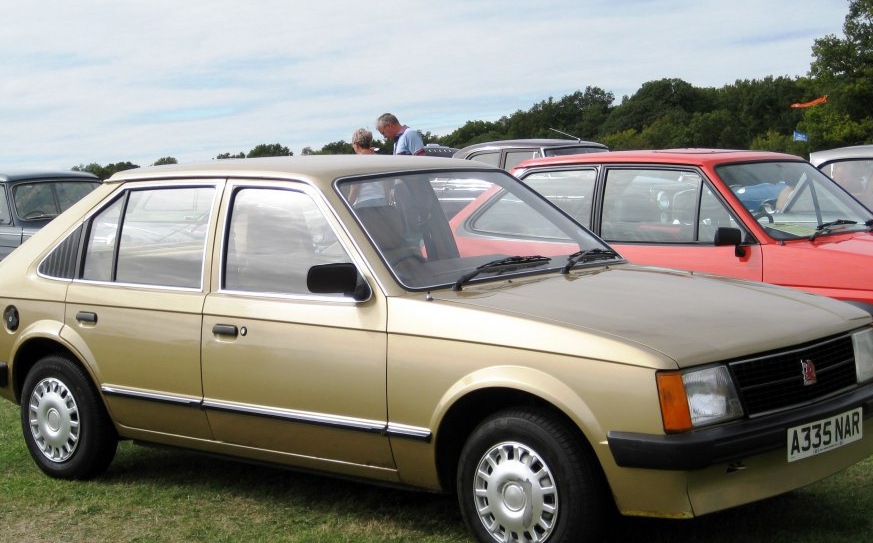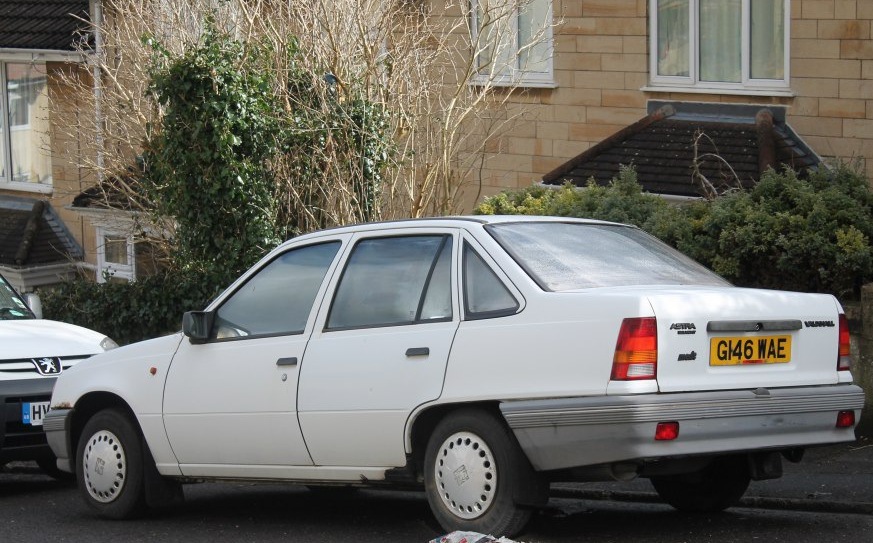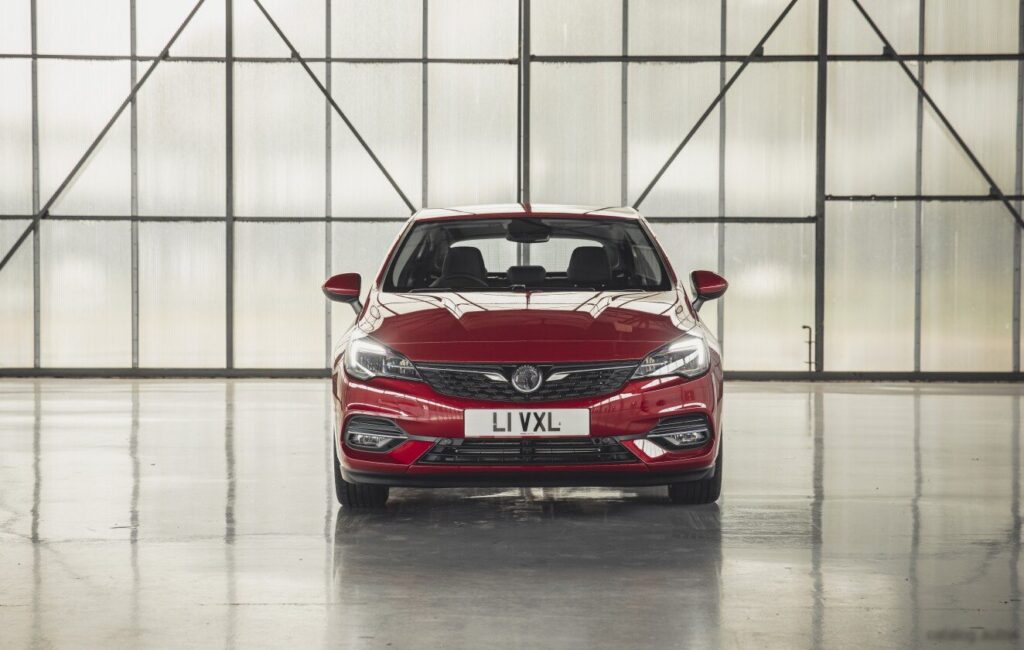
The Vauxhall Astra Mk VII (facelift, 2019) 1.2 Turbo, producing 110 horsepower, represents a key variant within the seventh generation of Vauxhall’s popular compact hatchback. Introduced as part of a mid-cycle refresh in 2019 and continuing through November 2021, this model aimed to balance affordability with reasonable performance and fuel efficiency. It occupied a mid-range position in the Astra Mk VII lineup, serving as a step up from the base models while remaining more accessible than the higher-powered or diesel-equipped versions. The facelift brought styling updates and revised technology, solidifying the Astra’s position as a competitive offering in the European C-segment.
Technical Specifications
| Brand | Vauxhall |
| Model | Astra |
| Generation | Astra Mk VII (facelift 2019) |
| Type (Engine) | 1.2 Turbo (110 Hp) |
| Start of production | 2019 |
| End of production | November, 2021 |
| Powertrain Architecture | Internal Combustion engine |
| Body type | Hatchback |
| Seats | 5 |
| Doors | 5 |
| Combined fuel consumption (WLTP) | 5.2-5.5 l/100 km (45.2 – 42.8 US mpg, 54.3 – 51.4 UK mpg, 19.2 – 18.2 km/l) |
| CO2 emissions (NEDC, WLTP equivalent) | 99 g/km |
| Fuel Type | Petrol (Gasoline) |
| Maximum speed | 200 km/h (124.27 mph) |
| Emission standard | Euro 6d |
| Power | 110 Hp @ 4500 rpm |
| Power per litre | 91.7 Hp/l |
| Torque | 195 Nm @ 2000-3500 rpm (143.82 lb.-ft. @ 2000-3500 rpm) |
| Engine layout | Front, Transverse |
| Engine Model/Code | F12SHL |
| Engine displacement | 1199 cm3 (73.17 cu. in.) |
| Number of cylinders | 3 |
| Engine configuration | Inline |
| Number of valves per cylinder | 4 |
| Fuel injection system | Direct injection |
| Engine aspiration | Turbocharger, Intercooler |
| Valvetrain | DOHC, VVT |
| Engine oil capacity | 4 l (4.23 US qt | 3.52 UK qt) |
| Coolant | 5.4 l (5.71 US qt | 4.75 UK qt) |
| Engine systems | Start & Stop System |
| Max. weight | 1805 kg (3979.34 lbs.) |
| Trunk (boot) space – minimum | 370 l (13.07 cu. ft.) |
| Trunk (boot) space – maximum | 1210 l (42.73 cu. ft.) |
| Fuel tank capacity | 48 l (12.68 US gal | 10.56 UK gal) |
| Permitted trailer load with brakes (12%) | 1220 kg (2689.64 lbs.) |
| Permitted trailer load without brakes | 620 kg (1366.87 lbs.) |
| Length | 4370 mm (172.05 in.) |
| Width | 1809 mm (71.22 in.) |
| Width including mirrors | 2042 mm (80.39 in.) |
| Height | 1485 mm (58.46 in.) |
| Wheelbase | 2662 mm (104.8 in.) |
| Front overhang | 960 mm (37.8 in.) |
| Rear overhang | 748 mm (29.45 in.) |
| Drag coefficient (Cd) | 0.26 |
| Minimum turning circle (turning diameter) | 11.05 m (36.25 ft.) |
| Drivetrain Architecture | The Internal combustion engine (ICE) drives the front wheels of the vehicle. |
| Drive wheel | Front wheel drive |
| Number of gears and type of gearbox | 6 gears, manual transmission |
| Front suspension | Independent type McPherson |
| Rear suspension | Semi-independent, coil spring |
| Front brakes | Ventilated discs, 276 mm |
| Rear brakes | Disc, 264 mm |
| Assisting systems | ABS (Anti-lock braking system) |
| Steering type | Steering rack and pinion |
| Power steering | Electric Steering |
| Tires size | 205/55 R16; 225/45 R17 |
| Wheel rims size | 16; 17 |
Powertrain & Engine Architecture
The heart of this Astra variant is the F12SHL, a 1.2-liter turbocharged three-cylinder gasoline engine. This engine belongs to Vauxhall/Opel’s Small Engine Family (SEF), known for its compact size and efficiency. The engine utilizes direct fuel injection, delivering fuel directly into the combustion chamber for improved combustion efficiency and reduced emissions. A single scroll turbocharger with an intercooler provides forced induction, boosting power output. The engine also features a Double Overhead Camshaft (DOHC) valvetrain with Variable Valve Timing (VVT) on both intake and exhaust valves, optimizing performance across the rev range. The 110 horsepower is delivered at 4500 rpm, while peak torque of 195 Nm (143.82 lb-ft) is available from 2000 to 3500 rpm. This engine was paired with a six-speed manual transmission, providing a balance between fuel economy and driver engagement.
Driving Characteristics
The 1.2 Turbo 110 hp Astra offers a generally pleasant driving experience, particularly for everyday commuting. While not a performance-oriented model, the turbocharger provides a noticeable boost in power when accelerating, making overtaking maneuvers manageable. The six-speed manual transmission allows for precise gear selection, and the gear ratios are well-suited for both urban and highway driving. Compared to the more powerful 1.4 Turbo models, the 1.2 feels less eager to rev, and acceleration is noticeably slower. However, it offers a more relaxed driving experience and better fuel economy. The relatively lightweight nature of the three-cylinder engine contributes to nimble handling, and the Astra’s suspension provides a comfortable ride, absorbing most road imperfections effectively.
Equipment & Trim Levels
The 1.2 Turbo 110 hp Astra typically came equipped with a reasonable level of standard features. These generally included air conditioning, a touchscreen infotainment system with Bluetooth connectivity, alloy wheels (typically 16 or 17 inch), and a suite of safety features such as ABS, electronic stability control, and multiple airbags. Higher trim levels, such as ‘Tech Line’ or ‘Elite’, added features like automatic climate control, a larger touchscreen display, parking sensors, and upgraded interior trim. Interior upholstery was typically cloth, with options for leather seats on higher-spec models. Optional extras included a panoramic sunroof, adaptive cruise control, and a premium audio system.
Chassis & Braking
The Astra Mk VII utilizes a McPherson strut front suspension setup, providing good handling and stability. The rear suspension employs a semi-independent torsion beam configuration, which is a cost-effective solution that offers a reasonable balance between ride comfort and handling. Braking duties are handled by ventilated discs at the front and solid discs at the rear. ABS (Anti-lock Braking System) is standard, enhancing braking performance and safety. The steering is electrically assisted, providing a light and responsive feel. The chassis is designed to provide a comfortable and controlled ride, with a focus on everyday usability rather than outright sportiness.
Market Reception & Comparison
The 1.2 Turbo 110 hp Astra was generally well-received by automotive critics as a practical and efficient option. It was praised for its fuel economy, comfortable ride, and reasonable performance. However, some reviewers noted that the engine could feel strained when fully loaded or driving uphill. Compared to the 1.4 Turbo models, the 1.2 offered a lower price point but sacrificed some performance. Against competitors like the Ford Focus, Volkswagen Golf, and Peugeot 308, the Astra 1.2 Turbo held its own, offering a competitive package in terms of price, features, and fuel efficiency. The diesel variants were often favored by those prioritizing fuel economy above all else, while the 1.4 Turbo appealed to drivers seeking more spirited performance.
Legacy
The F12SHL 1.2-liter turbo engine has proven to be a relatively reliable unit, although, like any turbocharged engine, it requires regular maintenance, including oil changes with the correct specification oil. Common issues reported include occasional turbocharger lag and, in some cases, problems with the direct injection system. On the used car market, the Astra Mk VII 1.2 Turbo 110 hp represents a good value proposition, offering a practical and affordable compact hatchback. Its fuel efficiency and relatively low running costs make it an attractive option for budget-conscious buyers. The availability of spare parts is good, and the Astra’s widespread popularity ensures that qualified mechanics are readily available for servicing and repairs.