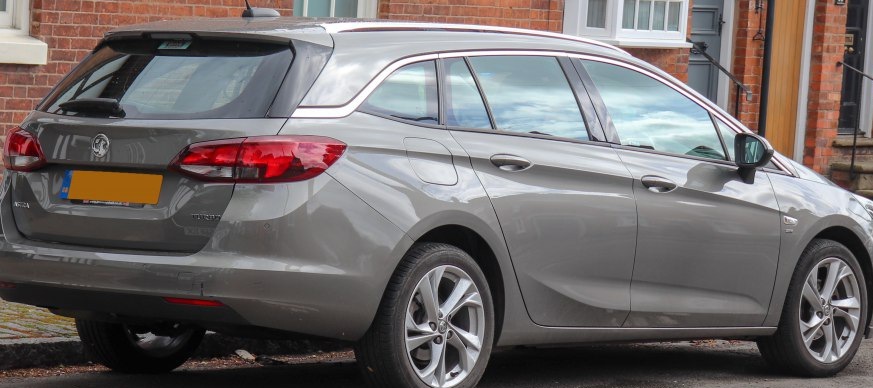
The Vauxhall Astra Mk VII Sports Tourer 1.6 CDTi Automatic, produced from 2015 to 2019, represented a practical and fuel-efficient option within the broader Astra Mk VII (J) range. Positioned as a mid-range trim, it catered to buyers seeking the versatility of a station wagon (estate) body style combined with the convenience of an automatic transmission and the economy of a modern diesel engine. This variant was part of the Astra J series, built on the General Motors Delta platform, and aimed to compete with rivals like the Ford Focus Estate and Volkswagen Golf Estate in the European market. The Sports Tourer body style, specifically, offered increased cargo capacity compared to the hatchback version, making it a popular choice for families and those requiring ample space.
Technical Specifications
| Brand | Vauxhall |
| Model | Astra |
| Generation | Astra Mk VII Sports Tourer |
| Type (Engine) | 1.6 CDTi (136 Hp) Automatic |
| Start of production | 2015 |
| End of production | 2019 |
| Powertrain Architecture | Internal Combustion engine |
| Body type | Station wagon (estate) |
| Seats | 5 |
| Doors | 5 |
| Fuel consumption (urban) | 5.7 l/100 km (41.3 US mpg, 49.6 UK mpg, 17.5 km/l) |
| Fuel consumption (extra urban) | 3.8 l/100 km (61.9 US mpg, 74.3 UK mpg, 26.3 km/l) |
| Fuel consumption (combined) | 4.5 l/100 km (52.3 US mpg, 62.8 UK mpg, 22.2 km/l) |
| CO2 emissions | 119 g/km |
| Fuel Type | Diesel |
| Acceleration 0 – 100 km/h | 10.1 sec |
| Acceleration 0 – 62 mph | 10.1 sec |
| Acceleration 0 – 60 mph | 9.6 sec |
| Maximum speed | 200 km/h (124.27 mph) |
| Emission standard | Euro 6 |
| Weight-to-power ratio | 9.9 kg/Hp, 100.7 Hp/tonne |
| Weight-to-torque ratio | 4.2 kg/Nm, 237 Nm/tonne |
| Power | 136 Hp @ 3500-4000 rpm |
| Power per litre | 85.1 Hp/l |
| Torque | 320 Nm @ 2000-2250 rpm (236.02 lb.-ft. @ 2000-2250 rpm) |
| Engine layout | Front, Transverse |
| Engine Model/Code | B16DTH |
| Engine displacement | 1598 cm3 (97.52 cu. in.) |
| Number of cylinders | 4 |
| Engine configuration | Inline |
| Cylinder Bore | 79.7 mm (3.14 in.) |
| Piston Stroke | 80.1 mm (3.15 in.) |
| Compression ratio | 16:1 |
| Fuel injection system | Diesel Commonrail |
| Engine aspiration | Turbocharger, Intercooler |
| Engine oil capacity | 5 l (5.28 US qt | 4.4 UK qt) |
| Kerb Weight | 1350 kg (2976.24 lbs.) |
| Max. weight | 1975 kg (4354.13 lbs.) |
| Max load | 625 kg (1377.89 lbs.) |
| Trunk (boot) space – minimum | 540 l (19.07 cu. ft.) |
| Trunk (boot) space – maximum | 1630 l (57.56 cu. ft.) |
| Fuel tank capacity | 48 l (12.68 US gal | 10.56 UK gal) |
| Max. roof load | 75 kg (165.35 lbs.) |
| Permitted trailer load with brakes (12%) | 1403 kg (3093.09 lbs.) |
| Permitted trailer load without brakes | 680 kg (1499.14 lbs.) |
| Length | 4702 mm (185.12 in.) |
| Width | 1809 mm (71.22 in.) |
| Width with mirrors folded | 1871 mm (73.66 in.) |
| Width including mirrors | 2042 mm (80.39 in.) |
| Height | 1510 mm (59.45 in.) |
| Wheelbase | 2662 mm (104.8 in.) |
| Front track | 1548 mm (60.94 in.) |
| Rear (Back) track | 1565 mm (61.61 in.) |
| Front overhang | 960 mm (37.8 in.) |
| Rear overhang | 1080 mm (42.52 in.) |
| Minimum turning circle | 11.05 m (36.25 ft.) |
| Drivetrain Architecture | Front wheel drive |
| Drive wheel | Front wheel drive |
| Number of gears and type of gearbox | 6 gears, automatic transmission |
| Front brakes | Ventilated discs |
| Rear brakes | Disc |
| Assisting systems | ABS (Anti-lock braking system) |
| Steering type | Steering rack and pinion |
| Tires size | 205/55 R16 |
| Wheel rims size | 6.5J x 16 |
Powertrain & Engine Architecture
The heart of this Astra variant is the 1.6-liter (1598 cc) four-cylinder diesel engine, designated B16DTH. This engine belongs to the ‘CDTi’ family developed by Vauxhall/Opel, known for its efficiency and refinement. It features a common rail direct injection system, delivering fuel at extremely high pressure for optimized combustion. A turbocharger with an intercooler is employed to boost power output and improve torque across a wider rev range. The engine produces 136 horsepower at 3500-4000 rpm and a substantial 320 Nm (236 lb-ft) of torque between 2000-2250 rpm. This torque figure is particularly noteworthy, providing strong pulling power for everyday driving and when carrying loads. The engine also incorporates a diesel particulate filter (DPF) to meet stringent Euro 6 emission standards. The engine is transversely mounted at the front of the vehicle. Paired with the engine is a six-speed automatic transmission, providing smooth and convenient gear changes. This transmission isn’t known for being particularly sporty, prioritizing comfort and fuel efficiency over rapid shifts.
Driving Characteristics
The 1.6 CDTi Automatic Sports Tourer offers a comfortable and relaxed driving experience. While not a performance-oriented model, the 320 Nm of torque provides adequate acceleration for most situations. The 0-60 mph time of around 9.6 seconds is respectable, and the engine feels responsive in the mid-range. The automatic transmission, while smooth, can sometimes feel hesitant when requesting sudden bursts of power. Compared to the manual version of the same engine, the automatic typically exhibits slightly slower acceleration due to transmission losses. Higher-output Astra variants, such as those with the 2.0 CDTi engine, offer significantly more performance but at the expense of fuel economy. The gear ratios are tuned for efficiency, keeping engine speeds relatively low during cruising, contributing to the impressive fuel economy figures.
Equipment & Trim Levels
The Astra Mk VII Sports Tourer 1.6 CDTi Automatic typically came equipped with a reasonable level of standard features. These included air conditioning, electric front windows, a CD/MP3 stereo system, alloy wheels, and ABS brakes. Higher trim levels, such as Tech Line or Elite, added features like a touchscreen infotainment system with navigation, parking sensors, cruise control, and upgraded interior trim. Interior upholstery was generally cloth, with options for leather available on higher-spec models. The dashboard layout was functional and well-designed, with a focus on ergonomics. Optional extras included a panoramic sunroof, heated seats, and a rear parking camera.
Chassis & Braking
The Astra Sports Tourer utilizes a MacPherson strut front suspension and a torsion beam rear suspension. This setup provides a good balance between ride comfort and handling. The torsion beam rear suspension is a cost-effective solution, but it doesn’t offer the same level of sophistication as a multi-link setup found on some higher-end models. Braking duties are handled by ventilated discs at the front and solid discs at the rear. ABS (Anti-lock Braking System) is standard, providing enhanced braking performance and stability. The steering is rack and pinion, offering precise and responsive control.
Market Reception & Comparison
The Astra Mk VII Sports Tourer 1.6 CDTi Automatic was generally well-received by automotive critics. It was praised for its fuel efficiency, comfortable ride, and spacious interior. However, some reviewers noted that the automatic transmission could feel sluggish at times, and the engine lacked the outright performance of some rivals. Compared to the 1.0-liter petrol versions, the 1.6 CDTi offered significantly more torque and better fuel economy, making it a more suitable choice for long-distance driving and those who frequently carry passengers or cargo. The Volkswagen Golf Estate and Ford Focus Estate were considered its main competitors, offering similar levels of practicality and refinement.
Legacy
The B16DTH engine, while generally reliable, is known to require regular maintenance, particularly regarding the DPF system. Proper servicing, including the use of high-quality oil and regular DPF regeneration, is crucial to prevent issues. The six-speed automatic transmission is also generally durable, but it’s important to ensure that the transmission fluid is changed at the recommended intervals. In the used car market, the Astra Mk VII Sports Tourer 1.6 CDTi Automatic represents a good value proposition, offering a practical and economical option for buyers seeking a versatile estate car. Its fuel efficiency and relatively low running costs make it an attractive choice for those looking for a sensible and reliable vehicle.