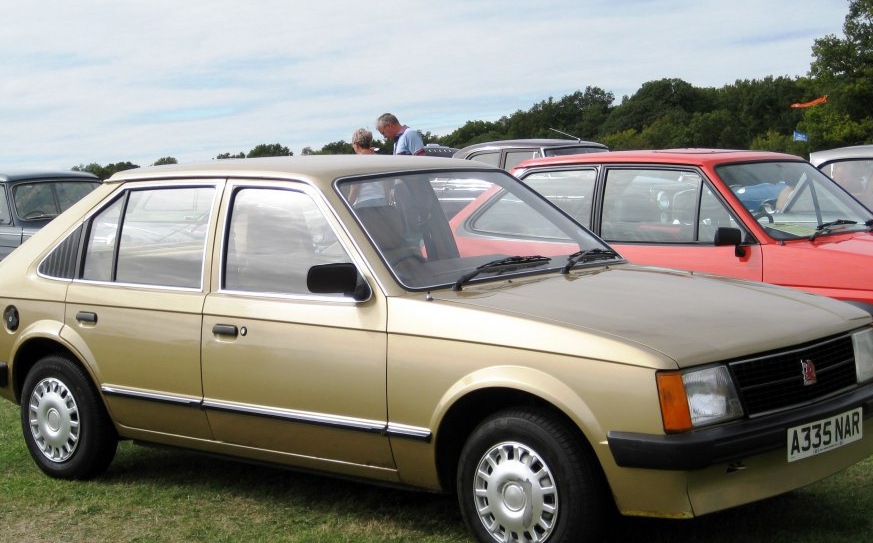
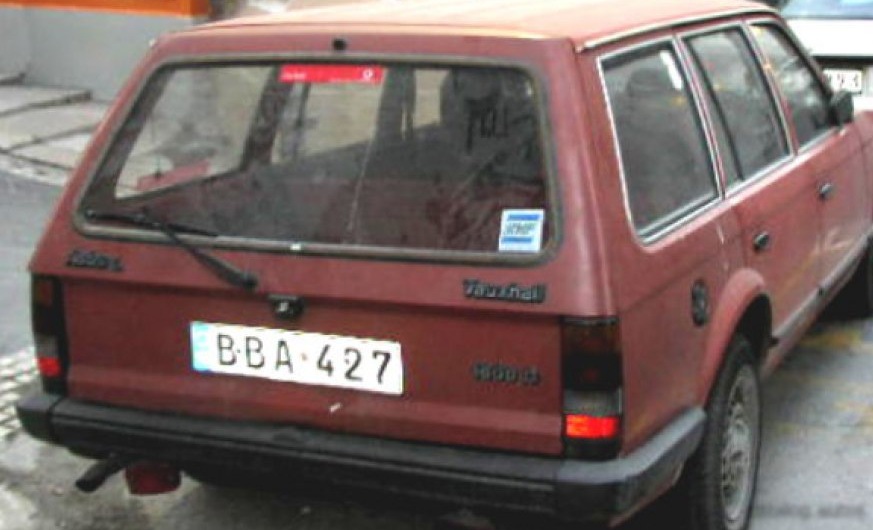
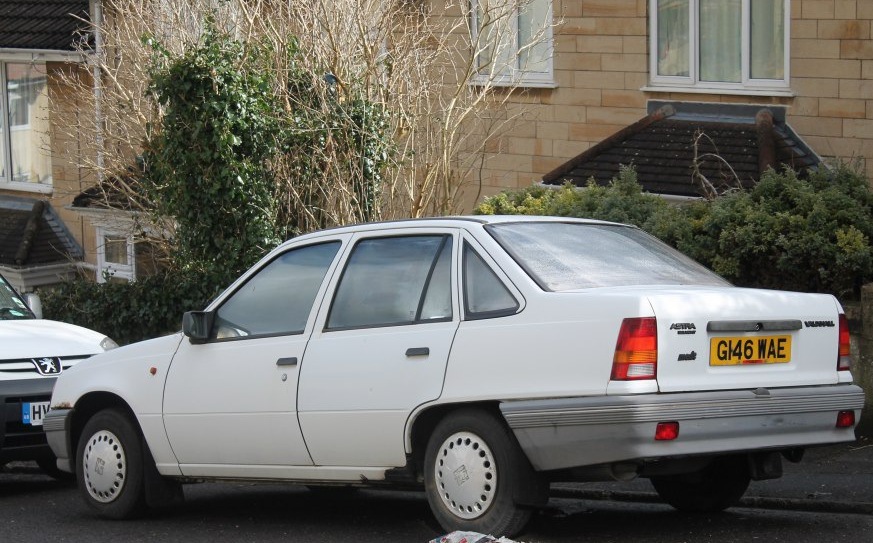
The Vauxhall Astra Mk VII Sports Tourer (facelift 2019) 1.5 Turbo D (122 hp) represents a significant iteration within the Astra range, specifically the station wagon (estate) body style. Introduced as part of the facelift in 2019 and continuing through November 2021, this variant aimed to provide a balance of fuel efficiency, practicality, and reasonable performance for the European market. It falls within the ‘J’ platform generation (Astra Mk VII), known for its focus on weight reduction and improved dynamics compared to its predecessor. This particular engine and trim level occupied a mid-range position in the Sports Tourer lineup, appealing to buyers prioritizing economy and space over outright performance.
Technical Specifications
| Brand | Vauxhall |
| Model | Astra |
| Generation | Astra Mk VII Sports Tourer (facelift 2019) |
| Type (Engine) | 1.5 Turbo D (122 Hp) |
| Start of production | 2019 |
| End of production | November, 2021 |
| Powertrain Architecture | Internal Combustion engine |
| Body type | Station wagon (estate) |
| Seats | 5 |
| Doors | 5 |
| Combined fuel consumption (WLTP) | 4.4-4.7 l/100 km (53.5 – 50 US mpg, 64.2 – 60.1 UK mpg, 22.7 – 21.3 km/l) |
| CO2 emissions (NEDC, WLTP equivalent) | 92 g/km |
| Fuel Type | Diesel |
| Maximum speed | 209 km/h (129.87 mph) |
| Emission standard | Euro 6d |
| Power | 122 Hp @ 3500 rpm |
| Power per litre | 81.6 Hp/l |
| Torque | 300 Nm @ 1750-2500 rpm (221.27 lb.-ft. @ 1750-2500 rpm) |
| Engine layout | Front, Transverse |
| Engine Model/Code | F15DVH |
| Engine displacement | 1496 cm3 (91.29 cu. in.) |
| Number of cylinders | 3 |
| Engine configuration | Inline |
| Number of valves per cylinder | 4 |
| Fuel injection system | Diesel Commonrail |
| Engine aspiration | Turbocharger, Intercooler |
| Valvetrain | DOHC |
| Engine oil capacity | 4.25 l (4.49 US qt | 3.74 UK qt) |
| Coolant | 7 l (7.4 US qt | 6.16 UK qt) |
| Trunk (boot) space – minimum | 540 l (19.07 cu. ft.) |
| Trunk (boot) space – maximum | 1630 l (57.56 cu. ft.) |
| Fuel tank capacity | 48 l (12.68 US gal | 10.56 UK gal) |
| Length | 4702 mm (185.12 in.) |
| Width | 1809 mm (71.22 in.) |
| Width including mirrors | 2042 mm (80.39 in.) |
| Height | 1510 mm (59.45 in.) |
| Wheelbase | 2662 mm (104.8 in.) |
| Front overhang | 960 mm (37.8 in.) |
| Rear overhang | 1080 mm (42.52 in.) |
| Drag coefficient (Cd) | 0.25 |
| Minimum turning circle (turning diameter) | 11.05 m (36.25 ft.) |
| Drivetrain Architecture | The Internal combustion engine (ICE) drives the front wheels of the vehicle. |
| Drive wheel | Front wheel drive |
| Number of gears and type of gearbox | 6 gears, manual transmission |
| Front suspension | Independent type McPherson |
| Rear suspension | Semi-independent, coil spring |
| Front brakes | Ventilated discs, 276 mm |
| Rear brakes | Disc, 264 mm |
| Assisting systems | ABS (Anti-lock braking system) |
| Steering type | Steering rack and pinion |
| Power steering | Electric Steering |
| Tires size | 205/55 R16; 225/45 R17 |
| Wheel rims size | 16; 17 |
INTRODUCTION
The Vauxhall Astra Mk VII Sports Tourer 1.5 Turbo D (122 hp) was introduced as part of the 2019 facelift, building upon the foundation of the Mk VII Astra launched in 2015. The facelift brought styling updates, revised technology, and powertrain refinements. This specific variant, powered by a 1.5-liter turbocharged diesel engine, was designed to appeal to buyers seeking a practical and economical estate car. It slotted into the Sports Tourer range as a mainstream offering, positioned below the more powerful diesel options and above the entry-level petrol engines. The Sports Tourer body style itself was crucial to the Astra’s success in Europe, offering a compelling alternative to traditional hatchbacks for families and those requiring increased cargo capacity.
Powertrain & Engine Architecture
At the heart of this Astra variant lies the F15DVH engine, a 1.5-liter inline-three cylinder diesel engine. This engine is part of Vauxhall/Opel’s ‘Small Diesel’ family, known for its compact design and efficiency. The engine utilizes a turbocharger with an intercooler to boost power output, achieving 122 horsepower at 3500 rpm and a respectable 300 Nm (221 lb-ft) of torque between 1750 and 2500 rpm. The engine employs a common-rail direct injection system, delivering fuel directly into the combustion chamber at high pressure for optimized combustion. The valvetrain features a Double Overhead Camshaft (DOHC) configuration with four valves per cylinder, enhancing breathing and contributing to improved performance. The engine is paired with a six-speed manual transmission, chosen for its efficiency and driver engagement. While an automatic transmission was available on other Astra variants, it wasn’t offered with this specific 1.5-liter diesel engine.
Driving Characteristics
The 1.5 Turbo D (122 hp) Sports Tourer delivers a driving experience focused on usability and fuel economy rather than outright performance. Acceleration is adequate for everyday driving, but it won’t provide the briskness of the higher-powered diesel or petrol options. The engine’s torque peak, available from 1750 rpm, provides sufficient pulling power for overtaking and maintaining speed on motorways. The six-speed manual transmission is well-matched to the engine, offering precise shifts and allowing the driver to keep the engine within its optimal operating range. Compared to the 1.6-liter diesel variants, the 1.5-liter engine feels slightly less refined, with a more noticeable engine note. However, the fuel economy benefits are significant, making it an attractive option for high-mileage drivers. The suspension setup, tuned for comfort, provides a reasonably smooth ride, although it may exhibit some body roll during spirited cornering.
Equipment & Trim Levels
The 1.5 Turbo D (122 hp) Sports Tourer typically came equipped with a reasonable level of standard equipment. This included air conditioning, a touchscreen infotainment system with Bluetooth connectivity, alloy wheels (typically 16 or 17 inch), and a suite of safety features such as ABS, ESP (Electronic Stability Program), and multiple airbags. Higher trim levels, such as ‘Tech Line’ or ‘Elite’, added features like a larger touchscreen, navigation system, parking sensors, and upgraded interior trim. Interior upholstery was generally cloth, with options for leather upgrades on higher trims. Optional extras included a panoramic sunroof, adaptive cruise control, and a premium sound system.
Chassis & Braking
The Astra Sports Tourer utilizes a McPherson strut front suspension setup, providing a good balance of comfort and handling. The rear suspension employs a semi-independent torsion beam configuration, which is cost-effective and space-efficient. Braking duties are handled by ventilated discs at the front and solid discs at the rear. ABS (Anti-lock Braking System) is standard, ensuring safe and controlled braking in emergency situations. The steering is electrically assisted, providing a light and responsive feel. The chassis is designed to maximize interior space while maintaining a reasonable level of rigidity. Stabilizer bars are fitted to both the front and rear axles to reduce body roll during cornering.
Market Reception & Comparison
The Astra Sports Tourer 1.5 Turbo D (122 hp) was generally well-received by automotive critics as a practical and economical estate car. It was praised for its fuel efficiency, spacious interior, and comfortable ride. However, some reviewers noted that the engine lacked the refinement and performance of its larger counterparts. Compared to the 1.6-liter diesel variants, the 1.5-liter engine offered better fuel economy but slightly less power and refinement. Against competitors such as the Ford Focus Estate and Volkswagen Golf Estate, the Astra Sports Tourer offered a competitive package in terms of price, practicality, and fuel efficiency.
Legacy
The F15DVH engine has proven to be a relatively reliable unit, although, like all diesel engines, it requires regular maintenance, including oil changes and filter replacements. The particulate filter can be a potential source of issues if the vehicle is primarily used for short journeys. In the used car market, the Astra Sports Tourer 1.5 Turbo D (122 hp) represents a good value proposition for buyers seeking a practical and economical estate car. Its fuel efficiency and spacious interior make it well-suited for families and those who frequently travel long distances. While it may not be the most exciting car to drive, it offers a solid and dependable ownership experience.