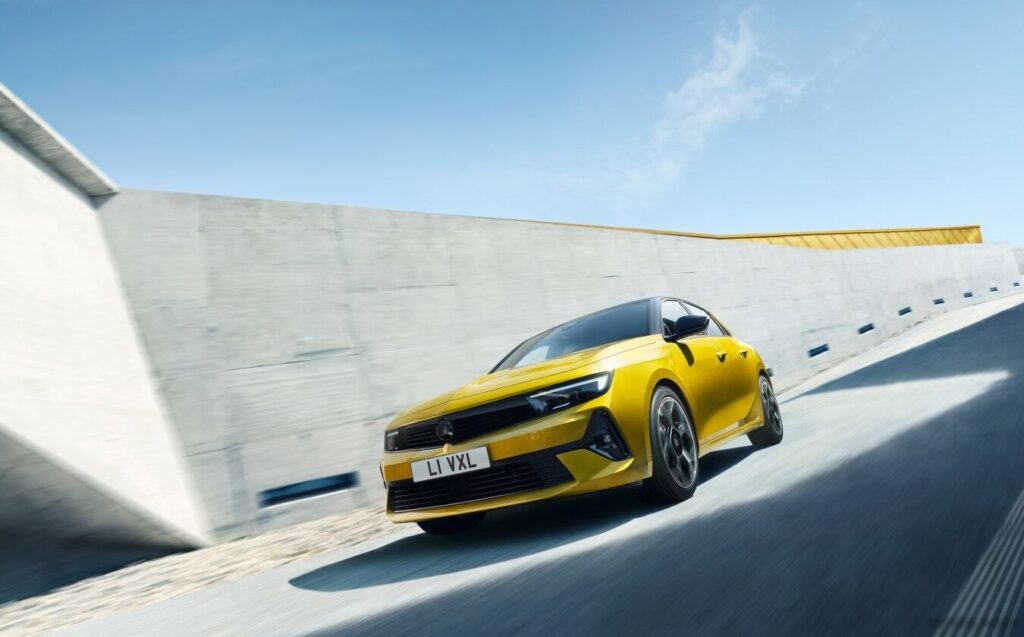
The Vauxhall Astra Mk VIII 1.2 Turbo (110 hp) represents an entry-level offering within the eighth generation of the Astra, launched in November 2021. Positioned as a fuel-efficient and accessible option, this variant utilizes a downsized turbocharged engine paired with a six-speed manual transmission. It’s built on the EMP2 platform, shared with other Stellantis vehicles like the Peugeot 308 and Opel Astra, marking a significant shift in the Astra’s engineering and design philosophy. This generation aimed to elevate the Astra’s appeal with a more modern interior, improved technology, and a broader range of powertrain options, catering to a wider spectrum of buyers in the European market.
Technical Specifications
| Brand | Vauxhall |
| Model | Astra |
| Generation | Astra Mk VIII |
| Type (Engine) | 1.2 Turbo (110 Hp) |
| Start of production | November, 2021 |
| Powertrain Architecture | Internal Combustion engine |
| Body type | Hatchback |
| Seats | 5 |
| Doors | 5 |
| Combined fuel consumption (WLTP) | 5.5-5.7 l/100 km (42.8 – 41.3 US mpg, 51.4 – 49.6 UK mpg, 18.2 – 17.5 km/l) |
| CO2 emissions (WLTP) | 123-125 g/km |
| Fuel Type | Petrol (Gasoline) |
| Acceleration 0 – 60 mph | 10.5 sec |
| Maximum speed | 200 km/h (124.27 mph) |
| Emission standard | Euro 6d |
| Power | 110 Hp @ 5500 rpm |
| Power per litre | 91.7 Hp/l |
| Torque | 205 Nm @ 1750 rpm (151.2 lb.-ft. @ 1750 rpm) |
| Engine layout | Front, Transverse |
| Engine Model/Code | F12XHL |
| Engine displacement | 1199 cm3 (73.17 cu. in.) |
| Number of cylinders | 3 |
| Engine configuration | Inline |
| Number of valves per cylinder | 4 |
| Fuel injection system | Direct injection |
| Engine aspiration | Turbocharger, Intercooler |
| Valvetrain | DOHC, VVT |
| Engine oil capacity | 3.5 l (3.7 US qt | 3.08 UK qt) |
| Max. weight | 1820 kg (4012.41 lbs.) |
| Trunk (boot) space – minimum | 367 l (12.96 cu. ft.) |
| Trunk (boot) space – maximum | 1182 l (41.74 cu. ft.) |
| Fuel tank capacity | 52 l (13.74 US gal | 11.44 UK gal) |
| Permitted trailer load with brakes (12%) | 1250 kg (2755.78 lbs.) |
| Permitted trailer load without brakes | 660 kg (1455.05 lbs.) |
| Length | 4374 mm (172.2 in.) |
| Width | 1860 mm (73.23 in.) |
| Width including mirrors | 2062 mm (81.18 in.) |
| Height | 1441 mm (56.73 in.) |
| Wheelbase | 2675 mm (105.31 in.) |
| Front overhang | 933 mm (36.73 in.) |
| Rear overhang | 869 mm (34.21 in.) |
| Minimum turning circle (turning diameter) | 10.51 m (34.48 ft.) |
| Drivetrain Architecture | The Internal combustion engine (ICE) drives the front wheels of the vehicle. |
| Drive wheel | Front wheel drive |
| Number of gears and type of gearbox | 6 gears, manual transmission |
| Front brakes | Ventilated discs |
| Rear brakes | Disc |
| Assisting systems | ABS (Anti-lock braking system) |
| Steering type | Steering rack and pinion |
| Power steering | Electric Steering |
| Tires size | 205/55 R16; 225/45 R17; 225/40 R18 |
| Wheel rims size | 16; 17; 18 |
Powertrain & Engine Architecture
The heart of the Astra Mk VIII 1.2 Turbo is the F12XHL engine, a 1.2-liter, three-cylinder turbocharged gasoline engine. This engine is part of Stellantis’s “PureTech” family, known for its compact size and efficiency. It utilizes direct fuel injection, delivering fuel directly into the combustion chamber for improved combustion efficiency and reduced emissions. The engine also features a double overhead camshaft (DOHC) valvetrain with variable valve timing (VVT) on both intake and exhaust valves, optimizing engine performance across a wider RPM range. The turbocharger, coupled with an intercooler, provides a boost in power and torque, compensating for the smaller displacement. The six-speed manual transmission is chosen for its affordability and driver engagement, offering precise gear changes and contributing to the car’s overall fuel economy.
Driving Characteristics
The 110 hp 1.2 Turbo engine delivers adequate performance for everyday driving. Acceleration from 0 to 60 mph takes approximately 10.5 seconds, and the top speed is rated at 124.27 mph. While not a performance-oriented variant, the engine provides sufficient torque (205 Nm or 151.2 lb-ft) at low RPMs, making it responsive in urban environments. Compared to higher-output Astra variants, such as those with larger engines or more powerful turbocharging, this version feels less eager during overtaking maneuvers or when climbing hills. The six-speed manual transmission is well-matched to the engine’s characteristics, offering a good balance between fuel efficiency and drivability. The gear ratios are tuned to maximize fuel economy, but can sometimes require frequent shifting to maintain momentum.
Equipment & Trim Levels
The 1.2 Turbo (110 hp) typically served as the entry-level trim for the Astra Mk VIII. Standard equipment generally included air conditioning, a touchscreen infotainment system with smartphone integration (Apple CarPlay and Android Auto), LED headlights, and a suite of safety features such as automatic emergency braking and lane departure warning. Interior upholstery was typically cloth, and the dashboard featured a functional, if somewhat minimalist, design. Optional extras included upgraded infotainment systems with larger screens, navigation, adaptive cruise control, heated seats, and a panoramic sunroof. Higher trim levels added features like leather upholstery, more advanced driver-assistance systems, and premium audio systems.
Chassis & Braking
The Astra Mk VIII utilizes a MacPherson strut front suspension and a torsion beam rear suspension. This setup provides a good balance between ride comfort and handling. The torsion beam rear suspension is a cost-effective solution commonly found in vehicles of this class. Braking duties are handled by ventilated discs at the front and solid discs at the rear. Anti-lock braking system (ABS) is standard, enhancing braking performance and stability. The steering system is an electric power steering (EPS) setup, providing light and precise steering feel. The chassis is designed to be relatively lightweight, contributing to the car’s overall fuel efficiency and agility.
Market Reception & Comparison
The Astra Mk VIII 1.2 Turbo (110 hp) was generally well-received by automotive critics as a practical and economical choice. Its fuel economy, rated at 5.5-5.7 l/100 km (42.8 – 41.3 US mpg), was a key selling point. Compared to other trims in the Astra lineup, such as the 1.5 Diesel or the more powerful 1.6 Turbo, this variant offered a lower purchase price but sacrificed some performance. It competed directly with other compact hatchbacks like the Volkswagen Golf, Ford Focus, and Peugeot 308, offering a compelling combination of value, efficiency, and practicality. Some reviewers noted that the three-cylinder engine could be somewhat noisy and lacked the refinement of larger engines.
Legacy
The F12XHL engine has proven to be a relatively reliable powertrain, although some owners have reported issues with the turbocharger and fuel injectors. Regular maintenance, including oil changes and timely replacement of wear items, is crucial for ensuring long-term reliability. On the used car market, the Astra Mk VIII 1.2 Turbo (110 hp) represents an affordable and fuel-efficient option for buyers seeking a practical compact hatchback. Its relatively low running costs and decent level of equipment make it an attractive choice for those prioritizing value and economy over outright performance. The EMP2 platform’s modularity has also contributed to the Astra’s continued relevance, allowing for future updates and improvements.