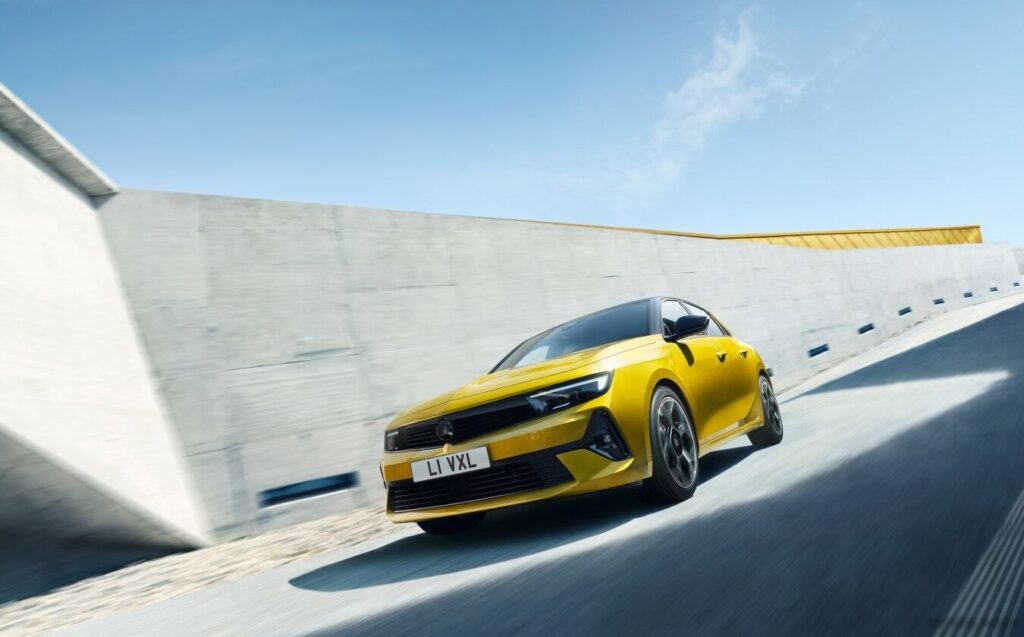
The Vauxhall Astra Mk VIII 1.5 Turbo D (130 hp) represents a significant entry point into the eighth generation of Vauxhall’s popular compact hatchback. Introduced in November 2021, this variant is positioned as a fuel-efficient and practical option within the Mk VIII Astra lineup, which is based on the Stellantis EMP2 platform shared with Peugeot and Citroën models. It caters to buyers prioritizing economy and everyday usability over outright performance. This model marked a shift for the Astra, incorporating a more modern design language and a wider range of powertrain options, including plug-in hybrid variants, while maintaining the Astra’s reputation for value and practicality in the European market.
Technical Specifications
| Brand | Vauxhall |
| Model | Astra |
| Generation | Astra Mk VIII |
| Type (Engine) | 1.5 Turbo D (130 Hp) |
| Start of production | November, 2021 |
| Powertrain Architecture | Internal Combustion engine |
| Body type | Hatchback |
| Seats | 5 |
| Doors | 5 |
| Combined fuel consumption (WLTP) | 4.4-4.5 l/100 km (53.5 – 52.3 US mpg, 64.2 – 62.8 UK mpg, 22.7 – 22.2 km/l) |
| CO2 emissions (WLTP) | 115-119 g/km |
| Fuel Type | Diesel |
| Acceleration 0 – 60 mph | 10.6 sec |
| Maximum speed | 209 km/h (129.87 mph) |
| Emission standard | Euro 6d |
| Power | 130 Hp @ 3750 rpm |
| Power per litre | 86.8 Hp/l |
| Torque | 300 Nm @ 1750 rpm (221.27 lb.-ft. @ 1750 rpm) |
| Engine layout | Front, Transverse |
| Engine Model/Code | F15DTH |
| Engine displacement | 1498 cm3 (91.41 cu. in.) |
| Number of cylinders | 4 |
| Engine configuration | Inline |
| Number of valves per cylinder | 4 |
| Fuel injection system | Diesel Commonrail |
| Engine aspiration | Turbocharger, Intercooler |
| Valvetrain | DOHC |
| Engine oil capacity | 3.8 l (4.02 US qt | 3.34 UK qt) |
| Max. weight | 1920 kg (4232.88 lbs.) |
| Trunk (boot) space – minimum | 367 l (12.96 cu. ft.) |
| Trunk (boot) space – maximum | 1182 l (41.74 cu. ft.) |
| Fuel tank capacity | 52 l (13.74 US gal | 11.44 UK gal) |
| Permitted trailer load with brakes (12%) | 1550 kg (3417.17 lbs.) |
| Permitted trailer load without brakes | 710 kg (1565.28 lbs.) |
| Length | 4374 mm (172.2 in.) |
| Width | 1860 mm (73.23 in.) |
| Width including mirrors | 2062 mm (81.18 in.) |
| Height | 1441 mm (56.73 in.) |
| Wheelbase | 2675 mm (105.31 in.) |
| Front overhang | 933 mm (36.73 in.) |
| Rear overhang | 869 mm (34.21 in.) |
| Minimum turning circle (turning diameter) | 10.51 m (34.48 ft.) |
| Drivetrain Architecture | The Internal combustion engine (ICE) drives the front wheels of the vehicle. |
| Drive wheel | Front wheel drive |
| Number of gears and type of gearbox | 6 gears, manual transmission |
| Front brakes | Ventilated discs |
| Rear brakes | Disc |
| Assisting systems | ABS (Anti-lock braking system) |
| Steering type | Steering rack and pinion |
| Power steering | Electric Steering |
| Tires size | 205/55 R16; 225/45 R17; 225/40 R18 |
| Wheel rims size | 16; 17; 18 |
Powertrain & Engine Architecture
The heart of the Astra Mk VIII 1.5 Turbo D is the F15DTH engine, a 1.5-liter inline-four cylinder diesel engine. This engine utilizes a common-rail direct fuel injection system, delivering fuel at extremely high pressure for optimized combustion. A turbocharger with an intercooler is employed to boost power and torque, mitigating the typical lag associated with smaller displacement engines. The engine features a Double Overhead Camshaft (DOHC) valvetrain, contributing to efficient valve control and improved engine breathing. The 130 hp output is achieved at 3750 rpm, while the peak torque of 300 Nm (221 lb-ft) is available from as low as 1750 rpm, providing strong low-end and mid-range acceleration. This engine is paired with a six-speed manual transmission, chosen for its efficiency and driver engagement. The engine also incorporates a Start & Stop system and a particulate filter to meet stringent Euro 6d emission standards.
Driving Characteristics
The 1.5 Turbo D with the manual transmission delivers a practical and economical driving experience. While not designed for outright speed, the 10.6-second 0-60 mph acceleration is adequate for most everyday driving situations. The engine’s strong low-end torque makes it feel responsive in urban environments and provides sufficient power for overtaking maneuvers on the highway. The six-speed gearbox is well-matched to the engine’s characteristics, offering smooth shifts and allowing the driver to keep the engine in its optimal power band. Compared to higher-output Astra variants, such as those with petrol engines, the 1.5 Turbo D prioritizes fuel efficiency over performance. The gear ratios are tuned for economy, meaning the engine may feel slightly strained at higher speeds or when carrying a full load. Compared to automatic transmission options available on other Astra trims, the manual gearbox provides a more engaging driving experience and typically results in slightly better fuel economy.
Equipment & Trim Levels
The 1.5 Turbo D (130 hp) typically served as a mid-range trim level in the Astra Mk VIII lineup. Standard equipment generally included air conditioning, a touchscreen infotainment system with Apple CarPlay and Android Auto compatibility, alloy wheels, and a suite of safety features such as lane departure warning and automatic emergency braking. Interior upholstery was typically cloth, with a functional and durable design. Optional extras included a larger touchscreen display, navigation system, heated seats, and a panoramic sunroof. Higher trim levels offered more luxurious interior appointments, such as leather upholstery and upgraded sound systems.
Chassis & Braking
The Astra Mk VIII utilizes a MacPherson strut front suspension and a torsion beam rear suspension. This setup provides a good balance between ride comfort and handling. The chassis is relatively lightweight, contributing to the car’s agility. The front brakes are ventilated discs, providing ample stopping power, while the rear brakes are solid discs. An Anti-lock Braking System (ABS) is standard, enhancing safety during emergency braking situations. Stabilizer bars are fitted to both the front and rear axles to reduce body roll during cornering.
Market Reception & Comparison
The Astra Mk VIII 1.5 Turbo D was generally well-received by automotive critics for its fuel efficiency and practicality. It was praised for its comfortable ride and well-equipped interior. However, some reviewers noted that the engine could feel slightly underpowered, particularly when fully loaded or driving on steep inclines. Compared to the petrol-powered Astra variants, the 1.5 Turbo D offered significantly better fuel economy, making it an attractive option for drivers covering long distances. In terms of reliability, the F15DTH engine has proven to be generally robust, although regular maintenance is essential to ensure long-term durability.
Legacy
The Vauxhall Astra Mk VIII 1.5 Turbo D (130 hp) represents a solid and dependable choice in the used car market. Its fuel efficiency, practicality, and relatively low running costs make it an appealing option for budget-conscious buyers. The F15DTH engine, while not the most exciting powertrain, is known for its reliability and longevity when properly maintained. As with any diesel engine, it’s important to check the service history and ensure that the diesel particulate filter (DPF) has been properly maintained. The Mk VIII Astra, in general, has established itself as a competitive offering in the compact hatchback segment, and the 1.5 Turbo D variant continues to provide a practical and economical transportation solution.