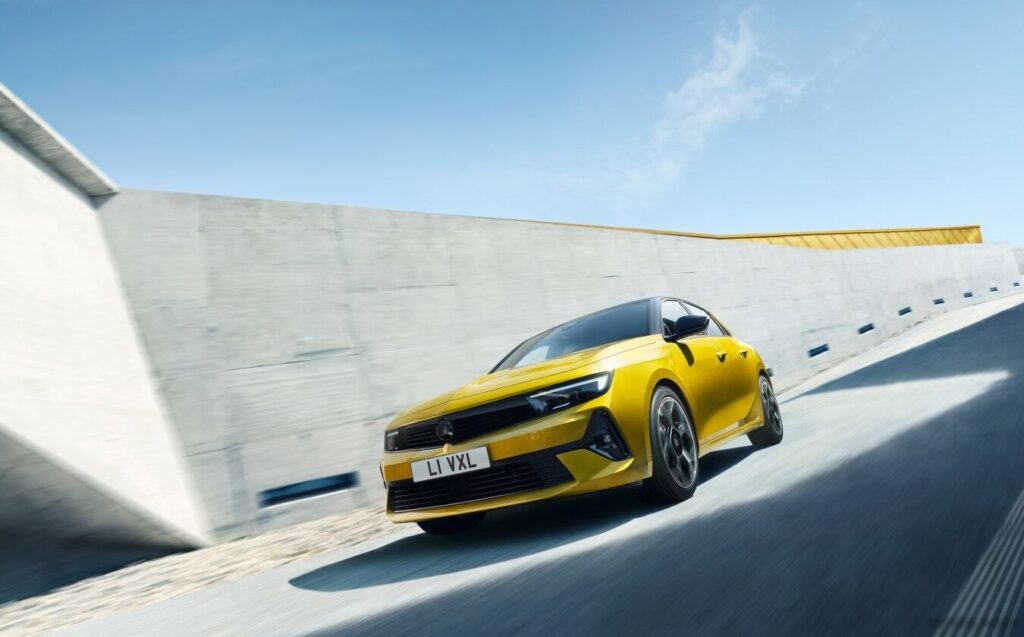
The Vauxhall Astra Mk VIII 54 kWh Electric, launched in 2023, represents a significant step in the Astra lineage, transitioning the popular British hatchback into the realm of fully electric vehicles. This variant, producing 156 horsepower, is positioned as a core offering within the Mk VIII range, aiming to provide a balance of practicality, range, and affordability for the burgeoning EV market. It builds upon the foundation of the 1HX0/A3 platform, shared with other Stellantis and Peugeot-Citroën vehicles, but distinguishes itself with a dedicated electric powertrain and associated technologies. The Astra Mk VIII marked a departure from previous generations, adopting a more modern and streamlined design language, and the electric variant further emphasizes this evolution.
Technical Specifications
| Brand | Vauxhall |
| Model | Astra |
| Generation | Astra Mk VIII |
| Type (Engine) | 54 kWh (156 Hp) Electric |
| Start of production | 2023 |
| Powertrain Architecture | BEV (Electric Vehicle) |
| Body type | Hatchback |
| Seats | 5 |
| Doors | 5 |
| Fuel Type | Electricity |
| Acceleration 0 – 100 km/h | 9.2 sec |
| Acceleration 0 – 62 mph | 9.2 sec |
| Acceleration 0 – 60 mph | 8.7 sec |
| Maximum speed | 170 km/h (105.63 mph) |
| Gross battery capacity | 54 kWh |
| Net (usable) battery capacity | 51 kWh |
| Battery technology | Lithium-ion (Li-Ion) |
| Battery weight | 339 kg (747.37 lbs) |
| Battery location | Below the floor |
| All-electric range (WLTP) | 412-417 km (256 – 259.11 mi) |
| Average Energy consumption (WLTP) | 14.8 kWh/100 km (23.82 kWh/100 mi) |
| MPGe | 141 |
| km/kWh | 6.8 |
| mi/kWh | 4.2 |
| Electric motor power | 156 Hp |
| Electric motor Torque | 270 Nm (199.14 lb.-ft.) |
| Electric motor model/code | ZK02 |
| Electric motor location | Front axle, Transverse |
| Electric motor type | Synchronous |
| System power | 156 Hp |
| System torque | 270 Nm (199.14 lb.-ft.) |
| Max. weight | 2100 kg (4629.71 lbs) |
| Trunk (boot) space – minimum | 352 l (12.43 cu. ft.) |
| Trunk (boot) space – maximum | 1268 l (44.78 cu. ft.) |
| Length | 4374 mm (172.2 in) |
| Width | 1860 mm (73.23 in) |
| Width including mirrors | 2062 mm (81.18 in) |
| Height | 1441 mm (56.73 in) |
| Wheelbase | 2675 mm (105.31 in) |
| Front track | 1551-1559 mm (61.06 – 61.38 in) |
| Rear (Back) track | 1546-1554 mm (60.87 – 61.18 in) |
| Front overhang | 906 mm (35.67 in) |
| Rear overhang | 793 mm (31.22 in) |
| Minimum turning circle | 10.51 m (34.48 ft) |
| Drivetrain Architecture | One electric motor drives the front wheels. |
| Drive wheel | Front wheel drive |
| Number of gears | 1 |
| Gearbox type | Automatic transmission |
| Front suspension | Independent, type McPherson with coil spring and anti-roll bar |
| Rear suspension | Coil spring, Torsion |
| Assisting systems | ABS (Anti-lock braking system) |
| Steering type | Steering rack and pinion |
| Power steering | Electric |
| Tires size | 215/45 R18 |
| Wheel rims size | 7.5J x 18 |
Powertrain & Engine Architecture
The Astra Mk VIII 54 kWh Electric utilizes a single synchronous electric motor, designated ZK02, mounted transversely on the front axle. This motor delivers 156 horsepower and 270 Nm (199.14 lb.-ft.) of torque. The powertrain is a fully Battery Electric Vehicle (BEV) system, meaning it relies entirely on electricity stored in a 54 kWh (gross) / 51 kWh (net) lithium-ion battery pack. This battery pack is positioned under the vehicle floor, contributing to a lower center of gravity and improved handling. The single-speed automatic transmission is inherent to electric vehicle design, providing seamless acceleration without the need for traditional gear changes. The vehicle employs regenerative braking, capturing kinetic energy during deceleration to recharge the battery, enhancing efficiency.
Driving Characteristics
The 54 kWh Astra Electric offers brisk acceleration, achieving 0-60 mph in approximately 8.7 seconds. While not a performance-oriented variant, the instant torque delivery characteristic of electric motors provides a responsive driving experience. Compared to potential future higher-output versions, this model prioritizes efficiency and range over outright speed. The single-speed transmission ensures smooth and linear power delivery. The lower center of gravity, thanks to the battery placement, contributes to stable handling, although the added weight of the battery pack (339 kg / 747.37 lbs) is noticeable compared to combustion engine Astra models. The driving experience is generally quiet and refined, typical of electric vehicles.
Equipment & Trim Levels
The 54 kWh Electric trim typically includes standard features such as a touchscreen infotainment system with Apple CarPlay and Android Auto compatibility, digital instrument cluster, automatic climate control, and a suite of safety features including lane keeping assist and automatic emergency braking. Interior upholstery is generally cloth, with options for leather upgrades. Available optional extras include a panoramic sunroof, adaptive cruise control, and premium audio systems. Trim levels beyond the base model often add features like heated seats, parking sensors, and upgraded alloy wheels.
Chassis & Braking
The Astra Mk VIII Electric utilizes an independent McPherson strut suspension setup at the front, providing a comfortable ride and responsive handling. The rear suspension employs a torsion beam configuration, a cost-effective solution that balances ride quality and space efficiency. The braking system features disc brakes at the front and drum brakes at the rear, a common configuration for this weight class. Electric power steering provides light and precise steering feel. Standard tires are 215/45 R18, mounted on 7.5J x 18 alloy wheels.
Market Reception & Comparison
The Astra Mk VIII Electric has been generally well-received by automotive critics, praised for its competitive range, comfortable ride, and modern interior. Compared to other trims in the Astra lineup, the Electric variant offers a significantly different driving experience, prioritizing efficiency and environmental friendliness over traditional performance metrics. Fuel economy, expressed as electricity consumption, is rated at 14.8 kWh/100 km (23.82 kWh/100 mi), translating to approximately 141 MPGe. Reliability data is still emerging, but early reports suggest a solid build quality and dependable powertrain.
Legacy
The Vauxhall Astra Mk VIII 54 kWh Electric represents a pivotal moment for the Astra model, marking its entry into the rapidly expanding electric vehicle market. The longevity of the powertrain is expected to be good, with lithium-ion battery technology becoming increasingly mature. On the used car market, these early electric Astras are likely to hold their value reasonably well, particularly as demand for EVs continues to grow. The success of this variant will play a crucial role in shaping the future direction of the Astra lineup and Vauxhall’s overall electrification strategy.