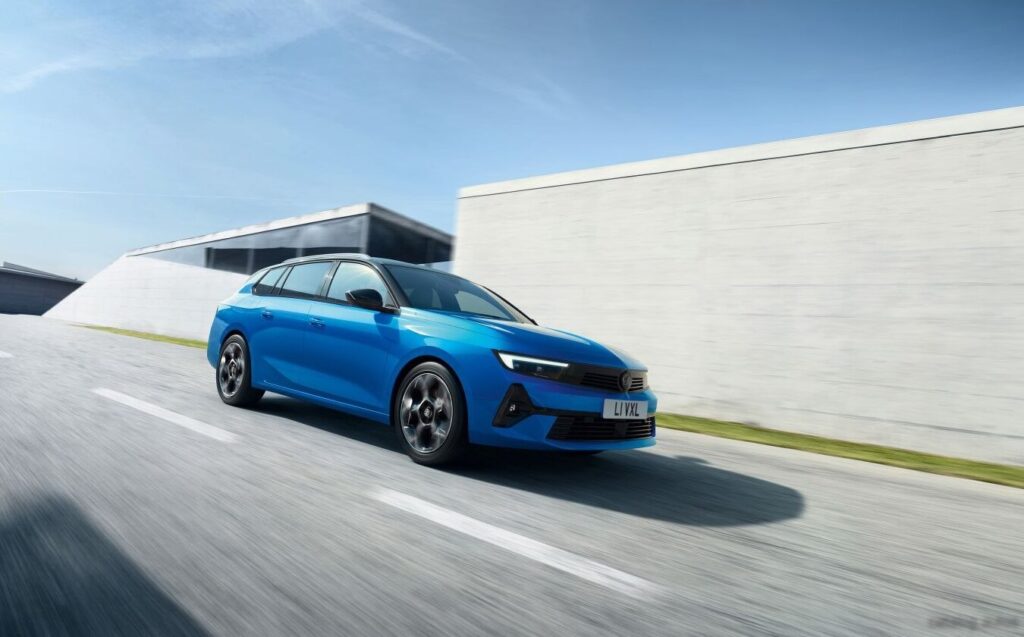
The Vauxhall Astra Mk VIII Sports Tourer 1.2 Turbo (130 hp) is a front-wheel-drive, five-door station wagon that formed part of the eighth generation of the Astra, launched in February 2022. Positioned as a mainstream offering within the Sports Tourer (estate) body style, this variant aimed to balance fuel efficiency with reasonable performance for everyday driving. It slots into the lineup as an entry to mid-range option, offering a more affordable alternative to the higher-powered engines and trim levels available. The Mk VIII Astra represents a significant redesign for the model, built upon the EMP2 platform shared with other Stellantis vehicles like the Peugeot 308 and Opel Astra.
Technical Specifications
| Brand | Vauxhall |
| Model | Astra |
| Generation | Astra Mk VIII Sports Tourer |
| Type (Engine) | 1.2 Turbo (130 Hp) |
| Start of production | February, 2022 |
| Powertrain Architecture | Internal Combustion engine |
| Body type | Station wagon (estate) |
| Seats | 5 |
| Doors | 5 |
| Combined fuel consumption (WLTP) | 5.6-5.7 l/100 km (42 – 41.3 US mpg, 50.4 – 49.6 UK mpg, 17.9 – 17.5 km/l) |
| CO2 emissions (WLTP) | 126-129 g/km |
| Fuel Type | Petrol (Gasoline) |
| Acceleration 0 – 60 mph | 10 sec |
| Maximum speed | 209 km/h (129.87 mph) |
| Emission standard | Euro 6d |
| Power | 130 Hp @ 5500 rpm |
| Power per litre | 108.4 Hp/l |
| Torque | 230 Nm @ 1750 rpm (169.64 lb.-ft. @ 1750 rpm) |
| Engine layout | Front, Transverse |
| Engine Model/Code | F12XHT |
| Engine displacement | 1199 cm3 (73.17 cu. in.) |
| Number of cylinders | 3 |
| Engine configuration | Inline |
| Number of valves per cylinder | 4 |
| Fuel injection system | Direct injection |
| Engine aspiration | Turbocharger, Intercooler |
| Valvetrain | DOHC, VVT |
| Engine oil capacity | 3.5 l (3.7 US qt | 3.08 UK qt) |
| Max. weight | 1880 kg (4144.69 lbs.) |
| Trunk (boot) space – minimum | 597 l (21.08 cu. ft.) |
| Trunk (boot) space – maximum | 1634 l (57.7 cu. ft.) |
| Fuel tank capacity | 52 l (13.74 US gal | 11.44 UK gal) |
| Permitted trailer load with brakes (12%) | 1200 kg (2645.55 lbs.) |
| Permitted trailer load without brakes | 690 kg (1521.19 lbs.) |
| Length | 4642 mm (182.76 in.) |
| Width | 1860 mm (73.23 in.) |
| Width including mirrors | 2062 mm (81.18 in.) |
| Height | 1443 mm (56.81 in.) |
| Wheelbase | 2732 mm (107.56 in.) |
| Front overhang | 906 mm (35.67 in.) |
| Rear overhang | 1004 mm (39.53 in.) |
| Minimum turning circle (turning diameter) | 10.7 m (35.1 ft.) |
| Drivetrain Architecture | The Internal combustion engine (ICE) drives the front wheels of the vehicle. |
| Drive wheel | Front wheel drive |
| Number of gears and type of gearbox | 6 gears, manual transmission |
| Front brakes | Ventilated discs |
| Rear brakes | Disc |
Powertrain & Engine Architecture
The heart of this Astra variant is the F12XHT, a 1.2-liter turbocharged three-cylinder gasoline engine. This engine is part of Stellantis’s “PureTech” family, known for its compact size and efficiency. It utilizes direct fuel injection, delivering fuel directly into the combustion chamber for improved combustion and reduced emissions. The engine also features a double overhead camshaft (DOHC) valvetrain with variable valve timing (VVT) on both intake and exhaust sides, optimizing performance across the rev range. The turbocharger, coupled with an intercooler, provides a boost in power and torque, mitigating the typical power deficit associated with smaller displacement engines. The engine is paired with a six-speed manual transmission, delivering power to the front wheels. This transmission choice was common for the European market, offering drivers a more engaging driving experience and contributing to better fuel economy compared to an automatic option.
Driving Characteristics
The 1.2 Turbo (130 hp) Sports Tourer delivers adequate performance for everyday driving. Acceleration from 0 to 60 mph takes around 10 seconds, and the top speed is rated at 129.87 mph. While not a particularly sporty setup, the engine provides sufficient torque (169.64 lb.-ft.) at low revs, making it suitable for overtaking and navigating urban environments. Compared to higher-output Astra variants, such as those equipped with larger engines, this version feels less responsive, particularly at higher speeds. The six-speed manual transmission allows for precise gear selection, but the gear ratios are tuned for fuel efficiency rather than outright performance. The driving experience is generally comfortable, with the Sports Tourer’s suspension providing a good balance between ride quality and handling.
Equipment & Trim Levels
The 1.2 Turbo (130 hp) Astra Sports Tourer typically came equipped with a reasonable level of standard features. These included air conditioning, a touchscreen infotainment system with smartphone integration (Apple CarPlay and Android Auto), and a suite of safety features such as automatic emergency braking, lane departure warning, and traffic sign recognition. Interior upholstery was typically cloth, with options for upgraded materials available. Depending on the specific trim level (e.g., Design, GS Line), additional features such as alloy wheels, parking sensors, and a rear-view camera could be included. Optional extras often included a panoramic sunroof, heated seats, and a more advanced infotainment system with navigation.
Chassis & Braking
The Astra Mk VIII Sports Tourer utilizes a MacPherson strut front suspension and a torsion beam rear suspension. This setup provides a good compromise between comfort and handling. The braking system consists of ventilated discs on the front wheels and solid discs on the rear. Anti-lock braking system (ABS) is standard, along with electronic brakeforce distribution (EBD). The suspension tuning is geared towards providing a comfortable ride, but the chassis is capable of handling moderate cornering loads. Stabilizer bars are fitted to both the front and rear axles to reduce body roll.
Market Reception & Comparison
The 1.2 Turbo (130 hp) Astra Sports Tourer was generally well-received by automotive critics as a practical and efficient family car. Its fuel economy of 42-41.3 US mpg was a significant selling point, particularly in Europe where fuel prices are high. Compared to the more powerful Astra variants, this version offered a more affordable entry point into the model range. However, some critics noted that the engine could feel strained when fully loaded or driving uphill. In terms of reliability, the PureTech engine family has had some reported issues with timing chain wear, although these concerns were more prevalent in earlier iterations of the engine. Overall, the 1.2 Turbo offered a good balance of value, efficiency, and practicality.
Legacy
The Vauxhall Astra Mk VIII Sports Tourer 1.2 Turbo (130 hp) represents a solid offering in the compact estate segment. While not the most exciting version of the Astra, it provided a practical and economical choice for families and individuals seeking a versatile vehicle. The long-term reliability of the F12XHT engine remains a topic of discussion, with preventative maintenance being key to avoiding potential timing chain issues. On the used car market, these models represent a relatively affordable option, offering a good level of equipment and a comfortable driving experience. As Stellantis continues to electrify its lineup, the 1.2 Turbo Astra will likely be remembered as a transitional model, bridging the gap between traditional internal combustion engines and the future of electric mobility.