
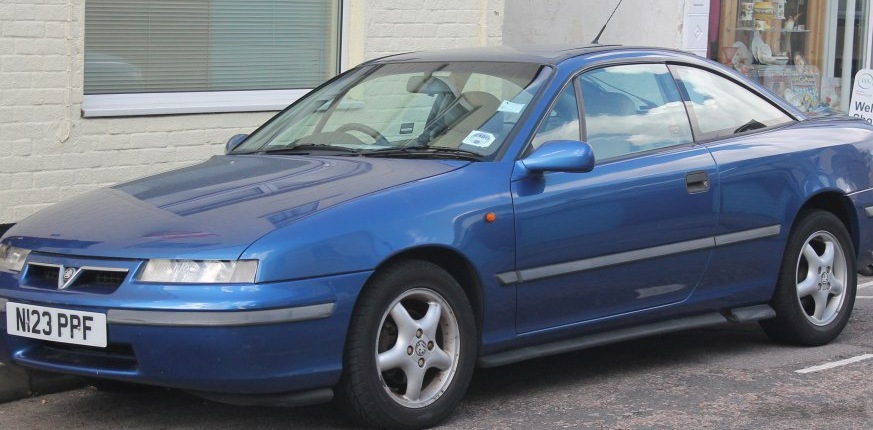
The Vauxhall Calibra 2.0 16V 4×4, produced between 1994 and 1997, represented the performance pinnacle of the Calibra coupe range. Positioned as the flagship model, it combined a potent 2.0-liter 16-valve engine with a permanent all-wheel-drive system. The Calibra itself was a distinctive coupe, known for its sleek, aerodynamic design – boasting a drag coefficient of just 0.29 – and was marketed as a stylish and sporty alternative to more conventional family cars. It was built on the GM410 platform, shared with the Vectra and Cavalier, but distinguished itself with its unique fastback body style and focus on driving experience.
Technical Specifications
| Brand | Vauxhall |
| Model | Calibra |
| Generation | Calibra |
| Type (Engine) | 2.0 16V (136 Hp) 4×4 |
| Start of production | 1994 |
| End of production | 1997 |
| Powertrain Architecture | Internal Combustion engine |
| Body type | Coupe |
| Seats | 4 |
| Doors | 2 |
| Fuel consumption (urban) | 12.5 l/100 km (18.8 US mpg, 22.6 UK mpg, 8 km/l) |
| Fuel consumption (extra urban) | 6.7 l/100 km (35.1 US mpg, 42.2 UK mpg, 14.9 km/l) |
| Fuel consumption (combined) | 8.8 l/100 km (26.7 US mpg, 32.1 UK mpg, 11.4 km/l) |
| CO2 emissions | 208 g/km |
| Fuel Type | Petrol (Gasoline) |
| Acceleration 0 – 60 mph | 8 sec |
| Maximum speed | 214 km/h (132.97 mph) |
| Weight-to-power ratio | 9.3 kg/Hp, 107.5 Hp/tonne |
| Weight-to-torque ratio | 6.7 kg/Nm, 148.6 Nm/tonne |
| Power | 136 Hp @ 5600 rpm |
| Power per litre | 68.1 Hp/l |
| Torque | 188 Nm @ 3200 rpm (138.66 lb.-ft. @ 3200 rpm) |
| Engine layout | Front, Transverse |
| Engine Model/Code | X20XEV |
| Engine displacement | 1998 cm3 (121.93 cu. in.) |
| Number of cylinders | 4 |
| Engine configuration | Inline |
| Cylinder Bore | 86 mm (3.39 in.) |
| Piston Stroke | 86 mm (3.39 in.) |
| Compression ratio | 10.8:1 |
| Number of valves per cylinder | 4 |
| Fuel injection system | Multi-port manifold injection |
| Engine aspiration | Naturally aspirated engine |
| Valvetrain | DOHC |
| Engine oil capacity | 4.5 l (4.76 US qt | 3.96 UK qt) |
| Coolant | 7.2 l (7.61 US qt | 6.34 UK qt) |
| Kerb Weight | 1265 kg (2788.85 lbs.) |
| Max. weight | 1670 kg (3681.72 lbs.) |
| Max load | 405 kg (892.87 lbs.) |
| Fuel tank capacity | 63 l (16.64 US gal | 13.86 UK gal) |
| Permitted trailer load with brakes (12%) | 1350 kg (2976.24 lbs.) |
| Permitted trailer load without brakes | 650 kg (1433 lbs.) |
| Length | 4492 mm (176.85 in.) |
| Width | 1688 mm (66.46 in.) |
| Width including mirrors | 1906 mm (75.04 in.) |
| Height | 1320 mm (51.97 in.) |
| Wheelbase | 2600 mm (102.36 in.) |
| Front overhang | 954 mm (37.56 in.) |
| Rear overhang | 938 mm (36.93 in.) |
| Front suspension | Independent type McPherson, Transverse stabilizer |
| Rear suspension | Transverse stabilizer, Trailing arm |
| Front brakes | Ventilated discs, 288 mm |
| Rear brakes | Disc, 270 mm |
| Assisting systems | ABS (Anti-lock braking system) |
| Steering type | Steering rack and pinion |
| Power steering | Hydraulic Steering |
| Tires size | 205/55 R15 |
| Wheel rims size | 6J x 15 |
Powertrain & Engine Architecture
The heart of the Calibra 2.0 16V 4×4 is the X20XEV engine, a 1998cc inline-four cylinder unit. This engine featured a dual overhead camshaft (DOHC) valvetrain operating four valves per cylinder, contributing to its relatively high specific output. It utilized Bosch Motronic multi-port fuel injection, carefully managing fuel delivery for optimal performance and efficiency. The X20XEV was known for its robust construction and relatively straightforward maintenance. The engine’s 86mm bore and 86mm stroke resulted in a square configuration, promoting good torque characteristics. The all-wheel-drive system was a permanent setup, distributing power to all four wheels via a viscous coupling. This system didn’t have traditional low-range gearing, but it provided enhanced traction in slippery conditions. The transmission was a four-speed automatic, chosen to provide ease of use, although it wasn’t as sporty as the available five-speed manual.
Driving Characteristics
The 136 horsepower and 188 Nm (138.66 lb-ft) of torque delivered by the X20XEV engine, combined with the all-wheel-drive system, provided a respectable level of performance. Acceleration to 60 mph took around 8 seconds, and the top speed was approximately 133 mph. However, the automatic transmission did detract somewhat from the driving experience compared to the manual gearbox. Gear changes weren’t particularly quick, and the transmission could sometimes feel hesitant. The all-wheel-drive system provided excellent grip, particularly on loose surfaces, but added weight, impacting handling agility. The Calibra 2.0 16V 4×4 wasn’t a track-focused sports car, but it offered a comfortable and capable grand touring experience.
Equipment & Trim Levels
The Calibra 2.0 16V 4×4 was generally well-equipped, reflecting its position as the range-topping model. Standard features typically included central locking, electric windows, power steering, and an anti-lock braking system (ABS). Interior upholstery was usually cloth, although leather options were available. The dashboard featured a comprehensive instrument cluster, and optional extras included a sunroof, upgraded audio system, and alloy wheels. The interior design, while functional, was somewhat dated even by the mid-1990s, lacking the more modern aesthetics found in some competitors.
Chassis & Braking
The Calibra’s chassis featured independent McPherson strut suspension at the front and a trailing arm setup at the rear. A transverse stabilizer bar was fitted to both axles, helping to reduce body roll during cornering. The braking system consisted of ventilated discs at the front and solid discs at the rear. ABS was standard, providing enhanced braking control. The suspension was tuned for a balance between comfort and handling, offering a reasonably compliant ride without feeling overly soft. The all-wheel-drive system added weight, which necessitated slightly firmer spring rates compared to the front-wheel-drive Calibras.
Market Reception & Comparison
The Calibra 2.0 16V 4×4 was generally well-received by automotive critics, who praised its stylish design, strong performance, and all-weather capability. However, the automatic transmission was often criticized for its lack of responsiveness. Compared to other trims in the Calibra lineup, the 2.0 16V 4×4 offered significantly more performance than the base 1.6-liter models, but it was less fuel-efficient. It also commanded a higher price tag. Against competitors like the Ford Escort Cosworth and the Nissan 200SX, the Calibra offered a more refined and comfortable driving experience, but lacked the outright performance of those more focused sports coupes.
Legacy
The Vauxhall Calibra 2.0 16V 4×4 has developed a cult following among enthusiasts. The X20XEV engine is known for its durability, and the all-wheel-drive system provides a unique driving experience. However, finding well-maintained examples can be challenging, as many cars have suffered from neglect or have been modified. Rust can be a significant issue, particularly on older examples. Today, the Calibra 2.0 16V 4×4 represents a nostalgic reminder of 1990s coupe styling and offers a relatively affordable entry point into classic car ownership. Parts availability is generally good, although some specific components may be difficult to source.
