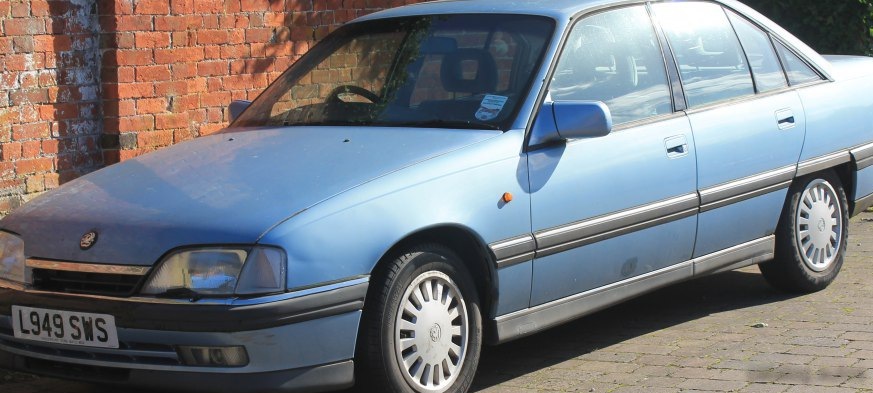
The Vauxhall Carlton Mk III 2.0i, produced between 1986 and 1994, represented a significant offering in the large family car segment within the United Kingdom and Europe. Positioned as a mid-range variant within the Mk III Carlton lineup, the 2.0i (122 hp) aimed to balance performance with affordability, appealing to buyers seeking a comfortable and spacious saloon without the expense of the more powerful, flagship models. The Mk III Carlton, internally designated as the GS series, was a substantial redesign of the Carlton, moving away from the more angular styling of the Mk II and adopting a more aerodynamic and contemporary aesthetic. It shared its platform with the Opel Senator and Opel Omega, reflecting Vauxhall’s close ties with its German parent company.
Technical Specifications
| Brand | Vauxhall |
| Model | Carlton Mk III |
| Generation | Carlton Mk III |
| Type (Engine) | 2.0i (122 Hp) |
| Start of production | 1986 |
| End of production | 1994 |
| Powertrain Architecture | Internal Combustion engine |
| Body type | Sedan |
| Seats | 5 |
| Doors | 4 |
| Fuel Type | Petrol (Gasoline) |
| Power | 122 Hp |
| Engine Model/Code | 20SE |
| Engine aspiration | Naturally aspirated engine |
| Engine oil capacity | 4.5 l (4.76 US qt | 3.96 UK qt) |
| Coolant capacity | 6.4 l (6.76 US qt | 5.63 UK qt) |
| Trunk (boot) space – minimum | 520 l (18.36 cu. ft.) |
| Trunk (boot) space – maximum | 870 l (30.72 cu. ft.) |
| Fuel tank capacity | 75 l (19.81 US gal | 16.5 UK gal) |
| Length | 4768 mm (187.72 in.) |
| Width | 1812 mm (71.34 in.) |
| Width including mirrors | 1933 mm (76.1 in.) |
| Height | 1435 mm (56.5 in.) |
| Wheelbase | 2730 mm (107.48 in.) |
| Drivetrain Architecture | Rear wheel drive |
Powertrain & Engine Architecture
The heart of the Carlton 2.0i was the 20SE engine, a 1998cc inline-four cylinder petrol engine. This engine was a naturally aspirated unit, featuring a cast iron block and an aluminum cylinder head. It employed a Bosch Motronic fuel injection system, a significant advancement over earlier carbureted Vauxhall engines, contributing to improved fuel efficiency and reduced emissions. The 20SE engine utilized a single overhead camshaft (SOHC) valvetrain with two valves per cylinder. The engine produced 122 horsepower at 5200 rpm and 138 lb-ft of torque at 3600 rpm. The engine was typically paired with a four-speed automatic transmission, although a five-speed manual gearbox was also available. The automatic transmission, a GM-sourced unit, was chosen by many buyers for its ease of use, particularly in urban driving conditions.
Driving Characteristics
The 2.0i automatic Carlton offered a comfortable, if not particularly sporty, driving experience. The automatic transmission, while smooth, did detract somewhat from the engine’s performance. Acceleration from 0 to 60 mph took around 10.5 seconds, making it competitive with other cars in its class but noticeably slower than the more powerful 2.4 and 2.8-liter versions. The gear ratios were geared towards relaxed cruising, prioritizing fuel economy over outright performance. The rear-wheel-drive layout provided balanced handling, although the car’s considerable weight (around 3,300 lbs) meant it wasn’t particularly agile. Compared to the manual transmission version, the automatic suffered a slight performance penalty, but offered a more refined and convenient driving experience. The 2.0i was often chosen by drivers who prioritized comfort and practicality over spirited driving.
Equipment & Trim Levels
The Carlton 2.0i typically came equipped with a reasonable level of standard features. Interior upholstery was usually cloth, available in a range of colors. The dashboard layout was functional and straightforward, with clear instrumentation. Standard equipment included central locking, electric front windows, and a basic stereo system. Optional extras included a sunroof, upgraded stereo systems, and leather upholstery. The 2.0i sat in the middle of the Carlton range, offering more features than the base models but lacking the luxury appointments of the higher-spec 2.4 and 2.8-liter variants. Trim levels varied slightly depending on the year of manufacture, but generally focused on enhancing comfort and convenience.
Chassis & Braking
The Carlton Mk III utilized a MacPherson strut front suspension and a semi-trailing arm rear suspension. The suspension was tuned for comfort, providing a smooth ride over most road surfaces. The 2.0i models typically featured front disc brakes and rear drum brakes. Anti-lock braking system (ABS) was available as an optional extra, enhancing safety. Stabilizer bars were fitted to both the front and rear axles, helping to reduce body roll during cornering. The chassis was robust and well-built, providing a solid foundation for the car’s considerable weight. The braking system, while adequate for normal driving, could feel somewhat overwhelmed when subjected to repeated hard stops.
Market Reception & Comparison
The Vauxhall Carlton 2.0i was generally well-received by automotive critics as a practical and comfortable family car. It was praised for its spacious interior, smooth ride, and reasonable fuel economy. However, it was also criticized for its somewhat bland styling and lack of sporting pretensions. Compared to its rivals, such as the Ford Granada and Rover 800, the Carlton offered a good balance of price, performance, and equipment. The 2.0i offered better fuel economy than the larger-engined models, but at the expense of performance. The manual transmission version was generally considered to be more engaging to drive, but the automatic was more popular with buyers seeking convenience. Reliability was generally good, although some owners reported issues with the Bosch Motronic fuel injection system.
Legacy
The Vauxhall Carlton Mk III 2.0i remains a relatively common sight on UK roads today, testament to its durability and practicality. The 20SE engine, while not particularly powerful, is known for its reliability and relatively low maintenance costs. Parts availability is generally good, although some trim-specific components can be difficult to find. The Carlton 2.0i has developed a cult following among classic car enthusiasts, who appreciate its understated styling and comfortable driving experience. While not a performance icon, the 2.0i represents a solid and dependable family car from a bygone era, offering a glimpse into the automotive landscape of the late 1980s and early 1990s. The automatic transmission, while not the most modern, has proven to be reasonably durable, and well-maintained examples continue to provide reliable service.