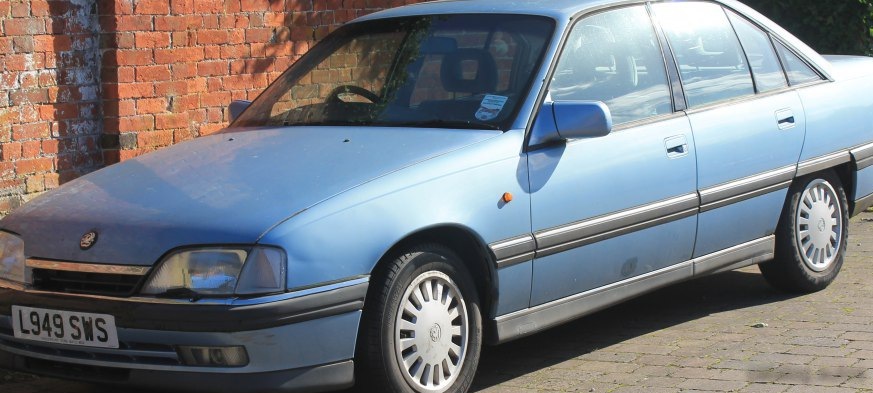
The Vauxhall Carlton Mk III 2.6i CAT, produced between 1990 and 1994, represented a significant offering in the large executive car segment for the British market. Falling within the third generation of the Carlton (designated as the C-series), this variant was positioned as a comfortable and relatively affordable entry point into the range, slotting below the more powerful 3.0-liter and the flagship Carlton GSi models. The “CAT” designation refers to the catalytic converter fitted as standard, reflecting increasingly stringent emissions regulations at the time. The Mk III Carlton, based on the Opel Omega A, aimed to provide a blend of spaciousness, refinement, and respectable performance for family and business users.
Technical Specifications
| Brand | Vauxhall |
| Model | Carlton Mk III |
| Type (Engine) | 2.6i CAT (150 Hp) |
| Start of production | 1990 |
| End of production | 1994 |
| Powertrain Architecture | Internal Combustion engine |
| Body type | Sedan |
| Seats | 5 |
| Doors | 4 |
| Fuel Type | Petrol (Gasoline) |
| Power | 150 Hp |
| Engine Model/Code | C26NE |
| Engine aspiration | Naturally aspirated engine |
| Engine oil capacity | 5.5 l (5.81 US qt | 4.84 UK qt) |
| Coolant capacity | 10.5 l (11.1 US qt | 9.24 UK qt) |
| Trunk (boot) space – minimum | 520 l (18.36 cu. ft.) |
| Trunk (boot) space – maximum | 870 l (30.72 cu. ft.) |
| Fuel tank capacity | 75 l (19.81 US gal | 16.5 UK gal) |
| Length | 4768 mm (187.72 in.) |
| Width | 1812 mm (71.34 in.) |
| Width including mirrors | 1933 mm (76.1 in.) |
| Height | 1435 mm (56.5 in.) |
| Wheelbase | 2730 mm (107.48 in.) |
| Drivetrain | Rear wheel drive |
Powertrain & Engine Architecture
The 2.6i CAT variant was powered by the C26NE engine, a 2.6-liter (2600cc) inline-six cylinder petrol engine. This engine was a mainstay of the Opel/Vauxhall range for many years, known for its smoothness and relative durability. It featured a single overhead camshaft (SOHC) valvetrain operating two valves per cylinder. Fuel delivery was managed by Bosch Motronic fuel injection, a system that provided precise control over fuel metering for improved efficiency and reduced emissions. The catalytic converter, integral to the “CAT” designation, played a crucial role in reducing harmful exhaust gases. The engine produced 150 horsepower and approximately 166 lb-ft of torque. The engine was mated to a four-speed automatic transmission, a common choice for buyers prioritizing comfort and ease of driving over outright performance.
Driving Characteristics
The Carlton 2.6i CAT with the automatic transmission offered a relaxed and comfortable driving experience. Acceleration was adequate for everyday driving, but it wasn’t a particularly sporty car. The four-speed automatic transmission, while smooth, lacked the responsiveness of a manual gearbox and contributed to a slightly less engaging driving experience. Gear ratios were geared towards cruising comfort rather than rapid acceleration. Compared to the 3.0-liter Carlton, the 2.6i felt noticeably less powerful, particularly when fully loaded or tackling inclines. However, the automatic transmission made it a more user-friendly option for urban driving and long journeys. The rear-wheel-drive configuration provided balanced handling, although it wasn’t as nimble as front-wheel-drive alternatives.
Equipment & Trim Levels
The 2.6i CAT typically came with a reasonable level of standard equipment, reflecting its position as a mainstream executive car. Standard features generally included central locking, electric front windows, power steering, and an AM/FM stereo. Interior upholstery was typically cloth, although leather was available as an optional extra. Dashboard design was functional and straightforward, with clear instrumentation. Optional extras included air conditioning, a sunroof, and upgraded sound systems. Trim levels varied slightly depending on the year of manufacture, but generally focused on adding convenience and comfort features.
Chassis & Braking
The Carlton Mk III utilized a MacPherson strut front suspension and a semi-trailing arm rear suspension. This setup provided a good balance between ride comfort and handling. The 2.6i CAT typically featured disc brakes on the front wheels and drum brakes on the rear. While adequate for normal driving, the rear drum brakes were a cost-saving measure compared to the all-disc setup found on higher-spec models. Stabilizer bars were fitted to both the front and rear axles to reduce body roll during cornering. The steering was a recirculating ball system, providing a relatively heavy but precise feel.
Market Reception & Comparison
The Vauxhall Carlton 2.6i CAT was generally well-received by critics as a comfortable and spacious executive car. However, it wasn’t considered a particularly exciting or dynamic vehicle. Fuel economy was reasonable for a car of its size and engine capacity, but it wasn’t a class leader. Compared to the 3.0-liter Carlton, the 2.6i offered a lower purchase price and slightly better fuel economy, but at the expense of performance. Against rivals like the Ford Granada and Rover 800, the Carlton offered a competitive package in terms of space, comfort, and value for money. Reliability was generally good, although the automatic transmission could be prone to issues if not properly maintained.
Legacy
The Carlton Mk III 2.6i CAT remains a relatively affordable classic car today. The C26NE engine is known for its robustness, and well-maintained examples can still provide reliable service. However, age-related issues such as corrosion and wear and tear on suspension components are common. Parts availability is generally good, although some specific trim items may be difficult to find. The automatic transmission requires regular fluid changes to prevent problems. While not a highly sought-after collector’s item, the 2.6i CAT represents a solid and comfortable example of 1990s British motoring, offering a nostalgic driving experience and a spacious interior for a reasonable price on the used car market.