
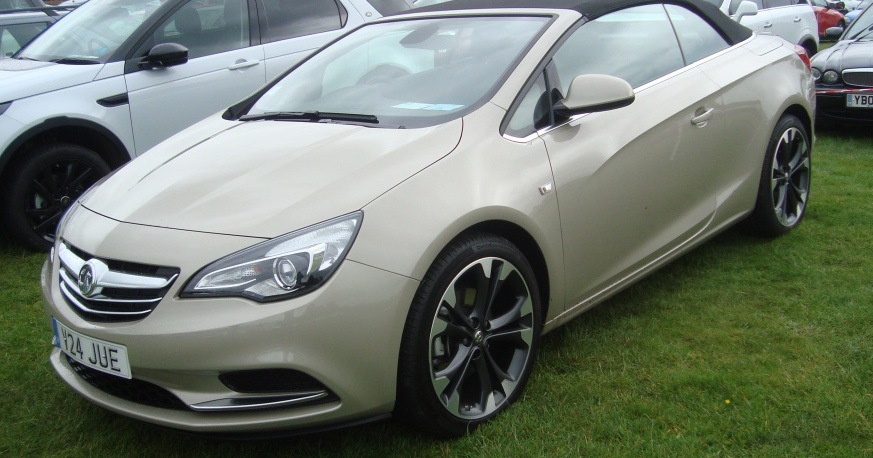
The Vauxhall Cascada 1.4 Turbo (140 hp) was a front-wheel-drive, four-seater convertible produced between 2013 and 2018. Positioned as a mid-range offering within the Cascada lineup, it aimed to provide a balance between affordability, fuel efficiency, and respectable performance in the European market. The Cascada itself was Vauxhall’s entry into the premium mid-size convertible segment, competing with models like the Ford Focus CC and Renault Megane Coupe Cabriolet. This variant, powered by the A14NET or B14NET engine, represented a popular choice for buyers seeking a stylish open-top experience without the higher running costs associated with the more powerful engine options.
Technical Specifications
| Brand | Vauxhall |
| Model | Cascada |
| Generation | Cascada |
| Type (Engine) | 1.4 Turbo (140 Hp) |
| Start of production | 2013 |
| End of production | 2018 |
| Powertrain Architecture | Internal Combustion engine |
| Body type | Cabriolet |
| Seats | 4 |
| Doors | 2 |
| Fuel consumption (urban) | 8.5 l/100 km (27.7 US mpg) |
| Fuel consumption (extra urban) | 5.4 l/100 km (43.6 US mpg) |
| Fuel consumption (combined) | 6.5 l/100 km (36.2 US mpg) |
| CO2 emissions | 151 g/km |
| Fuel Type | Petrol (Gasoline) |
| Maximum speed | 208 km/h (129.25 mph) |
| Emission standard | Euro 6 |
| Power | 140 Hp @ 4900-6000 rpm |
| Power per litre | 102.6 Hp/l |
| Torque | 200 Nm @ 1850-4900 rpm (147.51 lb.-ft. @ 1850-4900 rpm) |
| Engine layout | Front, Transverse |
| Engine Model/Code | A14NET, B14NET |
| Engine displacement | 1364 cm3 (83.24 cu. in.) |
| Number of cylinders | 4 |
| Engine configuration | Inline |
| Number of valves per cylinder | 4 |
| Fuel injection system | Multi-port manifold injection |
| Engine aspiration | Turbocharger, Intercooler |
| Engine oil capacity | 4 l (4.23 US qt | 3.52 UK qt) |
| Trunk (boot) space – minimum | 380 l (13.42 cu. ft.) |
| Trunk (boot) space – maximum | 750 l (26.49 cu. ft.) |
| Fuel tank capacity | 56 l (14.79 US gal | 12.32 UK gal) |
| Length | 4696 mm (184.88 in.) |
| Width | 1839 mm (72.4 in.) |
| Width including mirrors | 2020 mm (79.53 in.) |
| Height | 1443 mm (56.81 in.) |
| Wheelbase | 2695 mm (106.1 in.) |
| Minimum turning circle | 11.8 m (38.71 ft.) |
| Drivetrain Architecture | Front wheel drive |
| Number of gears and type of gearbox | 6 gears, manual transmission |
| Front brakes | Ventilated discs |
| Rear brakes | Disc |
| Assisting systems | ABS (Anti-lock braking system) |
| Steering type | Steering rack and pinion |
| Power steering | Electric Steering |
| Tires size | 245/40 R20 |
| Wheel rims size | 20 |
Powertrain & Engine Architecture
The heart of the Cascada 1.4 Turbo was the A14NET or B14NET engine, a 1.4-liter inline-four cylinder gasoline engine. This engine featured a single-scroll turbocharger with an intercooler, boosting power output to 140 horsepower and 200 Nm (147.51 lb-ft) of torque. The engine utilized multi-port fuel injection and a double overhead camshaft (DOHC) valvetrain with four valves per cylinder. The engine was designed to balance performance with fuel efficiency, incorporating technologies like direct ignition and variable valve timing. The six-speed manual transmission was the standard offering, providing a relatively direct connection to the engine. The gear ratios were tuned for a blend of acceleration and highway cruising, though not as aggressively as those found in the higher-output 2.0-liter Turbo models.
Driving Characteristics
The 1.4 Turbo Cascada offered a comfortable and refined driving experience. While not a sports car, the engine provided adequate power for everyday driving and overtaking maneuvers. Acceleration from 0 to 60 mph took around 9.8 seconds, and the top speed was 129.25 mph. The manual transmission allowed for driver engagement, but the relatively long throws and moderate clutch weight weren’t particularly sporty. Compared to the 2.0-liter Turbo variants, the 1.4 Turbo felt less eager to rev and offered less overall punch. However, it excelled in fuel economy, making it a more practical choice for those prioritizing running costs. The power delivery was relatively linear, with peak torque available from 1850 rpm, making it easy to drive in urban environments.
Equipment & Trim Levels
The Cascada 1.4 Turbo typically came equipped with a respectable level of standard features. These included air conditioning, alloy wheels, a touchscreen infotainment system with Bluetooth connectivity, and electric windows. Higher trim levels, such as the Exclusiv and Elite, added features like leather upholstery, heated seats, a premium sound system, and advanced safety technologies like lane departure warning and adaptive cruise control. Optional extras included a wind deflector, parking sensors, and a panoramic sunroof. Interior upholstery was typically cloth on the base models, upgrading to leather on higher trims. The dashboard layout was modern and functional, with a focus on ease of use.
Chassis & Braking
The Cascada utilized a MacPherson strut front suspension and a multi-link rear suspension, providing a comfortable ride quality. The suspension was tuned for comfort rather than outright handling prowess. Front brakes were ventilated discs, while rear brakes were solid discs. Anti-lock Braking System (ABS) was standard. The steering was electrically assisted, offering light and precise control. The Cascada’s chassis was designed to provide good rigidity for a convertible, minimizing scuttle shake. Stabilizer bars were fitted front and rear to reduce body roll during cornering.
Market Reception & Comparison
The Vauxhall Cascada 1.4 Turbo was generally well-received by automotive critics as a stylish and comfortable convertible. However, some reviewers noted that the engine lacked the outright performance of its rivals. Fuel economy was praised, and the car was considered a good value for money. Compared to the 2.0-liter Turbo models, the 1.4 Turbo offered significantly better fuel economy but less exciting performance. The 2.0-liter models were aimed at drivers who prioritized driving enjoyment, while the 1.4 Turbo appealed to those seeking a more relaxed and economical open-top experience. Reliability reports were generally positive, with few major issues reported with the 1.4 Turbo engine and transmission.
Legacy
The Vauxhall Cascada, including the 1.4 Turbo variant, enjoyed moderate success in the European market. While it didn’t achieve the sales figures of some of its more established rivals, it established Vauxhall as a contender in the mid-size convertible segment. On the used car market, the 1.4 Turbo Cascada remains a relatively affordable option for those seeking a stylish and well-equipped convertible. The A14NET/B14NET engine is generally considered reliable, provided it has been properly maintained. Common issues include occasional turbocharger problems and oil leaks, but these are not widespread. The Cascada 1.4 Turbo represents a good balance of style, comfort, and affordability, making it a viable choice for buyers looking for a used convertible.
