
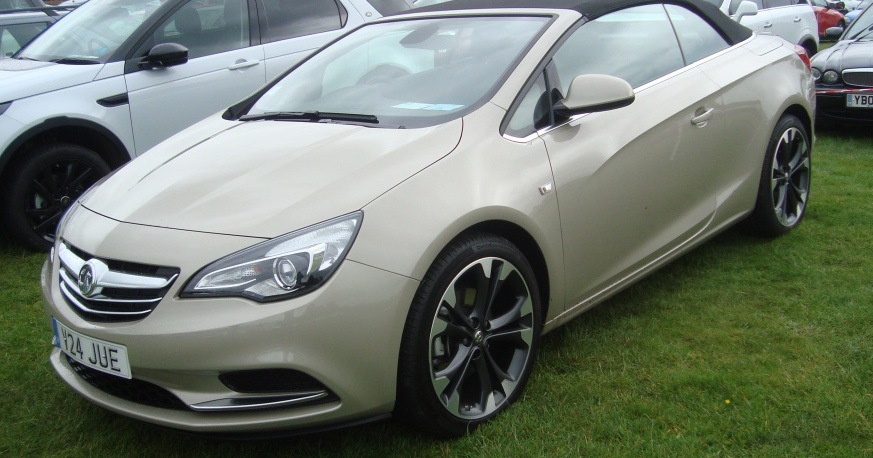
The Vauxhall Cascada 1.6 Turbo, produced from 2013 to 2018, represented a mid-range offering within the Cascada convertible lineup. Positioned between the lower-powered 1.4 Turbo and the more potent 2.0 CDTI diesel, the 1.6 Turbo aimed to strike a balance between fuel efficiency and engaging performance for the European market. The Cascada itself was Vauxhall’s entry into the premium mid-size convertible segment, competing with models like the Audi A3 Cabriolet and BMW 2 Series Convertible. It was built on the General Motors Delta platform, shared with other vehicles like the Opel Astra and Chevrolet Cruze, but uniquely offered as a soft-top convertible.
Technical Specifications
| Brand | Vauxhall |
| Model | Cascada |
| Generation | Cascada |
| Type (Engine) | 1.6 Turbo (200 Hp) |
| Start of production | 2013 |
| End of production | 2018 |
| Powertrain Architecture | Internal Combustion engine |
| Body type | Cabriolet |
| Seats | 4 |
| Doors | 2 |
| Fuel consumption (urban) | 9.1 l/100 km (25.8 US mpg, 31 UK mpg, 11 km/l) |
| Fuel consumption (extra urban) | 5.5 l/100 km (42.8 US mpg, 51.4 UK mpg, 18.2 km/l) |
| Fuel consumption (combined) | 6.9 l/100 km (34.1 US mpg, 40.9 UK mpg, 14.5 km/l) |
| CO2 emissions | 158 g/km |
| Fuel Type | Petrol (Gasoline) |
| Maximum speed | 235 km/h (146.02 mph) |
| Emission standard | Euro 6 |
| Power | 200 Hp @ 5500 rpm |
| Power per litre | 125.2 Hp/l |
| Torque | 280 Nm @ 1650-3500 rpm (206.52 lb.-ft. @ 1650-3500 rpm) |
| Engine layout | Front, Transverse |
| Engine Model/Code | A16SHT, B16SHT |
| Engine displacement | 1598 cm3 (97.52 cu. in.) |
| Number of cylinders | 4 |
| Engine configuration | Inline |
| Number of valves per cylinder | 4 |
| Fuel injection system | Direct injection |
| Engine aspiration | Turbocharger, Intercooler |
| Engine oil capacity | 5.5 l (5.81 US qt | 4.84 UK qt) |
| Trunk (boot) space (minimum) | 380 l (13.42 cu. ft.) |
| Trunk (boot) space (maximum) | 750 l (26.49 cu. ft.) |
| Fuel tank capacity | 56 l (14.79 US gal | 12.32 UK gal) |
| Length | 4696 mm (184.88 in.) |
| Width | 1839 mm (72.4 in.) |
| Width including mirrors | 2020 mm (79.53 in.) |
| Height | 1443 mm (56.81 in.) |
| Wheelbase | 2695 mm (106.1 in.) |
| Minimum turning circle | 11.8 m (38.71 ft.) |
| Drivetrain Architecture | Front wheel drive |
| Number of gears and type of gearbox | 6 gears, manual transmission |
| Front brakes | Ventilated discs |
| Rear brakes | Disc |
| Assisting systems | ABS (Anti-lock braking system) |
| Steering type | Steering rack and pinion |
| Power steering | Electric Steering |
| Tires size | 245/40 R20 |
| Wheel rims size | 20 |
Powertrain & Engine Architecture
The heart of the Cascada 1.6 Turbo is the A16SHT or B16SHT engine, a 1.6-liter turbocharged inline-four cylinder gasoline engine. This engine is part of General Motors’ Small Engine Family (SEF), known for its direct injection and variable valve timing. Direct injection allows for more precise fuel delivery, improving both power and efficiency. The turbocharger, coupled with an intercooler, provides a significant boost in power output. The engine produces 200 horsepower at 5500 rpm and 280 Nm (206.52 lb-ft) of torque between 1650 and 3500 rpm. This broad torque curve contributes to good drivability in various conditions. The engine is transversely mounted at the front of the vehicle. The standard transmission for this variant was a six-speed manual gearbox, offering precise shifts and driver engagement. While an automatic transmission was available on other Cascada trims, it wasn’t commonly paired with the 1.6 Turbo.
Driving Characteristics
The 1.6 Turbo Cascada offered a noticeable step up in performance compared to the base 1.4-liter engine. Acceleration was brisk, with the car capable of reaching 60 mph in around 7.5 seconds. The turbocharger provides a surge of power in the mid-range, making overtaking maneuvers relatively effortless. The six-speed manual transmission allows drivers to fully utilize the engine’s power band. Compared to the 2.0 CDTI diesel, the 1.6 Turbo felt more responsive and eager to rev, but lacked the diesel’s low-end torque. The Cascada’s suspension, tuned for comfort, provided a smooth ride, but didn’t offer the same level of handling precision as some of its more sports-oriented competitors. The steering was light and accurate, making it easy to maneuver in city driving.
Equipment & Trim Levels
The Cascada 1.6 Turbo was typically offered in mid-level trim configurations, such as ‘Sport’ or ‘Exclusiv’ depending on the market. Standard equipment generally included air conditioning, alloy wheels, a touchscreen infotainment system with Bluetooth connectivity, and electric windows and mirrors. Higher trim levels added features like leather upholstery, heated seats, a premium sound system, and advanced safety features such as lane departure warning and adaptive cruise control. The convertible top was fully automatic and could be operated at speeds up to 30 mph. Interior upholstery was typically cloth on the base trims, with leather options available as upgrades.
Chassis & Braking
The Cascada’s chassis utilized independent suspension at the front, typically a MacPherson strut setup, and a semi-independent torsion beam suspension at the rear. This configuration provided a good balance between ride comfort and handling. Braking duties were handled by ventilated discs at the front and solid discs at the rear. Anti-lock Braking System (ABS) was standard, providing enhanced stopping power and stability. The Cascada’s steering system employed an electric power steering (EPS) system, offering light and precise steering feel. The car rode on 20-inch alloy wheels as standard, contributing to its sporty appearance.
Market Reception & Comparison
The Vauxhall Cascada 1.6 Turbo was generally well-received by automotive critics. It was praised for its stylish design, comfortable ride, and responsive engine. However, some reviewers noted that the interior quality wasn’t quite on par with some of its premium competitors. Fuel economy was respectable, averaging around 34.1 US mpg in combined driving, but not class-leading. Compared to the 1.4 Turbo, the 1.6 Turbo offered a significant performance boost, while the 2.0 CDTI diesel provided better fuel economy and low-end torque. The Cascada’s pricing positioned it as a more affordable alternative to the Audi A3 Cabriolet and BMW 2 Series Convertible.
Legacy
The Vauxhall Cascada was discontinued in 2018, with no direct replacement. The 1.6 Turbo engine proved to be relatively reliable, with few widespread issues reported. However, like all turbocharged engines, it’s important to adhere to recommended maintenance schedules, including regular oil changes and inspections of the turbocharger and intercooler. On the used car market, the Cascada 1.6 Turbo represents a relatively affordable entry point into the mid-size convertible segment. Its combination of style, performance, and comfort continues to appeal to buyers looking for a fun and practical open-top car.
