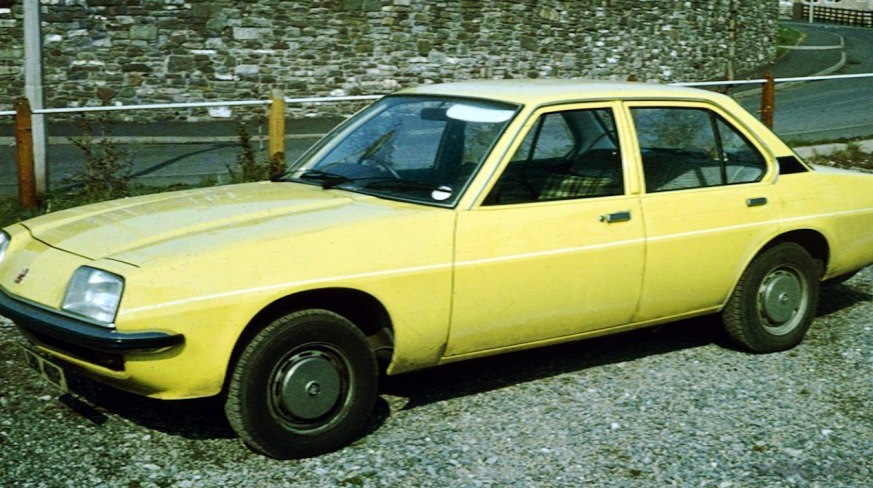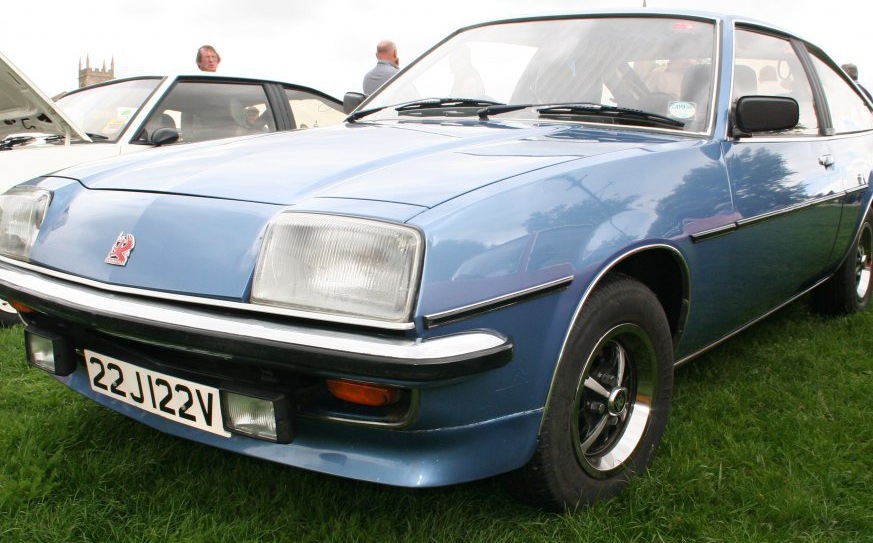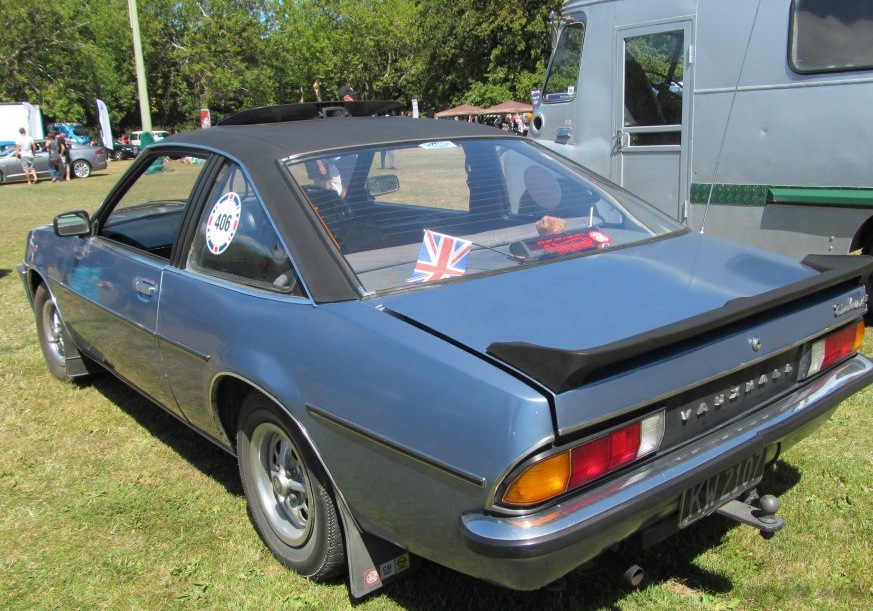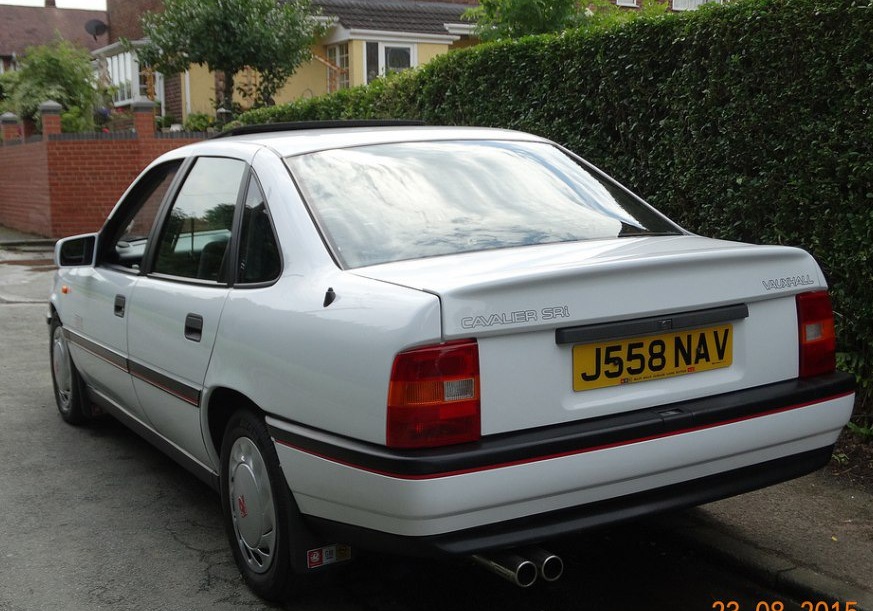
The Vauxhall Cavalier Mk III 1.6, producing 82 horsepower, was a mainstay of the British family car market from 1988 to 1992. Positioned as the entry-level variant of the Mk III Cavalier range, it offered affordable transportation within the larger ‘D’ segment. This generation Cavalier, based on the GM X platform (internally known as the 81BX/82BX), represented a significant step forward in design and technology compared to its predecessor, aiming to compete with rivals like the Ford Sierra and Austin Montego. The 1.6-liter engine and automatic transmission combination was specifically targeted at buyers prioritizing comfort and ease of use over outright performance.
Technical Specifications
| Brand | Vauxhall |
| Model | Cavalier |
| Generation | Cavalier Mk III |
| Type (Engine) | 1.6 (82 Hp) |
| Start of production | 1988 |
| End of production | 1992 |
| Powertrain Architecture | Internal Combustion engine |
| Body type | Sedan |
| Seats | 5 |
| Doors | 4 |
| Fuel consumption (urban) | 8.9 l/100 km (26.4 US mpg) |
| Fuel consumption (extra urban) | 5.2 l/100 km (45.2 US mpg) |
| Fuel consumption (combined) | 6.8 l/100 km (34.6 US mpg) |
| Fuel Type | Petrol (Gasoline) |
| Acceleration 0 – 100 km/h | 14 sec |
| Acceleration 0 – 62 mph | 14 sec |
| Acceleration 0 – 60 mph | 13.3 sec |
| Maximum speed | 178 km/h (110.6 mph) |
| Weight-to-power ratio | 12.4 kg/Hp |
| Weight-to-torque ratio | 7.8 kg/Nm |
| Power | 82 Hp @ 5200 rpm |
| Power per litre | 51.3 Hp/l |
| Torque | 130 Nm @ 2600 rpm (95.88 lb.-ft. @ 2600 rpm) |
| Engine layout | Front, Transverse |
| Engine Model/Code | 16SV |
| Engine displacement | 1598 cm3 (97.52 cu. in.) |
| Number of cylinders | 4 |
| Engine configuration | Inline |
| Cylinder Bore | 79 mm (3.11 in.) |
| Piston Stroke | 81.5 mm (3.21 in.) |
| Compression ratio | 10:1 |
| Number of valves per cylinder | 2 |
| Fuel injection system | Carburettor |
| Engine aspiration | Naturally aspirated |
| Valvetrain | OHC |
| Engine oil capacity | 3.5 l (3.7 US qt | 3.08 UK qt) |
| Coolant capacity | 5.8 l (6.13 US qt | 5.1 UK qt) |
| Kerb Weight | 1020 kg (2248.72 lbs.) |
| Max. weight | 1550 kg (3417.17 lbs.) |
| Max load | 530 kg (1168.45 lbs.) |
| Trunk (boot) space – minimum | 530 l (18.72 cu. ft.) |
| Trunk (boot) space – maximum | 840 l (29.66 cu. ft.) |
| Fuel tank capacity | 61 l (16.11 US gal | 13.42 UK gal) |
| Length | 4432 mm (174.49 in.) |
| Width | 1706 mm (67.17 in.) |
| Height | 1400 mm (55.12 in.) |
| Wheelbase | 2600 mm (102.36 in.) |
| Front track | 1426 mm (56.14 in.) |
| Rear track | 1423 mm (56.02 in.) |
| Drag coefficient (Cd) | 0.29 |
| Drivetrain Architecture | ICE, Front Wheel Drive |
| Drive wheel | Front wheel drive |
| Front suspension | Independent type McPherson |
| Rear suspension | Coil spring |
| Front brakes | Disc |
| Rear brakes | Drum |
| Assisting systems | ABS (Anti-lock braking system) |
| Steering type | Steering rack and pinion |
| Power steering | Hydraulic |
| Tires size | 175/70 R14 |
| Wheel rims size | 14 |
Powertrain & Engine Architecture
The heart of the Cavalier Mk III 1.6 was the 16SV engine, a naturally aspirated, inline-four cylinder unit displacing 1598cc. This engine, part of Vauxhall’s Family II series, utilized a single overhead camshaft (OHC) design and was equipped with a two-valve per cylinder configuration. Crucially, this variant employed a carburettor fuel delivery system – a cost-saving measure compared to the fuel injection found on higher-spec models. The carburettor, while simpler and cheaper, resulted in slightly lower power output and less precise fuel metering. The engine produced 82 horsepower at 5200 rpm and 130 Nm (95.88 lb-ft) of torque at 2600 rpm. The transmission paired with this engine was typically a three-speed automatic, although a five-speed manual was also available. The automatic transmission, while providing convenience, contributed to slightly slower acceleration times and reduced fuel economy compared to the manual option.
Driving Characteristics
The 1.6-liter automatic Cavalier offered a comfortable, if uninspiring, driving experience. Acceleration from 0-60 mph took around 13.3 seconds, and top speed was approximately 110.6 mph. The automatic transmission’s gear ratios were geared towards fuel efficiency and smooth cruising rather than spirited performance. Compared to the 2.0-liter models, particularly those with manual transmissions, the 1.6 felt noticeably slower, especially when overtaking or climbing hills. The automatic transmission also lacked the responsiveness of a manual, requiring more anticipation when accelerating. However, for drivers prioritizing ease of use and relaxed motoring, the 1.6 automatic provided a perfectly adequate experience.
Equipment & Trim Levels
The 1.6-liter Cavalier typically represented the base trim level. Standard equipment included central locking, electric front windows, and a basic stereo system. Interior upholstery was typically cloth, and the dashboard featured a simple, functional design. Optional extras included a sunroof, upgraded stereo systems, and alloy wheels. Higher trim levels, such as the GLS and SR, offered more luxurious features like leather upholstery, air conditioning, and more powerful engines.
Chassis & Braking
The Cavalier Mk III featured independent McPherson strut suspension at the front and a coil spring setup at the rear. The 1.6-liter models generally had a smaller diameter stabilizer bar compared to higher-spec variants, resulting in slightly more body roll during cornering. Braking was provided by disc brakes at the front and drum brakes at the rear. An anti-lock braking system (ABS) was available as an option, enhancing safety in emergency braking situations. The suspension tuning was geared towards providing a comfortable ride, absorbing bumps and imperfections in the road surface effectively.
Market Reception & Comparison
The Cavalier Mk III 1.6 automatic was generally well-received as an affordable and practical family car. Critics praised its comfortable ride and spacious interior, but noted its lack of performance compared to rivals and higher-spec Cavalier models. Fuel economy was considered reasonable for the time, averaging around 34.6 US mpg on a combined cycle. Compared to the 2.0-liter versions, the 1.6 offered lower running costs but sacrificed performance. The 1.9-liter diesel models provided even better fuel economy but were significantly slower.
Legacy
The Vauxhall Cavalier Mk III 1.6 automatic, while not the most exciting variant in the range, proved to be a reliable and durable car. The 16SV engine, despite its carburettor fuel system, was generally robust and capable of high mileage with proper maintenance. Today, these cars are relatively rare and are becoming increasingly sought after by classic car enthusiasts. The simplicity of the engine and transmission makes them relatively easy to maintain, and parts availability is still reasonable. While not a performance icon, the Cavalier Mk III 1.6 represents a significant piece of British automotive history, offering a nostalgic glimpse into the family cars of the late 1980s and early 1990s.