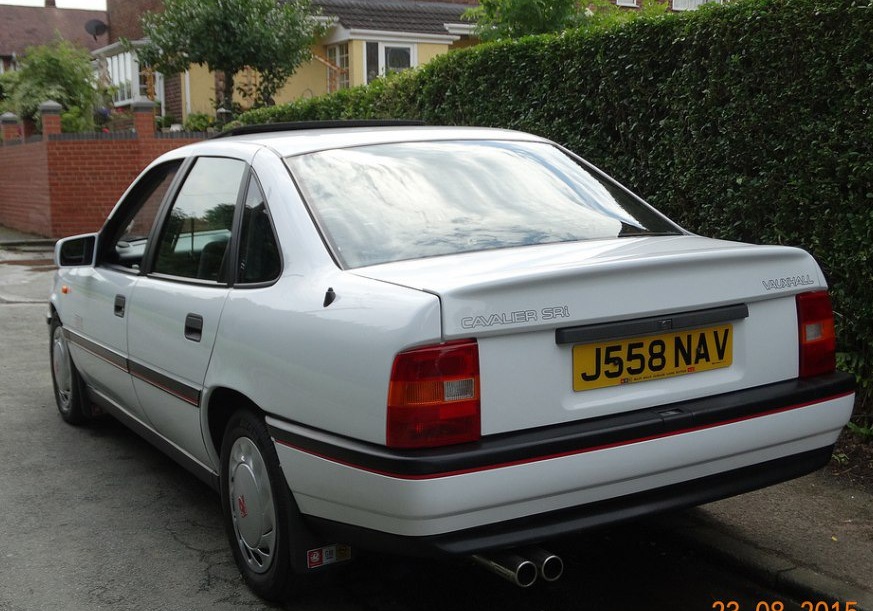
The Vauxhall Cavalier Mk III 1.6i, produced between 1993 and 1995, represented the entry point into the third generation of Vauxhall’s popular family saloon. Part of the 80s-90s ‘C’ platform shared with Opel, and later adapted by Saab, the Mk III Cavalier aimed to offer affordable, reliable transportation. The 1.6i variant, powered by the X16SZ engine producing 71 horsepower, was positioned as the most economical and accessible model in the range, targeting budget-conscious buyers and those prioritizing fuel efficiency over outright performance. It served as a direct competitor to Ford’s Sierra and later Mondeo in the UK market.
Technical Specifications
| Brand | Vauxhall |
| Model | Cavalier |
| Generation | Cavalier Mk III |
| Type (Engine) | 1.6i (71 Hp) |
| Start of production | 1993 |
| End of production | 1995 |
| Powertrain Architecture | Internal Combustion engine |
| Body type | Sedan |
| Seats | 5 |
| Doors | 4 |
| Fuel Type | Petrol (Gasoline) |
| Power | 71 Hp |
| Engine Model/Code | X16SZ |
| Engine aspiration | Naturally aspirated engine |
| Engine oil capacity | 3 l (3.17 US qt | 2.64 UK qt) |
| Coolant capacity | 5.5 l (5.81 US qt | 4.84 UK qt) |
| Trunk (boot) space – minimum | 530 l (18.72 cu. ft.) |
| Trunk (boot) space – maximum | 840 l (29.66 cu. ft.) |
| Fuel tank capacity | 61 l (16.11 US gal | 13.42 UK gal) |
| Length | 4432 mm (174.49 in.) |
| Width | 1706 mm (67.17 in.) |
| Height | 1400 mm (55.12 in.) |
| Wheelbase | 2600 mm (102.36 in.) |
| Drag coefficient (Cd) | 0.29 |
| Drivetrain Architecture | The Internal combustion engine (ICE) drives the front wheels of the vehicle. |
| Drive wheel | Front wheel drive |
Powertrain & Engine Architecture
The heart of the Cavalier 1.6i was the X16SZ engine, a 1.6-liter, inline-four cylinder petrol engine. This engine was a relatively simple design, utilizing a single overhead camshaft (SOHC) and two valves per cylinder. Fuel delivery was managed by a Bosch Mono-Jetronic fuel injection system, a single-point injection system that was cost-effective but less sophisticated than multi-point injection found in higher-spec models. The X16SZ produced 71 horsepower at 5200 rpm and 98 lb-ft of torque at 3600 rpm. The engine was known for its durability, though its performance was modest. The transmission offered was a four-speed automatic, contributing to the car’s ease of use but also impacting acceleration and fuel economy. This automatic was a GM-sourced unit, known for its smooth operation but not particularly quick shifts.
Driving Characteristics
The 1.6i automatic Cavalier offered a comfortable, if uninspiring, driving experience. Acceleration was leisurely, taking approximately 13 seconds to reach 60 mph. The four-speed automatic transmission featured relatively tall gear ratios, prioritizing fuel economy over performance. This meant that the engine often felt strained when attempting to accelerate quickly or climb hills. Compared to the 1.8L and 2.0L variants, and especially the more powerful GSi models, the 1.6i felt significantly underpowered. Manual transmission versions of the 1.6i offered a slightly more engaging driving experience, but the automatic was favored by buyers seeking convenience. The steering was light and easy, making it well-suited for urban driving, but lacked the precision of some competitors.
Equipment & Trim Levels
The 1.6i trim level was the base model in the Cavalier Mk III range. Standard equipment included central locking, power steering, and an adjustable steering column. Interior upholstery was typically cloth, with a simple dashboard layout. Optional extras included electric windows, a sunroof, and an upgraded stereo system. The 1.6i was often chosen by fleet buyers, so many examples were equipped with minimal options. The interior plastics were durable but felt somewhat basic compared to more expensive cars in the segment. Safety features were limited by the standards of the time, with only a driver’s airbag being optional.
Chassis & Braking
The Cavalier Mk III utilized a MacPherson strut front suspension and a twist-beam rear suspension. This setup provided a comfortable ride, but wasn’t particularly sporty. The 1.6i models typically featured smaller diameter wheels and tires than the higher-spec variants. Braking was handled by disc brakes on the front wheels and drum brakes on the rear. Anti-lock braking system (ABS) was not standard on the 1.6i, but was available as an option. The suspension was tuned for comfort, resulting in noticeable body roll during cornering. Stabilizer bars were fitted, but were relatively thin compared to those found on the GSi models.
Market Reception & Comparison
The Cavalier 1.6i was generally well-received as an affordable and practical family car. Critics praised its comfortable ride and spacious interior, but noted its lack of performance. Compared to the 1.8L and 2.0L models, the 1.6i offered significantly lower fuel economy, though the difference wasn’t dramatic. Reliability was generally good, with the X16SZ engine proving to be durable. However, the Mono-Jetronic fuel injection system could be prone to issues if not properly maintained. The 1.6i competed directly with the Ford Sierra 1.6L and later the Ford Mondeo 1.6L, offering a similar level of practicality and affordability. The Vauxhall was often seen as slightly less refined than the Ford, but offered a more spacious interior.
Legacy
The Cavalier Mk III 1.6i remains a relatively common sight on UK roads today, testament to its durability and affordability. The X16SZ engine is known for its longevity, and parts availability remains good. However, examples are now showing their age, and rust can be a significant issue. The 1.6i automatic is often favored by classic car enthusiasts looking for a simple, reliable, and inexpensive classic. While not a performance icon, the Cavalier 1.6i played an important role in providing affordable transportation to a wide range of buyers during the 1990s, and continues to offer a nostalgic driving experience for those seeking a taste of that era.