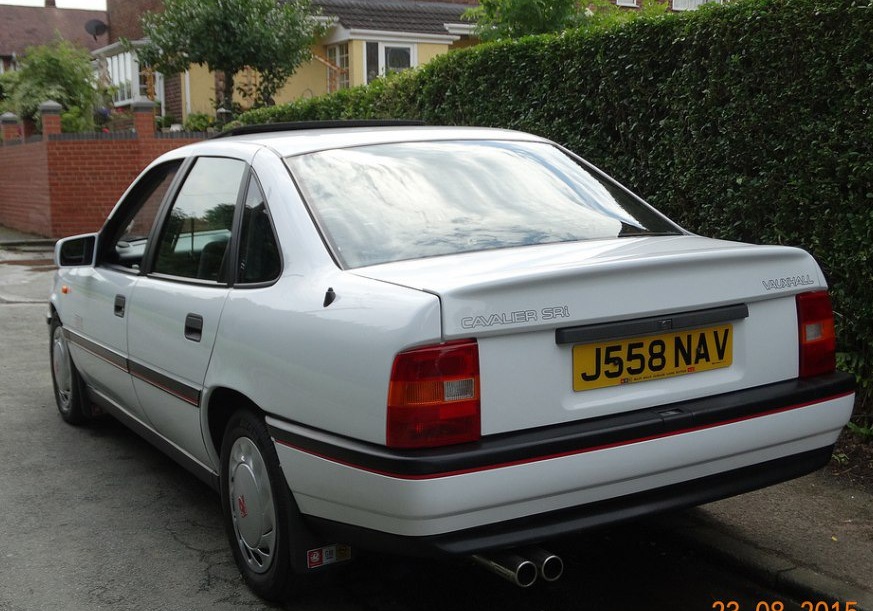
The Vauxhall Cavalier Mk III 2.0 SRi was a performance-oriented variant of the Mk III Cavalier, produced between 1988 and 1989. Positioned as a sporty trim level within the broader Cavalier range, it aimed to offer a more engaging driving experience than the standard models. The Mk III Cavalier, built on the GM J-platform (internally designated as the 81BU), represented a significant step forward in design and technology for Vauxhall, moving away from the more angular styling of the Mk II. The 2.0 SRi specifically targeted drivers seeking a blend of practicality and performance in a front-wheel-drive, mid-size sedan.
The 2.0 SRi was powered by the 20SEH engine, a 1998cc inline-four cylinder gasoline engine. This engine featured multi-port fuel injection and an overhead camshaft (OHC) valvetrain, producing 129 horsepower at 5600 rpm and 180 Nm (132.76 lb-ft) of torque. The engine’s design emphasized reliability and reasonable fuel efficiency alongside its performance capabilities. The 20SEH was a common engine within the GM J-platform family, also appearing in other Opel and Vauxhall models. The engine utilized a naturally aspirated configuration, relying on displacement and efficient combustion rather than forced induction for its power output. Engine oil capacity was 4 liters (4.23 US quarts), and coolant capacity was 7.2 liters (7.61 US quarts).
In driving terms, the 2.0 SRi offered a noticeable improvement over the lower-powered Cavalier variants. While not a sports car in the modern sense, the 129 hp engine provided brisk acceleration and a respectable top speed of 206 km/h (128 mph). The five-speed manual transmission allowed drivers to fully utilize the engine’s powerband. The weight-to-power ratio of 8.6 kg/hp contributed to a responsive feel, although it wasn’t as nimble as lighter, more focused sports sedans. Compared to the base model Cavaliers, the SRi offered a more engaging driving experience, and compared to potential future turbocharged or V6 variants, it represented a more accessible entry point into performance motoring.
The SRi trim level included several features designed to enhance both the aesthetic and driving experience. Standard equipment typically included sport seats, a more aggressive body kit (often including a rear spoiler), and upgraded suspension components. Interior appointments were generally more refined than those found in base models, with higher-quality upholstery and trim materials. Optional extras could include power windows, central locking, and an upgraded sound system. The SRi was designed to appeal to buyers who wanted a stylish and well-equipped car without the expense of a full-fledged luxury model.
The Cavalier Mk III 2.0 SRi utilized an independent McPherson strut front suspension with coil springs and an anti-roll bar, providing responsive handling and a comfortable ride. The rear suspension employed a simpler coil spring setup. Braking duties were handled by ventilated discs at the front and discs at the rear, offering adequate stopping power for the car’s weight and performance. An Anti-lock Braking System (ABS) was often included as standard or an optional extra, enhancing safety. The steering system was a hydraulic power-assisted rack and pinion setup, providing precise and effortless steering control. The car rode on 175/70 R14 tires mounted on 14-inch wheels.
Contemporary reviews of the Cavalier 2.0 SRi generally praised its blend of performance, practicality, and value. Critics noted the engine’s willingness to rev and the car’s competent handling. Fuel economy was considered reasonable for a car of its class, with combined fuel consumption figures around 7.5 l/100 km (31.4 US mpg). Reliability was generally good, although, like many cars of the era, it was susceptible to rust. Compared to other trims, the SRi offered a significant performance upgrade without a substantial price premium. It was often seen as a direct competitor to Ford’s Sierra models.
| Engine Model/Code | 20SEH |
| Engine displacement | 1998 cm3 (121.93 cu. in.) |
| Number of cylinders | 4, Inline |
| Power | 129 Hp @ 5600 rpm |
| Torque | 180 Nm (132.76 lb.-ft.) |
| Fuel Type | Petrol (Gasoline) |
| Fuel consumption (urban) | 10.8 l/100 km (21.8 US mpg) |
| Fuel consumption (extra urban) | 6 l/100 km (39.2 US mpg) |
| Fuel consumption (combined) | 7.5 l/100 km (31.4 US mpg) |
| Maximum speed | 206 km/h (128 mph) |
| Kerb Weight | 1115 kg (2458.15 lbs.) |
| Max. weight | 1645 kg (3626.6 lbs.) |
| Trunk (boot) space (min/max) | 530 – 540 l (18.72 – 19.07 cu. ft.) |
| Fuel tank capacity | 61 l (16.11 US gal) |
| Length | 4432 mm (174.49 in.) |
| Width | 1706 mm (67.17 in.) |
| Height | 1400 mm (55.12 in.) |
| Number of gears | 5, manual transmission |
Today, the Cavalier Mk III 2.0 SRi is gaining recognition as a classic of the late 1980s. While not as highly sought after as some more exotic performance cars of the era, it represents an affordable and enjoyable entry point into classic car ownership. The 20SEH engine is known for its durability, and well-maintained examples can still provide reliable transportation. However, potential buyers should be aware of the risk of rust, a common issue with cars of this age. The 2.0 SRi remains a popular choice for enthusiasts looking for a nostalgic and engaging driving experience.