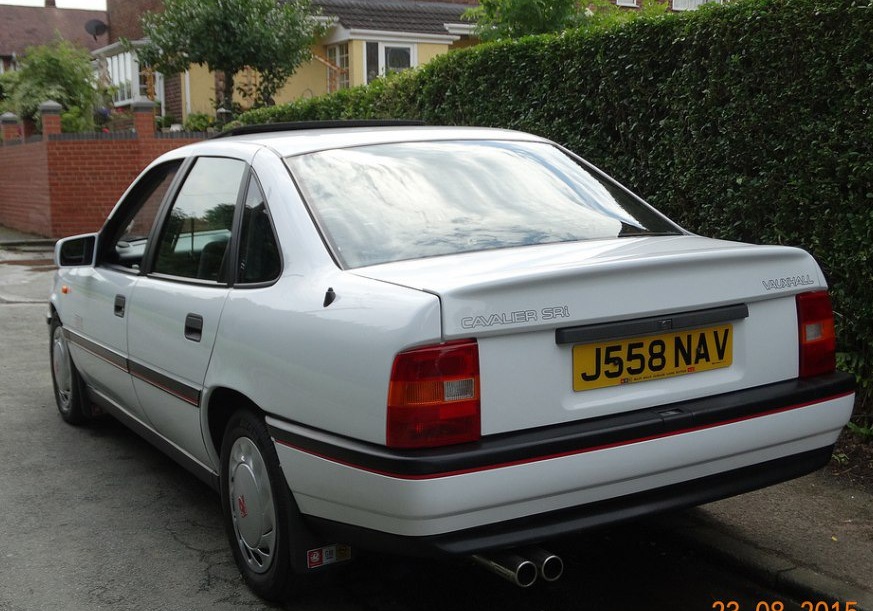
The Vauxhall Cavalier Mk III 2.0 SRi 16V was a performance-oriented variant of the Cavalier Mk III, produced between 1994 and 1995. Positioned as a near-top-of-the-line model, it offered a significant step up in power and handling compared to the base models, but remained more accessible than the ultimate performance version. The Mk III Cavalier, built on the GM X platform (internally known as the 1HX0), represented a substantial redesign of the Cavalier line, offering improved styling, safety, and refinement. The 2.0 SRi 16V aimed to appeal to drivers seeking a sporty sedan with a practical side.
At the heart of the 2.0 SRi 16V lay the X20XEV engine, a 1,998 cc (121.93 cu. in.) inline-four cylinder powerplant. This engine featured multi-port fuel injection and a dual overhead camshaft (DOHC) valvetrain with four valves per cylinder – hence the “16V” designation. The X20XEV was a robust and relatively advanced engine for its time, known for its good torque delivery. It produced 136 horsepower at 5,600 rpm and 188 Nm (138.66 lb-ft) of torque at 3,200 rpm. The engine’s design emphasized drivability and responsiveness, making it well-suited to everyday driving conditions. The engine required 4 liters (4.23 US qt) of oil and 7.2 liters (7.61 US qt) of coolant.
The driving experience in the 2.0 SRi 16V was noticeably more engaging than that of the lower-powered Cavalier models. Acceleration from 0 to 62 mph took approximately 9.5 seconds, and it could achieve a top speed of 130.49 mph (210 km/h). While not a sports car by modern standards, the SRi 16V offered a good balance of performance and comfort. The five-speed manual transmission allowed drivers to fully exploit the engine’s powerband. The gear ratios were tuned to provide brisk acceleration in the lower gears and comfortable cruising at highway speeds. Compared to the base 1.8L models, the 2.0 SRi 16V provided a substantial increase in power and torque, resulting in a more confident and enjoyable driving experience. It differed from potential future turbocharged or diesel variants by offering a naturally aspirated, rev-happy engine.
The SRi 16V trim level included a number of features designed to enhance both comfort and style. Standard equipment typically included sports seats, a leather-wrapped steering wheel, and upgraded interior trim. The dashboard featured a sporty instrument cluster with additional gauges. Optional extras could include electric windows, central locking, and an upgraded sound system. The interior was generally well-appointed for a car in its class, offering a comfortable and functional environment for both driver and passengers. The exterior styling was also enhanced with features such as a rear spoiler and alloy wheels.
The Cavalier Mk III 2.0 SRi 16V utilized an independent McPherson strut suspension setup at the front, coupled with a coil spring rear suspension. This configuration provided a good balance of ride comfort and handling. The front brakes were ventilated discs, while the rear brakes were discs, offering adequate stopping power for the car’s weight and performance. Hydraulic power steering was standard, providing light and precise steering feel. The car rode on 195/60 R15 tires, mounted on 15-inch alloy wheels. The suspension was tuned to provide a slightly firmer ride than the base models, enhancing handling and stability.
Contemporary reviews of the 2.0 SRi 16V generally praised its performance and handling. Critics noted that the engine provided ample power for spirited driving, and the chassis felt well-balanced and responsive. Fuel economy was rated at approximately 34.1 US mpg (6.9 l/100 km). Compared to the lower-powered Cavalier models, the SRi 16V offered a significant improvement in driving enjoyment. However, some reviewers noted that the interior quality, while acceptable, was not quite as refined as some of its competitors. Reliability was generally good, although like any car of this era, regular maintenance was essential.
| Brand | Vauxhall |
| Model | Cavalier |
| Generation | Cavalier Mk III |
| Type | 2.0 SRi 16V (136 Hp) |
| Start of production | 1994 |
| End of production | 1995 |
| Engine Model/Code | X20XEV |
| Engine displacement | 1998 cm3 (121.93 cu. in.) |
| Number of cylinders | 4 |
| Power | 136 Hp @ 5600 rpm |
| Torque | 188 Nm @ 3200 rpm (138.66 lb.-ft. @ 3200 rpm) |
| Fuel consumption (combined) | 6.9 l/100 km (34.1 US mpg, 40.9 UK mpg, 14.5 km/l) |
| Acceleration 0-62 mph | 9.5 sec |
| Maximum speed | 210 km/h (130.49 mph) |
| Kerb Weight | 1230 kg (2711.69 lbs) |
| Fuel tank capacity | 61 l (16.11 US gal, 13.42 UK gal) |
| Length | 4432 mm (174.49 in) |
| Width | 1706 mm (67.17 in) |
| Height | 1400 mm (55.12 in) |
| Number of gears | 5 |
| Gearbox type | Manual transmission |
Today, the Vauxhall Cavalier Mk III 2.0 SRi 16V is considered a classic among British car enthusiasts. The X20XEV engine is known for its durability, and well-maintained examples can still provide reliable transportation. However, as with any older vehicle, finding a rust-free example can be challenging. Parts availability is generally good, although some specific trim pieces may be difficult to source. The 2.0 SRi 16V represents a sweet spot in the Cavalier Mk III lineup, offering a good balance of performance, practicality, and affordability in the used car market.