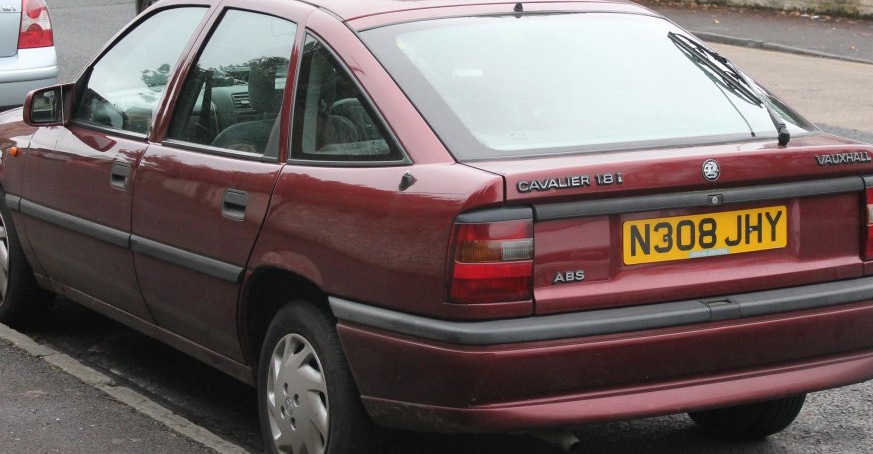
The Vauxhall Cavalier Mk III CC 2.0i 16V, produced between 1988 and 1989, represented a performance-oriented variant within the Mk III Cavalier (also known as the Opel Vectra A in some markets) range. This model, built on the GM H platform (internally designated 1HX0/A3), aimed to offer a more engaging driving experience than the base models, bridging the gap between the more economical trims and the forthcoming, more luxurious versions. It was primarily sold as a five-door hatchback, though saloon (sedan) versions were also available across the Mk III range.
Powertrain & Engine Architecture
The heart of the 2.0i 16V was the 20XEJ engine, a 1,998 cc (121.93 cu. in.) inline-four cylinder gasoline engine. This engine was a significant upgrade over the smaller displacement and less powerful engines offered in the Cavalier lineup. It featured a dual overhead camshaft (DOHC) valvetrain with four valves per cylinder, contributing to its higher power output. The engine utilized multi-port fuel injection, a relatively advanced system for its time, ensuring precise fuel delivery and improved efficiency. The compression ratio was set at 10.5:1. Engine oil capacity was 4.5 liters (4.76 US quarts / 3.96 UK quarts) and required a specification that would have been detailed in the owner’s manual.
The 20XEJ produced 150 horsepower (hp) at 6000 rpm and 196 Newton-meters (144.56 lb-ft) of torque at 4600 rpm. This power was delivered to the front wheels through a three or four-speed automatic transmission, depending on the specific market and year of production. The automatic transmission was chosen to broaden the appeal of the 2.0i 16V, offering convenience alongside respectable performance. While not as sporty as the five-speed manual option available on other 2.0i 16V models, the automatic provided a smoother, more relaxed driving experience.
Transmission Details
The automatic transmission used in the 2.0i 16V was a conventional hydraulic automatic, offering three forward gears and reverse. Gear ratios were tuned to balance acceleration and fuel economy, though the automatic inherently reduced overall efficiency compared to a manual gearbox. The transmission’s shift points were designed to keep the engine within its optimal power band, providing adequate acceleration for everyday driving. Specific gear ratios varied slightly depending on the transmission model used.
Driving Characteristics
The 2.0i 16V automatic offered a noticeable step up in performance compared to the lower-spec Cavalier models. Acceleration from 0 to 60 mph was approximately 8.1 seconds, and 0-100 km/h took around 8.5 seconds. While these figures weren’t groundbreaking, they were competitive for a family hatchback of the late 1980s. The engine felt responsive, particularly in the mid-range, and provided sufficient power for overtaking maneuvers. However, the automatic transmission did detract somewhat from the engine’s potential, resulting in a less engaging driving experience than the manual version. The weight-to-power ratio of 8.1 kg/hp and weight-to-torque ratio of 6.2 kg/Nm indicated a reasonably balanced vehicle.
Compared to the 1.8L and 2.0L 8V engines available in other Cavalier trims, the 2.0i 16V offered significantly more power and a higher rev limit. The 16-valve head allowed for improved breathing, resulting in a more spirited engine character. The 2.0i 16V was positioned as a mid-range performance option, appealing to drivers who wanted more than basic transportation but didn’t require the ultimate performance of potential future, higher-spec models.
Equipment & Trim Levels
The 2.0i 16V automatic typically came with a higher level of standard equipment than the base Cavalier models. This included features such as central locking, electric windows, and a more comprehensive instrument cluster. Interior upholstery was generally cloth, though higher-spec trims might have offered optional leather seats. The dashboard layout was typical of the Mk III Cavalier, featuring a functional and straightforward design. Optional extras included a sunroof, upgraded audio system, and alloy wheels. The trim level often denoted the quality of the interior materials and the inclusion of additional convenience features.
Chassis & Braking
The Cavalier Mk III CC utilized an independent McPherson strut suspension system at the front, providing a comfortable ride and decent handling. The rear suspension employed a coil spring setup. The 2.0i 16V models generally featured a thicker anti-roll bar compared to the base models, reducing body roll during cornering. Braking was handled by ventilated discs at the front and discs at the rear, providing adequate stopping power. An Anti-lock Braking System (ABS) was often included as standard equipment, enhancing safety. The steering system was a rack and pinion setup with hydraulic power assistance, offering precise and responsive steering feel. The standard tire size was 195/60 R15, mounted on 15-inch wheels.
Market Reception & Comparison
The 2.0i 16V automatic was generally well-received by automotive critics, who praised its performance and comfortable ride. However, some reviewers noted that the automatic transmission detracted from the engine’s potential, and the manual version was often preferred by driving enthusiasts. Fuel economy was rated at 7.2 l/100 km (32.7 US mpg / 39.2 UK mpg / 13.9 km/l), which was reasonable for a vehicle of its class and performance level. Compared to the 1.8L and 2.0L 8V models, the 2.0i 16V offered a significant performance advantage, but at a higher price point. Reliability was generally good, though regular maintenance was essential to ensure the longevity of the engine and transmission.
Technical Specifications
| Brand | Vauxhall |
| Model | Cavalier |
| Generation | Cavalier Mk III CC |
| Type (Engine) | 2.0i 16V (150 Hp) |
| Start of production | 1988 |
| End of production | 1989 |
| Powertrain Architecture | Internal Combustion engine |
| Body type | Hatchback |
| Seats | 5 |
| Doors | 5 |
| Fuel consumption (combined) | 7.2 l/100 km |
| Fuel consumption (US mpg) | 32.7 US mpg |
| Fuel consumption (UK mpg) | 39.2 UK mpg |
| Fuel consumption (km/l) | 13.9 km/l |
| Fuel Type | Petrol (Gasoline) |
| Acceleration 0 – 100 km/h | 8.5 sec |
| Acceleration 0 – 62 mph | 8.5 sec |
| Acceleration 0 – 60 mph | 8.1 sec |
| Maximum speed | 217 km/h / 134.84 mph |
| Weight-to-power ratio | 8.1 kg/Hp |
| Weight-to-torque ratio | 6.2 kg/Nm |
| Power | 150 Hp @ 6000 rpm |
| Power per litre | 75.1 Hp/l |
| Torque | 196 Nm @ 4600 rpm / 144.56 lb.-ft. @ 4600 rpm |
| Engine layout | Front, Transverse |
| Engine Model/Code | 20XEJ |
| Engine displacement | 1998 cm3 / 121.93 cu. in. |
| Number of cylinders | 4 |
| Engine configuration | Inline |
| Cylinder Bore | 86 mm / 3.39 in. |
| Piston Stroke | 86 mm / 3.39 in. |
| Compression ratio | 10.5:1 |
| Number of valves per cylinder | 4 |
| Fuel injection system | Multi-port manifold injection |
| Engine aspiration | Naturally aspirated engine |
| Valvetrain | DOHC |
| Engine oil capacity | 4.5 l / 4.76 US qt | 3.96 UK qt |
| Coolant | 7.2 l / 7.61 US qt | 6.34 UK qt |
| Kerb Weight | 1215 kg / 2678.62 lbs. |
| Max. weight | 1720 kg / 3791.95 lbs. |
| Max load | 505 kg / 1113.33 lbs. |
| Trunk (boot) space – minimum | 460 l / 16.24 cu. ft. |
| Trunk (boot) space – maximum | 1290 l / 45.56 cu. ft. |
| Fuel tank capacity | 61 l / 16.11 US gal | 13.42 UK gal |
| Length | 4352 mm / 171.34 in. |
| Width | 1706 mm / 67.17 in. |
| Height | 1400 mm / 55.12 in. |
| Wheelbase | 2600 mm / 102.36 in. |
| Front track | 1420 mm / 55.91 in. |
| Rear (Back) track | 1423 mm / 56.02 in. |
| Drivetrain Architecture | Front wheel drive |
| Front suspension | Independent, type McPherson with coil spring and anti-roll bar |
| Rear suspension | Coil spring |
| Front brakes | Ventilated discs |
| Rear brakes | Disc |
| Assisting systems | ABS (Anti-lock braking system) |
| Steering type | Steering rack and pinion |
| Power steering | Hydraulic Steering |
| Tires size | 195/60 R15 |
| Wheel rims size | 15 |
Legacy
The 2.0i 16V Cavalier, while not the most common variant, holds a respectable position among enthusiasts. The 20XEJ engine is known for its durability and tunability, making it a popular choice for modifications. Today, well-maintained examples are sought after by collectors and classic car enthusiasts. The automatic transmission, while not ideal for performance driving, has proven to be relatively reliable. The Cavalier Mk III CC 2.0i 16V represents a significant step forward in performance and refinement for the Cavalier model line, and remains a fondly remembered vehicle from the late 1980s.