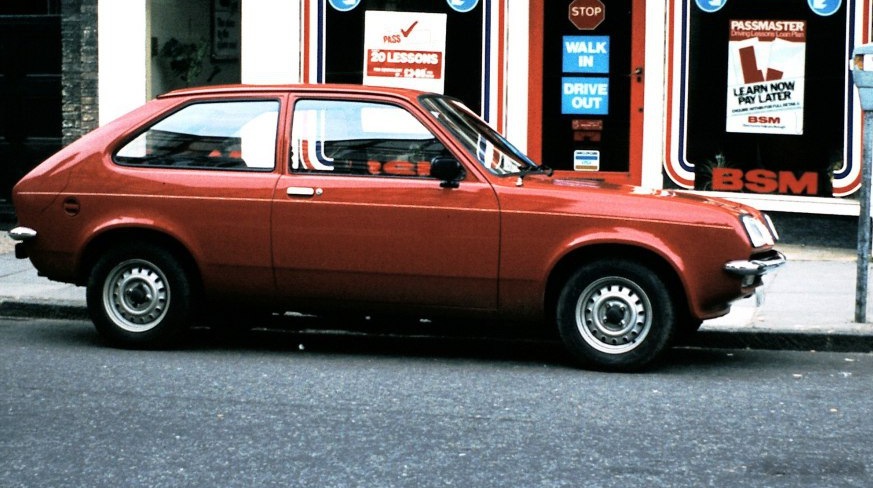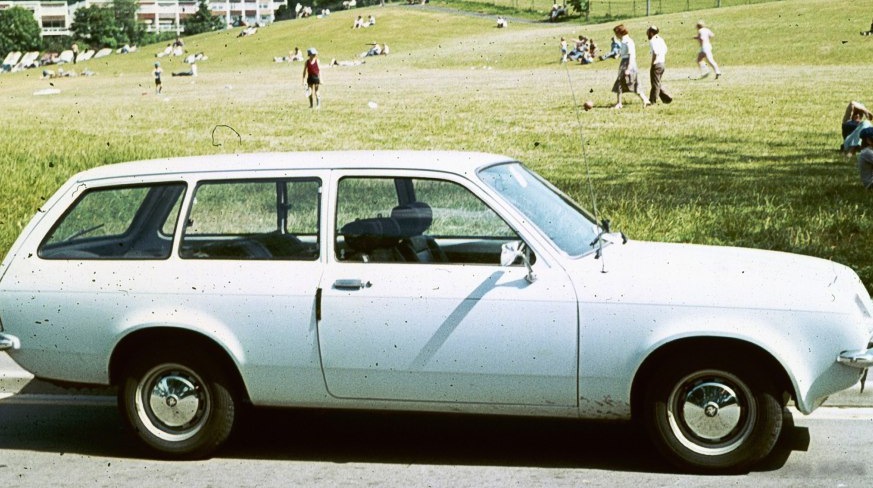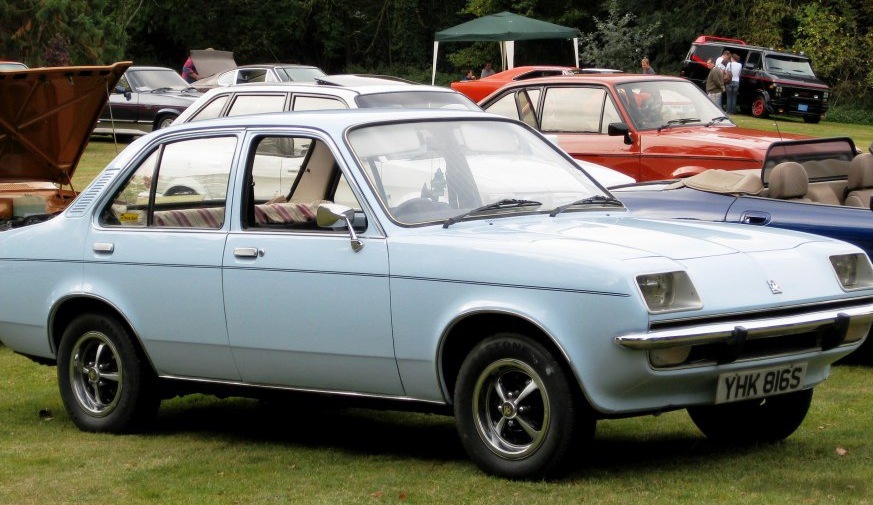
The Vauxhall Chevette 1300, producing 58 horsepower, was a mainstay of the British automotive market from 1975 to 1985. Positioned as the entry-level model within the Chevette range, it offered affordable transportation during a period of economic uncertainty and rising fuel costs. The Chevette itself was Vauxhall’s response to the increasing popularity of smaller, more fuel-efficient vehicles, particularly those originating from Japan and continental Europe. Built on a rear-wheel-drive platform, the 1300 represented a deliberate return to simpler, more traditional automotive engineering, contrasting with the increasingly complex front-wheel-drive designs gaining traction at the time. It was part of the first generation Chevette, internally designated as the Mk1.
Powertrain & Engine Architecture
The heart of the Chevette 1300 was the 1256 cc (76.65 cubic inches) inline-four cylinder engine. This engine, derived from Vauxhall’s long-running overhead valve (OHV) design, featured a two-valve-per-cylinder configuration. The engine code is not widely documented, but it represents a refinement of earlier Vauxhall units. Fuel delivery was managed by a single Zenith 36mm downdraft carburetor, a relatively simple and robust system for the era. The engine’s longitudinal mounting within the engine bay, coupled with rear-wheel drive, was a characteristic of British automotive design of the period. The engine produced 58 hp at 5600 rpm and 89 Nm (65.64 lb-ft) of torque at 2600 rpm. The engine required 2.8 liters (2.96 US quarts, 2.46 UK quarts) of oil, specified to Vauxhall’s standards for the time. The cooling system held 5.8 liters (6.13 US quarts, 5.1 UK quarts) of coolant.
Transmission
The Chevette 1300 was primarily equipped with a four-speed manual transmission. This gearbox was a fully synchronized unit, offering relatively smooth gear changes for its time. The gear ratios were tailored to provide reasonable acceleration and fuel economy, prioritizing usability over outright performance. While an automatic transmission was offered on higher-spec Chevette models, it was not available with the base 1300 engine. The manual transmission contributed to the car’s relatively low weight and simple mechanical layout.
Driving Characteristics
The Chevette 1300’s driving experience was defined by its simplicity and affordability. With only 58 horsepower propelling a relatively lightweight vehicle (826 kg or 1821.02 lbs), acceleration was modest. The car was not designed for rapid speeds or spirited driving. However, the rear-wheel-drive layout provided a degree of handling balance that was uncommon in other small cars of the era. The steering, utilizing a rack and pinion system, was direct and provided good feedback to the driver. The suspension, while basic, offered a comfortable ride on most road surfaces. The 1300’s performance was adequate for urban driving and shorter journeys, but it struggled on steep inclines or when fully loaded. Compared to the later 1600cc and HS models, the 1300 felt noticeably slower and less refined.
Equipment & Trim Levels
The Chevette 1300 was deliberately minimalist in its specification, reflecting its position as the entry-level model. Standard features included basic cloth upholstery, a simple dashboard layout with minimal instrumentation (speedometer, fuel gauge, and temperature gauge), and manually operated windows and door locks. The interior was functional rather than luxurious. Optional extras were limited but could include a radio, heater, and upgraded seat trim. The exterior trim was also basic, with black plastic bumpers and steel wheels. The car was typically finished in a limited range of solid colors. The focus was on providing a practical and affordable vehicle, rather than one laden with creature comforts.
Chassis & Braking
The Chevette’s chassis was a traditional body-on-frame construction, providing a robust and relatively simple structure. The front suspension utilized independent wishbones and coil springs, while the rear suspension employed a live axle with leaf springs. This setup provided a reasonable balance between ride comfort and handling. The braking system consisted of front disc brakes and rear drum brakes. The brakes were adequate for the car’s performance, but lacked the stopping power of more modern systems. The car’s relatively light weight helped to mitigate the limitations of the braking system. The front and rear track width were both 1300 mm (51.18 inches).
Market Reception & Comparison
The Vauxhall Chevette 1300 was generally well-received by the British public as an affordable and practical small car. Critics praised its simplicity, reliability, and fuel economy. However, it was also criticized for its lack of refinement and modest performance. Compared to rivals such as the Ford Fiesta and Austin Metro, the Chevette offered a more spacious interior and a more traditional driving experience. However, it lacked the Fiesta’s more modern design and the Metro’s more sophisticated engineering. The 1300’s fuel economy was competitive for the time, averaging around 35-40 mpg. Reliability was generally good, although the car’s simple construction meant that it required regular maintenance. The 1300 was significantly cheaper to purchase and maintain than the higher-spec Chevette models, making it a popular choice for first-time buyers and those on a tight budget.
Technical Specifications
| Body Type | Sedan, 4 Doors, 5 Seats |
| Engine Displacement | 1.3 l / 1256 cm3 / 76.65 cu. in. |
| Number of Cylinders | 4, Inline |
| Power | 58 Hp @ 5600 rpm |
| Torque | 89 Nm @ 2600 rpm / 65.64 lb.-ft. @ 2600 rpm |
| Drivetrain | Rear wheel drive. Internal Combustion engine. |
| Transmission | 4 gears, manual transmission |
| Length | 4188 mm / 164.88 in. |
| Width | 1570 mm / 61.81 in. |
| Height | 1313 mm / 51.69 in. |
| Wheelbase | 2395 mm / 94.29 in. |
| Kerb Weight | 826 kg / 1821.02 lbs. |
| Fuel Tank Capacity | 45 l / 11.89 US gal / 9.9 UK gal |
Legacy
The Vauxhall Chevette 1300, while now a relatively rare sight on British roads, holds a nostalgic place in the hearts of many drivers who experienced its simple and affordable motoring in the 1970s and 1980s. The engine, while not particularly powerful, proved to be durable and relatively easy to maintain. The car’s rear-wheel-drive layout and simple mechanicals made it a popular choice for amateur mechanics and enthusiasts. Today, well-maintained examples of the Chevette 1300 are sought after by classic car collectors. The car’s affordability and simplicity continue to appeal to those seeking a taste of classic British motoring. Parts availability can be challenging, but a dedicated network of enthusiasts and suppliers continues to support the Chevette community. The 1300’s legacy is one of providing reliable and affordable transportation during a challenging economic period.