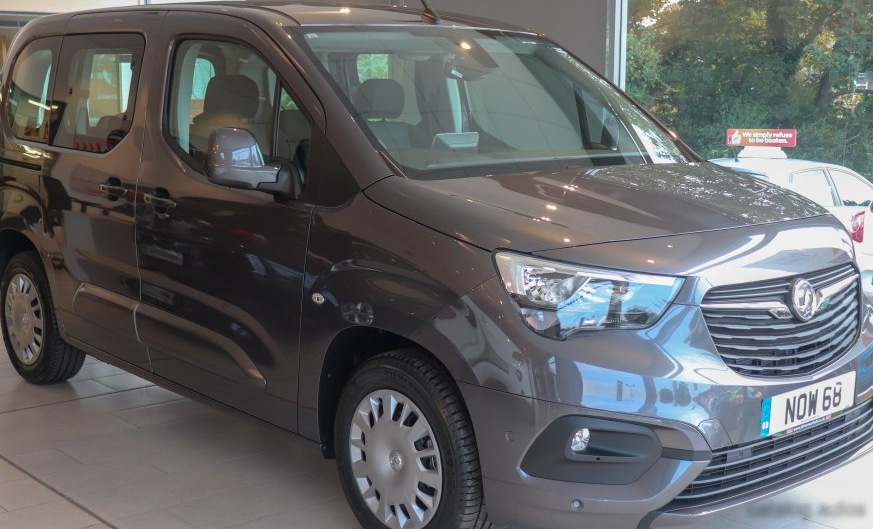
The Vauxhall Combo Life E 1.2 Turbo (110 hp) 7-seat configuration is a compact minivan produced from 2018 onwards as part of the Combo Life E generation. Positioned as a practical and versatile family vehicle, it offered a balance between affordability, fuel efficiency, and passenger capacity within the Combo Life lineup. This variant catered to families needing seven seats in a relatively small footprint, making it a popular choice for urban and suburban environments. The Combo Life E itself is based on the PSA Group’s EMP2 platform, shared with models like the Citroën Berlingo and Peugeot Rifter.
Powertrain & Engine Architecture
The heart of the Combo Life E 1.2 Turbo is the PSA-developed 1.2-liter inline-three cylinder gasoline engine, specifically the D12XHL or F12XHL engine code. This engine is a turbocharged, direct-injection unit designed for efficiency and reasonable performance. The direct injection system, utilizing high-pressure fuel injectors, ensures precise fuel delivery for optimized combustion. The engine also features variable valve timing (VVT) on both the intake and exhaust valves, further enhancing efficiency and responsiveness across the rev range. The 1.2L engine produces 110 horsepower at 5500 rpm and 205 Nm (151.2 lb-ft) of torque at 1750 rpm. This torque figure is a key characteristic, providing usable power at lower engine speeds, which is beneficial for everyday driving and carrying a full passenger load.
The Combo Life E 1.2 Turbo is equipped with a six-speed manual transmission. This transmission was chosen to maximize fuel economy and provide a more engaging driving experience compared to an automatic option, which was not widely available for this specific engine/trim combination in the US market. The gear ratios are tuned for a balance of acceleration and fuel efficiency, with a relatively long final drive to aid in highway cruising.
Engine Specifications
Key engine specifications include a displacement of 1199 cm³ (73.17 cubic inches) and a compression ratio of approximately 10.5:1. The engine utilizes a single turbocharger with an intercooler to increase air density and boost power output. Oil capacity is 3.5 liters (3.7 US quarts / 3.08 UK quarts), and the recommended oil specification is dependent on the specific market and year of manufacture. Coolant capacity is 5.7 liters (6.02 US quarts / 5.02 UK quarts).
Driving Characteristics
The 1.2 Turbo engine, while not exceptionally powerful, provides adequate performance for the Combo Life E, especially considering its intended use as a family vehicle. Acceleration is best described as moderate; 0-60 mph times are typically in the 12-14 second range. The engine feels most comfortable in the mid-range, offering sufficient power for overtaking and merging onto highways. The six-speed manual transmission allows drivers to keep the engine in its optimal power band. Compared to potential higher-output engine options (which were not commonly offered in this vehicle), the 1.2 Turbo prioritizes fuel economy over outright speed. The manual transmission also provides a more connected driving experience than an automatic would.
The vehicle’s weight, even with seven passengers, is relatively manageable, contributing to acceptable handling characteristics. The suspension is tuned for comfort, absorbing bumps and imperfections in the road well. However, this comfort comes at the expense of sporty handling; body roll is noticeable in corners. The steering is light and easy to use, making it well-suited for urban driving.
Equipment & Trim Levels
The Combo Life E 1.2 Turbo 7-seat variant typically came with a reasonable level of standard equipment. This included features such as air conditioning, a touchscreen infotainment system with Bluetooth connectivity, USB ports, and basic safety features like ABS, electronic stability control, and multiple airbags. Higher trim levels offered additional features such as a rearview camera, parking sensors, cruise control, and upgraded interior materials. Interior upholstery was typically cloth, with options for more durable and stain-resistant fabrics. The dashboard layout is functional and straightforward, prioritizing usability over aesthetics. Optional extras included panoramic sunroofs, navigation systems, and advanced driver-assistance systems (ADAS) like lane departure warning and automatic emergency braking, depending on the model year and market.
Chassis & Braking
The Combo Life E utilizes a front-wheel-drive chassis with a MacPherson strut suspension in the front and a torsion beam suspension in the rear. This setup provides a good balance of comfort and handling for a vehicle of its type. Braking duties are handled by disc brakes on the front wheels and drum brakes on the rear wheels. This configuration is typical for vehicles in this weight class, offering a cost-effective braking solution. The vehicle is equipped with ABS (Anti-lock Braking System) and electronic brake-force distribution (EBD) to enhance braking performance and stability. Stabilizer bars are fitted to both the front and rear axles to reduce body roll during cornering.
Market Reception & Comparison
The Vauxhall Combo Life E 1.2 Turbo 7-seat was generally well-received by critics as a practical and affordable family vehicle. Its spacious interior, versatile seating configuration, and reasonable fuel economy were frequently praised. However, some reviewers noted that the 1.2-liter engine could feel underpowered when fully loaded with passengers and luggage. Compared to other trims in the Combo Life lineup, the 1.2 Turbo offered the best fuel economy but the lowest performance. It competed with other compact minivans such as the Citroën Berlingo, Peugeot Rifter, and Renault Kangoo, offering a similar blend of practicality and affordability. Fuel economy figures are approximately 6.3 l/100 km (37.3 US mpg / 44.8 UK mpg) in urban conditions, 5 l/100 km (47 US mpg / 56.5 UK mpg) on the extra-urban cycle, and 5.5 l/100 km (42.8 US mpg / 51.4 UK mpg) combined. CO2 emissions are rated at 125 g/km (Euro 6d standard).
Technical Specifications
| Brand | Vauxhall |
| Model | Combo Life E |
| Type | 1.2 Turbo (110 Hp) 7 Seat |
| Start of production | 2018 |
| Engine Type | Internal Combustion Engine (Petrol/Gasoline) |
| Body Type | Minivan |
| Seats | 7 |
| Doors | 5 |
| Fuel Consumption (Urban) | 6.3 l/100 km (37.3 US mpg) |
| Fuel Consumption (Extra Urban) | 5 l/100 km (47 US mpg) |
| Fuel Consumption (Combined) | 5.5 l/100 km (42.8 US mpg) |
| CO2 Emissions | 125 g/km |
| Maximum Speed | 175 km/h (108.74 mph) |
| Engine Code | D12XHL, F12XHL |
| Engine Displacement | 1199 cm³ (73.17 cu. in.) |
| Number of Cylinders | 3 |
| Power | 110 Hp @ 5500 rpm |
| Torque | 205 Nm (151.2 lb.-ft.) @ 1750 rpm |
| Fuel Tank Capacity | 61 l (16.11 US gal) |
| Max. Weight | 2205 kg (4861.19 lbs.) |
| Trunk Space (Min) | 597 l (21.08 cu. ft.) |
| Trunk Space (Max) | 2126 l (75.08 cu. ft.) |
| Transmission | 6-speed Manual |
| Drive Type | Front Wheel Drive |
| Wheel Size | 205/60 R16 |
| Length | 4403 mm (173.35 in.) |
| Width | 1848 mm (72.76 in.) |
| Height | 1841 mm (72.48 in.) |
Legacy
The 1.2 Turbo engine in the Combo Life E has proven to be generally reliable, although like any engine, it is not without its potential issues. Common concerns include turbocharger wear and potential issues with the direct injection system. Regular maintenance, including oil changes and timely replacement of filters, is crucial for ensuring long-term reliability. On the used car market, the Combo Life E 1.2 Turbo 7-seat holds its value reasonably well, thanks to its practicality and versatility. It remains a popular choice for families seeking an affordable and spacious vehicle. Its relatively simple mechanical design and readily available parts contribute to lower maintenance costs compared to more complex vehicles. The combination of a fuel-efficient engine and a practical body style ensures that the Combo Life E 1.2 Turbo continues to be a relevant and desirable option in the used car market.