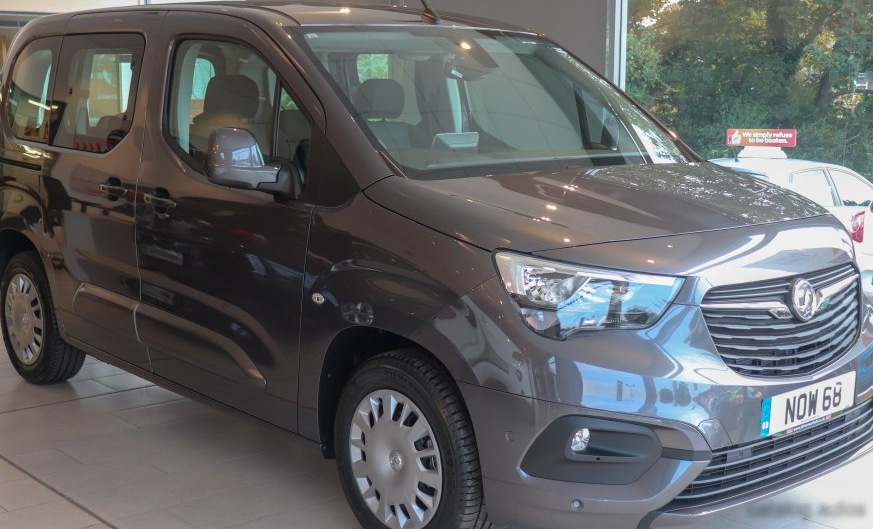
The Vauxhall Combo Life E 1.2 Turbo (130 hp) Automatic 7-Seat, launched in June 2019, represents a key variant within the Combo Life E generation. Positioned as a mid-range offering, it catered to families seeking a practical and fuel-efficient multi-passenger vehicle with the convenience of an automatic transmission. Built on the EMP2 platform (also known as the 1HX0/A3 platform shared with Peugeot and Citroën), the Combo Life E aimed to provide a spacious and versatile alternative to traditional MPVs and larger SUVs. This specific configuration balanced affordability with a reasonable level of performance and features, making it a popular choice in the European leisure activity vehicle (LAV) segment.
Powertrain & Engine Architecture
At the heart of the Combo Life E 1.2 Turbo is the F12XHT engine, a 1.2-liter turbocharged inline-three cylinder gasoline engine. This engine is part of Vauxhall/Opel’s Small Engine Family, known for its compact size and efficiency. It produces a maximum power output of 130 horsepower (97 kW) at 5500 rpm and 230 Nm (169.64 lb-ft) of torque at 1750 rpm, delivering a power-to-weight ratio of 108.4 hp per liter. The engine utilizes direct fuel injection, a technology that improves combustion efficiency and reduces emissions. The valvetrain employs a Double Overhead Camshaft (DOHC) configuration with Variable Valve Timing (VVT) on both intake and exhaust valves, optimizing performance across the engine’s operating range.
The engine is paired with an 8-speed automatic transmission, providing smooth and convenient gear changes. This transmission is an Aisin-sourced unit, known for its reliability and responsiveness. The automatic transmission contributes to the vehicle’s ease of driving, particularly in urban environments. The powertrain also incorporates a Start & Stop system to further enhance fuel economy and reduce emissions, and a particulate filter to meet stringent Euro 6d emission standards.
Engine Details
The 1.2-liter engine benefits from a turbocharger and intercooler, which significantly boost power and torque output compared to naturally aspirated engines of similar displacement. The direct injection system precisely meters fuel into the combustion chamber, maximizing efficiency and minimizing fuel waste. The engine oil capacity is 3.5 liters (3.7 US quarts or 3.08 UK quarts), and the recommended oil specification is crucial for maintaining engine health and longevity.
Driving Characteristics
The Combo Life E 1.2 Turbo Automatic offers a comfortable and practical driving experience. While not designed for outright performance, the 130 hp engine provides adequate power for everyday driving and highway cruising. Acceleration from 0 to 100 km/h (0-62 mph) takes approximately 12.3 seconds, and 0-60 mph is achieved in around 11.7 seconds. The maximum speed is electronically limited to 185 km/h (114.95 mph). The 8-speed automatic transmission contributes to a smooth driving experience, with well-chosen gear ratios that keep the engine operating within its optimal power band. Compared to the manual transmission versions, the automatic offers greater convenience, especially in stop-and-go traffic. However, the manual versions generally offer slightly better fuel economy and a more engaging driving experience. Compared to potential higher-output engine options (had they been available in this model), this variant prioritizes fuel efficiency and affordability over outright performance.
Equipment & Trim Levels
The Combo Life E 1.2 Turbo Automatic 7-Seat typically came equipped with a range of standard features designed to enhance comfort, convenience, and safety. These included air conditioning, a touchscreen infotainment system with Bluetooth connectivity, USB ports, and steering wheel-mounted audio controls. Safety features such as ABS (Anti-lock Braking System), electronic stability control, and multiple airbags were standard. The 7-seat configuration provides exceptional versatility for families, with flexible seating arrangements and ample space for passengers and luggage. Interior upholstery was typically cloth, with options for upgraded materials available. Optional extras could include navigation system, parking sensors, a rearview camera, and alloy wheels. Trim levels varied by market, but generally offered progressively more features and cosmetic enhancements.
Chassis & Braking
The Combo Life E features a front-wheel-drive layout with a MacPherson strut suspension at the front and a torsion beam suspension at the rear. This suspension setup provides a comfortable ride quality, absorbing bumps and irregularities in the road surface effectively. The braking system consists of disc brakes on the front wheels and drum brakes on the rear wheels, providing adequate stopping power for the vehicle’s weight class. The steering system utilizes a rack and pinion setup, offering precise and responsive steering feel. Tire sizes typically ranged from 205/60 R16 to 205/55 R17, depending on the trim level and wheel size. Stabilizer bars are included to reduce body roll during cornering.
Market Reception & Comparison
The Vauxhall Combo Life E 1.2 Turbo Automatic 7-Seat was generally well-received by critics and consumers alike. It was praised for its spacious interior, versatile seating arrangements, and fuel-efficient engine. The automatic transmission was appreciated for its convenience, making it a popular choice for families and drivers who prefer not to operate a manual gearbox. Fuel consumption figures ranged from 6.9 to 7.0 liters per 100 kilometers (34.1 to 33.6 US mpg or 40.9 to 40.4 UK mpg), making it a competitive option in its class. CO2 emissions were rated at 157-158 g/km. Compared to the diesel variants, the 1.2 Turbo offered lower upfront cost but slightly higher running costs due to the higher price of gasoline. Compared to other MPVs and SUVs in the same price range, the Combo Life E offered a compelling combination of practicality, affordability, and fuel efficiency.
Technical Specifications
| Brand | Vauxhall |
| Model | Combo Life E |
| Type | 1.2 Turbo (130 Hp) Automatic 7 Seat |
| Start of production | June, 2019 |
| Powertrain Architecture | Internal Combustion engine |
| Body type | Minivan |
| Seats | 7 |
| Doors | 5 |
| Combined fuel consumption (WLTP) | 6.9-7 l/100 km |
| CO2 emissions (WLTP) | 157-158 g/km |
| Fuel Type | Petrol (Gasoline) |
| Acceleration 0 – 100 km/h | 12.3 sec |
| Acceleration 0 – 62 mph | 12.3 sec |
| Acceleration 0 – 60 mph | 11.7 sec |
| Maximum speed | 185 km/h (114.95 mph) |
| Emission standard | Euro 6d |
| Power | 130 Hp @ 5500 rpm |
| Torque | 230 Nm @ 1750 rpm (169.64 lb.-ft. @ 1750 rpm) |
| Engine layout | Front, Transverse |
| Engine Model/Code | F12XHT |
| Engine displacement | 1199 cm3 (73.17 cu. in.) |
| Number of cylinders | 3 |
| Engine configuration | Inline |
| Number of valves per cylinder | 4 |
| Fuel injection system | Direct injection |
| Engine aspiration | Turbocharger, Intercooler |
| Valvetrain | DOHC, VVT |
| Engine oil capacity | 3.5 l (3.7 US qt | 3.08 UK qt) |
| Trunk (boot) space – minimum | 571 l (20.16 cu. ft.) |
| Trunk (boot) space – maximum | 2126 l (75.08 cu. ft.) |
| Fuel tank capacity | 61 l (16.11 US gal | 13.42 UK gal) |
| Length | 4403 mm (173.35 in.) |
| Width | 1921 mm (75.63 in.) |
| Width including mirrors | 2107 mm (82.95 in.) |
| Height | 1841 mm (72.48 in.) |
| Wheelbase | 2785 mm (109.65 in.) |
| Number of gears and type of gearbox | 8 gears, automatic transmission |
| Drive wheel | Front wheel drive |
Legacy
The F12XHT engine and Aisin 8-speed automatic transmission combination have proven to be relatively reliable in the Combo Life E. While some minor issues have been reported, such as occasional turbocharger problems or transmission glitches, these are not widespread. The Combo Life E 1.2 Turbo Automatic 7-Seat remains a popular choice in the used car market, offering a practical and affordable option for families. Its fuel efficiency and spacious interior continue to appeal to buyers seeking a versatile and economical vehicle. Proper maintenance, including regular oil changes and adherence to the manufacturer’s service schedule, is crucial for ensuring the long-term reliability of this powertrain.