
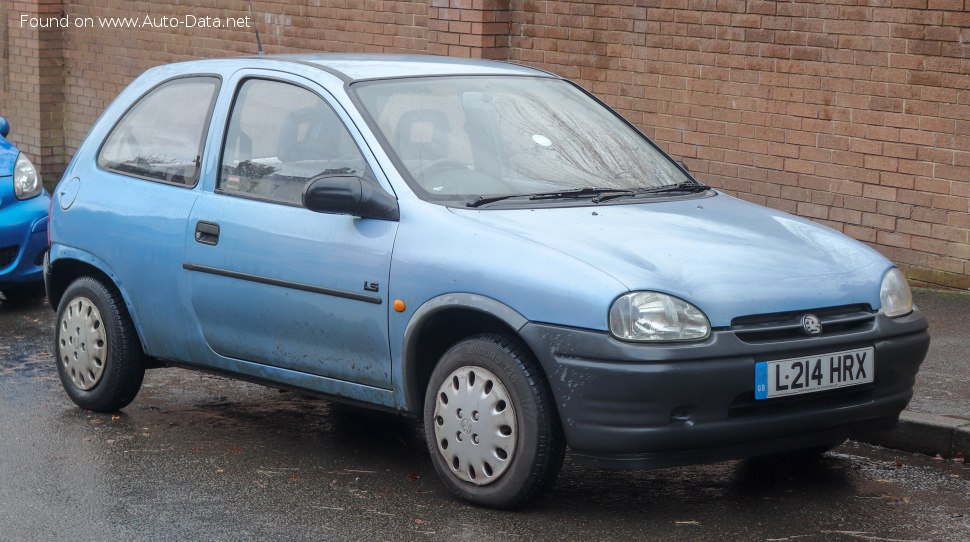
The Vauxhall Corsa B 1.2i 16V Automatic, produced between 1998 and 2000, represented an entry-level offering within the broader Corsa B range (1993-2000). Positioned as a practical and economical choice, this variant aimed at buyers prioritizing affordability and ease of use over outright performance. It was built on the GM/Opel 1HX0/A3 platform, shared with other small European hatchbacks like the Opel/Vauxhall Tigra and the Fiat Punto. The Corsa B represented a significant step forward for Vauxhall in the supermini segment, offering improved styling, safety, and refinement compared to its predecessor, the Corsa A.
The 1.2i 16V Automatic: A Detailed Overview
This specific Corsa B trim combined a relatively small-displacement, 16-valve engine with a four-speed automatic transmission. This combination was designed to provide comfortable and convenient city driving, appealing to a demographic that included new drivers, urban commuters, and those seeking a no-fuss vehicle. While not a performance-oriented model, it offered a reasonable level of usability for everyday tasks.
Powertrain & Engine Architecture
The heart of the Corsa B 1.2i 16V Automatic is the X12XE engine, a 1.2-liter (1199 cc) inline-four cylinder gasoline engine. This engine featured multi-port fuel injection and a double overhead camshaft (DOHC) valvetrain, contributing to its relatively efficient operation for its time. The 16 valves (four per cylinder) allowed for improved breathing and a slightly higher power output compared to engines with fewer valves. The engine produced 65 horsepower (hp) at 5600 rpm and 81.13 lb-ft of torque at 4000 rpm. The compression ratio was set at 10.1:1.
The automatic transmission was a four-speed unit, designed for smooth, if not particularly rapid, gear changes. It was a conventional hydraulic automatic, lacking the more advanced electronic controls found in some contemporary transmissions. The gear ratios were optimized for fuel economy and drivability in urban environments, rather than aggressive acceleration. The transmission’s operation was generally reliable, but it wasn’t known for its sporty responsiveness.
Driving Characteristics
The driving experience in the Corsa B 1.2i 16V Automatic was characterized by its relaxed and undemanding nature. Acceleration was modest, taking approximately 17 seconds to reach 62 mph (100 km/h) and 16.2 seconds to reach 60 mph. The engine felt somewhat strained at higher speeds, and overtaking maneuvers required careful planning. The automatic transmission contributed to a smooth ride, but it also resulted in a noticeable loss of power compared to the available five-speed manual version. The manual transmission, paired with the same engine, offered a slightly quicker 0-60 mph time and improved fuel economy.
The gear ratios were spaced to prioritize fuel efficiency and low-speed drivability. First gear provided adequate launch power, but subsequent gears were geared for cruising rather than rapid acceleration. The transmission’s shift points were programmed to maintain the engine within its optimal operating range, but they could sometimes feel hesitant or ill-timed, particularly during sudden acceleration requests.
Equipment & Trim Levels
The 1.2i 16V Automatic typically came with a fairly basic level of equipment, reflecting its position as an entry-level model. Standard features generally included power steering, central locking, and an adjustable steering column. Interior upholstery was typically cloth, and the dashboard featured a simple, functional design. Air conditioning was often an optional extra, as were electric windows and a radio/cassette player. Higher trim levels, such as the “Club” or “Sport,” offered additional features like alloy wheels, upgraded interior trim, and body-colored bumpers.
Safety features were relatively limited by modern standards. Anti-lock brakes (ABS) were often optional, and airbags were not standard equipment on all models. The Corsa B did, however, benefit from a reinforced safety cell and side impact protection.
Chassis & Braking
The Corsa B 1.2i 16V Automatic utilized a MacPherson strut front suspension and a torsion beam rear suspension. This setup provided a reasonable balance between ride comfort and handling. The torsion beam rear suspension was a cost-effective solution that minimized complexity and weight. The front brakes were ventilated discs, providing adequate stopping power, while the rear brakes were drums. This combination was typical for vehicles in this weight class and price range at the time.
The relatively light curb weight of 875 kg (1929.04 lbs) helped to offset the engine’s modest power output. The suspension was tuned for comfort, resulting in a slightly softer ride than some of its more performance-oriented rivals. Stabilizer bars were fitted to both the front and rear axles to reduce body roll during cornering.
Market Reception & Comparison
The Corsa B 1.2i 16V Automatic received mixed reviews from automotive critics. While praised for its affordability and ease of use, it was often criticized for its lack of performance and somewhat dated automatic transmission. Compared to the more powerful 1.4-liter and 1.6-liter versions, the 1.2i Automatic felt significantly slower and less refined. The 1.9 TDI diesel version offered superior fuel economy and torque, but at a higher purchase price.
Fuel economy was a strong point for the 1.2i 16V Automatic, achieving approximately 28.3 US mpg (34 UK mpg) in urban driving and 46.1 US mpg (55.4 UK mpg) on the open road. Reliability was generally good, although the automatic transmission could be prone to occasional issues if not properly maintained. The engine itself was known to be durable and relatively trouble-free.
Technical Specifications
| Brand | Vauxhall |
| Model | Corsa |
| Generation | Corsa B |
| Type (Engine) | 1.2i 16V (65 Hp) Automatic |
| Start of production | 1998 |
| End of production | 2000 |
| Fuel consumption (urban) | 8.3 l/100 km (28.3 US mpg) |
| Fuel consumption (extra urban) | 5.1 l/100 km (46.1 US mpg) |
| Fuel Type | Petrol (Gasoline) |
| Acceleration 0 – 100 km/h | 17 sec |
| Acceleration 0 – 62 mph | 17 sec |
| Acceleration 0 – 60 mph | 16.2 sec |
| Maximum speed | 155 km/h (96.31 mph) |
| Weight-to-power ratio | 13.5 kg/Hp |
| Engine Power | 65 Hp @ 5600 rpm |
| Engine Torque | 110 Nm @ 4000 rpm (81.13 lb.-ft. @ 4000 rpm) |
| Engine Layout | Front, Transverse |
| Engine Model/Code | X12XE |
| Engine Displacement | 1199 cm3 (73.17 cu. in.) |
| Number of Cylinders | 4 |
| Cylinder Bore | 72.5 mm (2.85 in.) |
| Piston Stroke | 72.6 mm (2.86 in.) |
| Compression Ratio | 10.1:1 |
| Engine Oil Capacity | 3.5 l (3.7 US qt | 3.08 UK qt) |
| Coolant Capacity | 5.2 l (5.49 US qt | 4.58 UK qt) |
| Kerb Weight | 875 kg (1929.04 lbs.) |
| Max. weight | 1370 kg (3020.33 lbs.) |
| Trunk (boot) space (min) | 260 l (9.18 cu. ft.) |
| Trunk (boot) space (max) | 1050 l (37.08 cu. ft.) |
| Fuel tank capacity | 46 l (12.15 US gal | 10.12 UK gal) |
| Length | 3740 mm (147.24 in.) |
| Width | 1610 mm (63.39 in.) |
| Height | 1420 mm (55.91 in.) |
| Wheelbase | 2443 mm (96.18 in.) |
| Number of gears | 4 |
| Gearbox type | Automatic transmission |
Legacy
The Corsa B 1.2i 16V Automatic, while not a particularly sought-after variant today, remains a relatively affordable and accessible classic car. The X12XE engine is known for its durability, and the automatic transmission, while not the most refined, is generally reliable if properly maintained. These cars are often found in the hands of first-time car owners or those seeking a simple, economical runabout. Parts availability is generally good, although some trim-specific components may be difficult to find. The Corsa B 1.2i 16V Automatic represents a snapshot of affordable motoring from the late 1990s, offering a blend of practicality, economy, and ease of use.
