
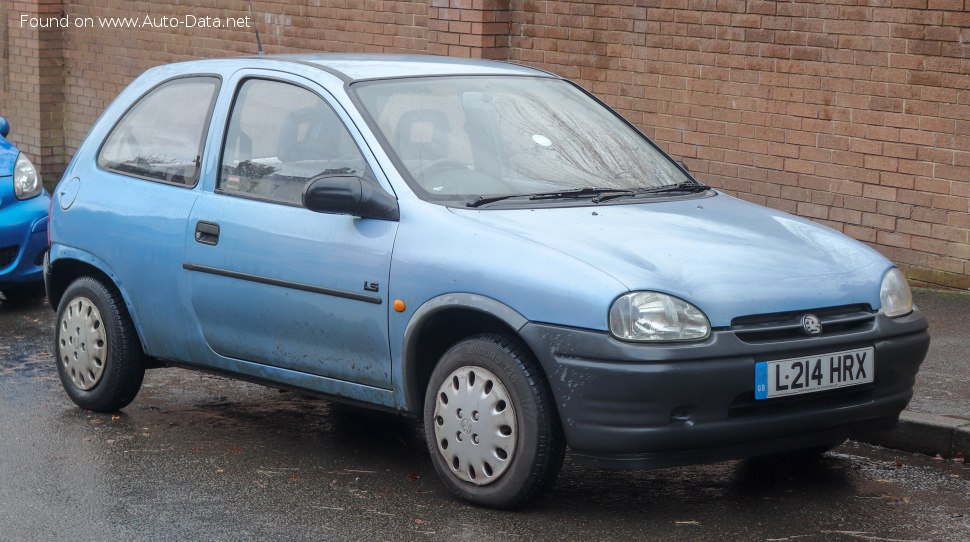
The Vauxhall Corsa B 1.2i, producing 45 horsepower, was an entry-level variant of the Corsa B generation, manufactured between 1993 and 1997. This model represented a significant update over its predecessor, the Corsa A, and was a key player in Vauxhall’s attempt to capture a larger share of the European supermini market. Positioned as the most affordable option in the Corsa B lineup, it targeted budget-conscious buyers, first-time drivers, and those seeking economical transportation. The Corsa B was built on the GM121 platform, also known as the 1HX0/A3 platform, shared with other Opel/Vauxhall and Fiat models.
Powertrain & Engine Architecture
The heart of the Corsa B 1.2i was the C12NZ (and later X12SZ) inline-four cylinder engine, displacing 1195cc (72.92 cubic inches). This engine was a naturally aspirated, two-valve-per-cylinder unit featuring single-point fuel injection. The single-point injection system, while cost-effective, was less sophisticated than the multi-point injection systems found in higher-spec Corsa B models. This contributed to the lower power output. The engine produced 45 hp at 5000 rpm and 88 Nm (64.91 lb-ft) of torque at 2400 rpm. The compression ratio was 10:1. Engine oil capacity was 3.5 liters (3.7 US quarts), and the recommended coolant capacity was 5.9 liters (6.23 US quarts).
The 1.2i was typically paired with a five-speed manual transmission. However, a four-speed automatic transmission was also offered, though less common. The automatic transmission was a traditional hydraulic unit, known for its simplicity and durability, but also for its relatively slow shift times and tendency to hunt for gears, especially under load. The automatic version significantly impacted performance, adding to the 0-60 mph time.
Engine Codes & Variations
The C12NZ engine code was used during the earlier years of Corsa B production. Later models transitioned to the X12SZ code, which represented minor revisions to the engine management system and potentially some internal component upgrades. These changes were primarily aimed at improving emissions and refining engine operation, but did not result in a significant power increase.
Driving Characteristics
The Corsa B 1.2i, particularly in its 45 hp guise, offered modest performance. Acceleration from 0 to 60 mph took approximately 19 seconds, and the top speed was around 90 mph. The engine felt strained at higher speeds, and overtaking required careful planning. The five-speed manual transmission allowed drivers to keep the engine in its optimal power band, but the automatic version noticeably dulled acceleration. The gear ratios were geared towards fuel efficiency rather than outright performance. The automatic transmission, while providing convenience, resulted in a sluggish driving experience, especially when attempting quick maneuvers or climbing hills.
Handling was generally considered adequate for a supermini. The Corsa B featured a MacPherson strut front suspension and a torsion beam rear suspension. The steering was light and easy, making it well-suited for urban driving. However, the suspension setup was relatively basic, resulting in a somewhat bumpy ride on uneven surfaces. The car’s light weight (approximately 820 kg or 1808 lbs) helped to mitigate the effects of the low power output, making it feel reasonably nimble in city traffic.
Equipment & Trim Levels
The Corsa B 1.2i was typically offered in base trim levels, focusing on affordability. Standard equipment generally included central locking, power steering, and a basic stereo system. Interior upholstery was typically cloth, and the dashboard featured a simple, functional design. Optional extras included electric windows, a sunroof, and upgraded stereo systems. Higher trim levels, such as the “Swing” or “Merit,” added features like alloy wheels, body-colored bumpers, and more comfortable interior trim. The base 1.2i models often featured black plastic trim around the bumpers and side moldings to further reduce costs.
Chassis & Braking
The Corsa B 1.2i utilized a front-wheel-drive layout. The front suspension consisted of MacPherson struts with an anti-roll bar, while the rear suspension employed a torsion beam. The braking system featured ventilated discs on the front wheels and drum brakes on the rear wheels. Anti-lock Braking System (ABS) was available as an option, but not standard on all models. Tire size was typically 165/70 R13, mounted on 5J x 13 steel wheels. The relatively simple suspension and braking systems were adequate for the car’s weight and performance, but did not offer the sophistication of more expensive superminis.
Market Reception & Comparison
The Corsa B 1.2i was generally well-received as an affordable and economical supermini. Critics praised its practicality, fuel efficiency (achieving around 39.9 US mpg combined), and low running costs. However, the 45 hp engine was often criticized for being underpowered, particularly when paired with the automatic transmission. Compared to other trims in the Corsa B lineup, such as the 1.4i or 1.6i models, the 1.2i offered significantly less performance. The 1.4i provided a noticeable improvement in acceleration and overall drivability, while the 1.6i offered even more power and a more refined driving experience. The 1.9 TDI diesel version offered superior fuel economy but at a higher initial cost.
In terms of reliability, the Corsa B 1.2i was generally considered to be a dependable car, although the single-point injection system could be prone to occasional issues. The automatic transmission, while durable, required regular servicing to ensure smooth operation. Overall, the Corsa B 1.2i represented a sensible choice for buyers seeking a budget-friendly and practical supermini.
Technical Specifications
| Brand | Vauxhall |
| Model | Corsa B |
| Generation | Corsa B |
| Type (Engine) | 1.2i (45 Hp) |
| Start of production | 1993 |
| End of production | 1997 |
| Powertrain Architecture | Internal Combustion Engine |
| Body type | Hatchback |
| Seats | 5 |
| Doors | 3-5 |
| Fuel consumption (urban) | 7.2 l/100 km (32.7 US mpg) |
| Fuel consumption (extra urban) | 4.4 l/100 km (53.5 US mpg) |
| Fuel consumption (combined) | 5.9 l/100 km (39.9 US mpg) |
| CO2 emissions | 140 g/km |
| Fuel Type | Petrol (Gasoline) |
| Acceleration 0 – 100 km/h | 20 sec |
| Acceleration 0 – 62 mph | 20 sec |
| Acceleration 0 – 60 mph | 19 sec |
| Maximum speed | 145 km/h (90.1 mph) |
| Weight-to-power ratio | 18.2 kg/Hp |
| Engine layout | Front, Transverse |
| Engine Model/Code | C12NZ, X12SZ |
| Engine displacement | 1195 cm3 (72.92 cu. in.) |
| Number of cylinders | 4 |
| Cylinder Bore | 72 mm (2.83 in.) |
| Piston Stroke | 73.4 mm (2.89 in.) |
| Compression ratio | 10:1 |
| Fuel injection system | Single-point injection |
| Engine oil capacity | 3.5 l (3.7 US qt) |
| Coolant capacity | 5.9 l (6.23 US qt) |
| Kerb Weight | 820 kg (1807.79 lbs.) |
| Max. weight | 1320 kg (2910.1 lbs.) |
| Trunk (boot) space – minimum | 260 l (9.18 cu. ft.) |
| Trunk (boot) space – maximum | 1050 l (37.08 cu. ft.) |
| Fuel tank capacity | 46 l (12.15 US gal) |
| Length | 3740 mm (147.24 in.) |
| Width | 1610 mm (63.39 in.) |
| Height | 1420 mm (55.91 in.) |
| Wheelbase | 2445 mm (96.26 in.) |
| Tires size | 165/70 R13 |
| Number of gears | 5 (manual) / 4 (automatic) |
Legacy
The Corsa B 1.2i remains a relatively common sight on European roads today, often found as an affordable used car. The C12NZ/X12SZ engine is known for its durability, although age and mileage can lead to issues such as oil leaks and worn piston rings. The availability of spare parts is generally good, and the car’s simple mechanical design makes it relatively easy to maintain for those with basic mechanical skills. While not a performance car, the Corsa B 1.2i provides reliable and economical transportation, making it a popular choice for students, commuters, and those seeking a low-cost vehicle. The automatic transmission versions, while less desirable due to their slower performance, can still offer a comfortable and convenient driving experience for those who prioritize ease of use over speed.
