
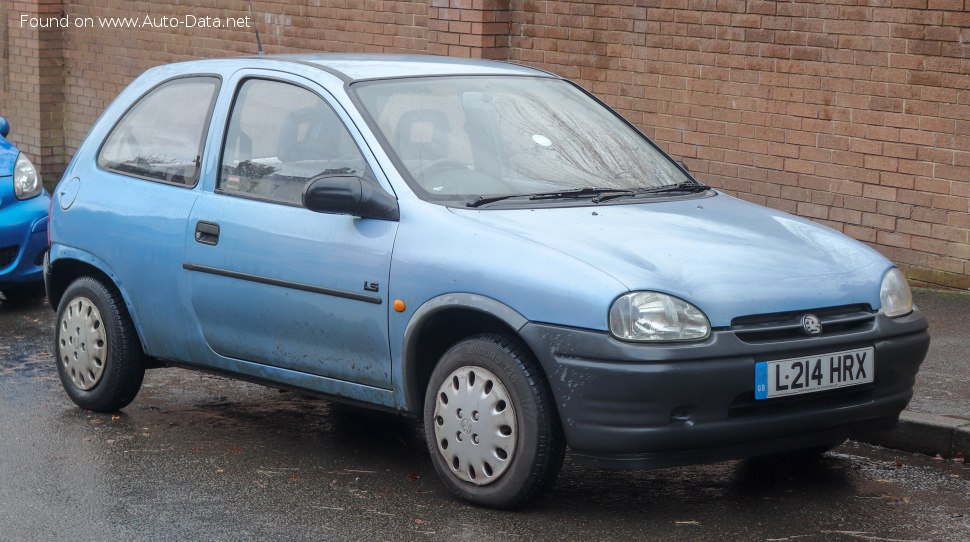
The Vauxhall Corsa B 1.5 D, producing 50 horsepower, was an entry-level variant of the Corsa B generation, manufactured between 1993 and 1996. This model represented a significant update over the outgoing Corsa A, sharing its platform (X10) with the Opel/Vauxhall Nova and Fiat Uno, but offering improved styling, safety features, and a more refined driving experience. The 1.5 D served as the most economical and affordable option in the Corsa B lineup, targeting budget-conscious buyers and those prioritizing fuel efficiency over outright performance. It was available in both 3-door and 5-door hatchback configurations.
Powertrain & Engine Architecture
The heart of the Corsa B 1.5 D is the 1487cc (90.74 cubic inches) inline-four cylinder diesel engine, designated as the 15D and also known as the 4EC1. This engine is a naturally aspirated, indirect injection diesel, utilizing a precombustion chamber injection system. This system, common in European diesel engines of the era, involved injecting fuel into a small pre-chamber where it partially combusted, then igniting the main combustion chamber. This design aided in smoother combustion and reduced engine noise compared to direct injection systems. The engine features an overhead camshaft (OHC) valvetrain with two valves per cylinder.
The 15D engine produced 50 hp at 4800 rpm and 90 Nm (66.38 lb-ft) of torque at 2400 rpm. The compression ratio was relatively high at 23:1, typical for diesel engines. Engine oil capacity was 3.75 liters (3.96 US quarts), and the recommended coolant capacity was 6 liters (6.34 US quarts). The engine was transversely mounted in the front of the vehicle, driving the front wheels.
Transmission
The Corsa B 1.5 D was exclusively equipped with a five-speed manual transmission. An automatic transmission was not offered with this engine variant. The gearbox was chosen to maximize fuel economy and provide adequate, though not sporty, performance. Gear ratios were geared towards lower-end torque, prioritizing drivability in urban environments.
Driving Characteristics
The driving experience in the Corsa B 1.5 D was characterized by its modest performance. Acceleration from 0 to 100 km/h (0-62 mph) took approximately 19.5 seconds, and 0 to 60 mph took around 18.5 seconds. The top speed was limited to 150 km/h (93.21 mph). While not particularly quick, the engine delivered usable torque at low to mid-range revs, making it suitable for everyday driving. The 1.5 D was noticeably slower than the petrol-powered Corsa B variants, particularly the 1.6-liter models. However, it offered significantly better fuel economy. The handling was typical of small hatchbacks of the era – safe and predictable, but not particularly engaging. The relatively light weight of the vehicle (985 kg / 2171.55 lbs) helped to mitigate the lack of power.
Equipment & Trim Levels
The Corsa B 1.5 D was generally offered in a basic trim level, reflecting its position as the entry-point to the Corsa B range. Standard equipment typically included basic cloth upholstery, a simple dashboard layout, and manual windows and door locks. Power steering was often an optional extra. Safety features were limited by the standards of the time, but generally included a driver’s airbag and an Anti-lock Braking System (ABS) on some models. Optional extras could include a radio/cassette player, upgraded interior trim, and central locking. The interior space was adequate for a small hatchback, offering seating for five passengers, although rear passenger space was somewhat limited.
Chassis & Braking
The Corsa B 1.5 D utilized a MacPherson strut front suspension and a torsion beam rear suspension. This setup provided a reasonable balance between ride comfort and handling. The front brakes were ventilated discs, while the rear brakes were drums. This configuration was common for vehicles in this weight class during the 1990s. The steering was a worm-reduction type, providing a relatively direct feel. The standard tire size was 145/70 R13, mounted on 5J x 13 inch steel wheels. The curb weight of 985 kg (2171.55 lbs) contributed to the car’s relatively nimble handling.
Market Reception & Comparison
The Corsa B 1.5 D was well-received as an affordable and economical city car. Critics praised its fuel efficiency – achieving approximately 6 l/100 km (39.2 US mpg) in urban conditions and 4 l/100 km (58.8 US mpg) on the open road – and its low running costs. However, its performance was often criticized as being sluggish, particularly when compared to the more powerful petrol variants. Compared to the 1.4 and 1.6-liter Corsas, the 1.5 D offered significantly lower performance but a substantial improvement in fuel economy. The 1.5 D also contrasted with the later 1.7 DTi model, which offered more power and torque through the use of direct injection technology, but at a higher price point. The 1.5 D appealed to buyers who prioritized practicality and economy over driving excitement.
Technical Specifications
| Brand | Vauxhall |
| Model | Corsa |
| Generation | Corsa B |
| Type (Engine) | 1.5 D (50 Hp) |
| Start of production | 1993 |
| End of production | 1996 |
| Engine Displacement | 1487 cm3 (90.74 cu. in.) |
| Engine Model/Code | 15D, 4EC1 |
| Number of Cylinders | 4 |
| Engine Configuration | Inline |
| Cylinder Bore | 76 mm (2.99 in.) |
| Piston Stroke | 82 mm (3.23 in.) |
| Compression Ratio | 23:1 |
| Power | 50 Hp @ 4800 rpm |
| Torque | 90 Nm @ 2400 rpm (66.38 lb.-ft. @ 2400 rpm) |
| Fuel Type | Diesel |
| Fuel Consumption (Urban) | 6 l/100 km (39.2 US mpg) |
| Fuel Consumption (Extra Urban) | 4 l/100 km (58.8 US mpg) |
| Acceleration 0-100 km/h | 19.5 sec |
| Acceleration 0-62 mph | 19.5 sec |
| Acceleration 0-60 mph | 18.5 sec |
| Maximum Speed | 150 km/h (93.21 mph) |
| Kerb Weight | 985 kg (2171.55 lbs) |
| Max. Weight | 1390 kg (3064.43 lbs) |
| Fuel Tank Capacity | 46 l (12.15 US gal) |
| Length | 3740 mm (147.24 in.) |
| Width | 1610 mm (63.39 in.) |
| Height | 1420 mm (55.91 in.) |
| Wheelbase | 2443 mm (96.18 in.) |
| Drivetrain | Front Wheel Drive |
| Transmission | 5-speed Manual |
Legacy
The Corsa B 1.5 D, while not a performance icon, proved to be a reliable and durable vehicle. The 15D engine, though simple in design, is known for its longevity when properly maintained. Today, examples of the Corsa B 1.5 D are relatively rare, and those that remain are often sought after by enthusiasts looking for a classic, economical, and easy-to-maintain city car. Parts availability is generally good, and the relatively straightforward mechanical design makes it accessible for home mechanics. The Corsa B 1.5 D represents a practical and affordable option from a bygone era of automotive engineering, offering a glimpse into the world of 1990s European motoring.
