
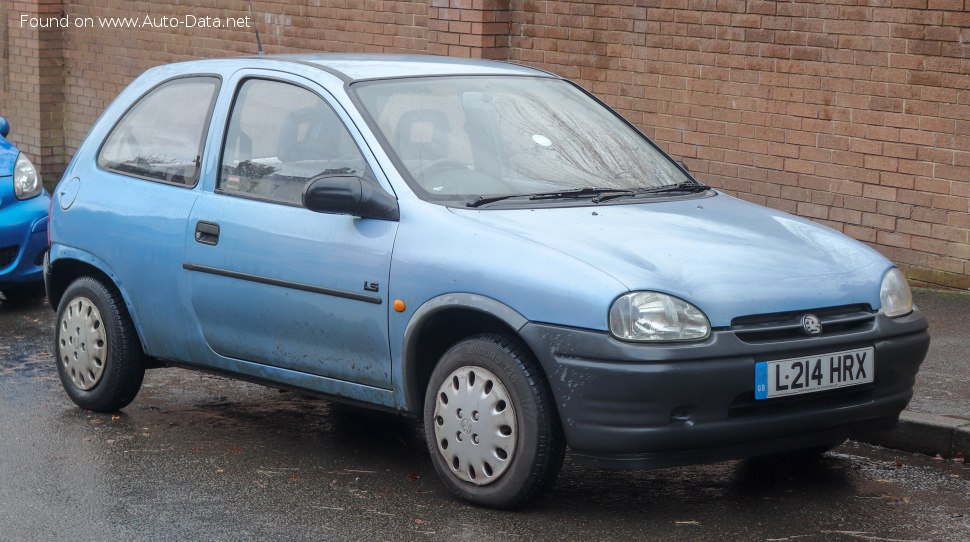
The Vauxhall Corsa B 1.6i 16V, produced between 1994 and 1997, represented a significant step up in performance and refinement within the second generation Corsa (B) lineup. Positioned as a mid-range offering, it bridged the gap between the more economical 1.0L and 1.2L models and the later, sportier iterations. Built on the GM45 platform (internally known as 1HX0/A3), the Corsa B aimed to provide a modern, practical, and relatively affordable hatchback for the European market. The 1.6i 16V was particularly notable for offering a substantial power increase over the base models, appealing to drivers seeking a more engaging driving experience without the expense of the higher-performance variants.
Powertrain & Engine Architecture
The heart of the Corsa B 1.6i 16V is the X16XE engine, a 1.6-liter inline-four cylinder gasoline engine. This engine is a naturally aspirated unit, meaning it does not utilize a turbocharger or supercharger. It boasts a displacement of 1598 cm³ (97.52 cubic inches) and features a cylinder bore of 79 mm (3.11 inches) and a piston stroke of 81.5 mm (3.21 inches). The engine operates with a compression ratio of 10:1 and utilizes a dual overhead camshaft (DOHC) valvetrain with four valves per cylinder – hence the “16V” designation. This configuration allows for improved breathing and higher engine speeds.
Fuel delivery is managed by a multi-port fuel injection system, providing precise fuel metering for optimal combustion. The X16XE engine is known for its relatively simple design and robust construction, contributing to its overall reliability. The engine requires 3.25 liters (3.43 US quarts) of engine oil, typically specified to meet GM standards. Coolant capacity is 5.6 liters (5.92 US quarts). While the X16XE engine was also used in other Opel/Vauxhall and Holden vehicles, the Corsa B application was often paired with a five-speed manual transmission, but a four-speed automatic transmission was also available, though less common.
Automatic Transmission Details
The four-speed automatic transmission used in the Corsa B 1.6i 16V is a GM-sourced unit, designed for smooth and relatively efficient operation. While not known for its particularly sporty characteristics, it provided a convenient alternative to the manual gearbox, especially for urban driving. The gear ratios were optimized for fuel economy and acceptable acceleration, but the automatic transmission did result in a noticeable performance decrease compared to the manual version. The automatic transmission’s shift points were electronically controlled, aiming to balance performance and fuel efficiency.
Driving Characteristics
The Corsa B 1.6i 16V with the automatic transmission delivers a respectable, if not exhilarating, driving experience. The engine produces 106 horsepower (hp) at 6000 rpm and 148 Newton-meters (109.16 lb-ft) of torque at 4000 rpm. This translates to a 0-62 mph (0-100 km/h) acceleration time of approximately 10 seconds and a top speed of 119.3 mph (192 km/h). Compared to the manual transmission version, the automatic typically adds around 0.5-1 second to the 0-60 mph time.
The automatic transmission’s gear ratios are geared towards providing adequate acceleration from a standstill and maintaining comfortable cruising speeds. However, the lack of a fifth or sixth gear means that engine speeds can be relatively high at highway speeds, potentially impacting fuel economy and noise levels. The power delivery is linear, with a noticeable surge in power as the engine approaches its peak torque output. The Corsa B’s relatively lightweight construction (approximately 960 kg or 2116.44 lbs) helps to mitigate the performance loss associated with the automatic transmission.
Equipment & Trim Levels
The Corsa B 1.6i 16V typically came equipped with a reasonable level of standard features for its time. These included power steering, central locking, and an adjustable steering column. Interior upholstery was typically cloth, with a relatively simple dashboard layout. Optional extras included electric windows, a sunroof, and upgraded audio systems. Trim levels varied depending on the market, but generally, the 1.6i 16V was positioned as a step above the base models, offering a more comfortable and well-equipped interior.
Safety features were relatively basic by modern standards, typically including an Anti-lock Braking System (ABS) as an option, and front seatbelts. Airbags were not standard equipment on all models. The Corsa B offered either a three-door or five-door body style, with the five-door version providing greater practicality for families.
Chassis & Braking
The Corsa B 1.6i 16V utilizes a MacPherson strut front suspension and a torsion beam rear suspension. This setup provides a good balance between ride comfort and handling. The front suspension incorporates a stabilizer bar to reduce body roll during cornering. Braking duties are handled by ventilated discs at the front and drum brakes at the rear. The ABS system, when equipped, helps to prevent wheel lockup during hard braking, improving stability and control.
The tires are typically sized 185/60 R14, providing adequate grip for everyday driving conditions. The wheel rims are typically 5J x 13. The Corsa B’s relatively narrow track width contributes to its nimble handling characteristics, but also limits its overall grip levels.
Market Reception & Comparison
The Corsa B 1.6i 16V was generally well-received by automotive critics as a competent and affordable hatchback. It was praised for its lively engine, comfortable ride, and relatively spacious interior. However, the automatic transmission was often criticized for its lack of responsiveness and its impact on fuel economy. Compared to the 1.0L and 1.2L models, the 1.6i 16V offered a significant performance boost, making it a more enjoyable car to drive. Compared to the later, more powerful Corsa B variants (such as the GSi), the 1.6i 16V offered a more balanced combination of performance, fuel economy, and affordability.
Fuel economy figures for the 1.6i 16V with the automatic transmission are approximately 10.8 l/100 km (21.8 US mpg) in urban driving and 6.1 l/100 km (38.6 US mpg) in extra-urban driving. Reliability is generally good, with the X16XE engine being known for its durability. However, like all older cars, the Corsa B 1.6i 16V is susceptible to age-related issues, such as corrosion and wear and tear on suspension components.
Technical Specifications
| Brand | Vauxhall |
| Model | Corsa |
| Generation | Corsa B |
| Type (Engine) | 1.6i 16V (106 Hp) |
| Start of production | 1994 |
| End of production | 1997 |
| Engine Model/Code | X16XE |
| Engine displacement | 1598 cm3 (97.52 cu. in.) |
| Number of cylinders | 4 |
| Power | 106 Hp @ 6000 rpm |
| Torque | 148 Nm @ 4000 rpm (109.16 lb.-ft. @ 4000 rpm) |
| Fuel Type | Petrol (Gasoline) |
| Acceleration 0 – 100 km/h | 10 sec |
| Acceleration 0 – 62 mph | 10 sec |
| Acceleration 0 – 60 mph | 9.5 sec |
| Maximum speed | 192 km/h (119.3 mph) |
| Kerb Weight | 960 kg (2116.44 lbs) |
| Max. weight | 1415 kg (3119.54 lbs) |
| Fuel tank capacity | 46 l (12.15 US gal | 10.12 UK gal) |
| Length | 3740 mm (147.24 in) |
| Width | 1610 mm (63.39 in) |
| Height | 1420 mm (55.91 in) |
| Wheelbase | 2443 mm (96.18 in) |
| Drive wheel | Front wheel drive |
| Number of gears and type of gearbox | 4 gears, automatic transmission |
Legacy
The Corsa B 1.6i 16V, particularly with the automatic transmission, remains a relatively affordable and accessible classic car in the used market. The X16XE engine is known for its durability, and with proper maintenance, it can provide many years of reliable service. However, potential buyers should be aware of the possibility of age-related issues, such as corrosion and wear and tear on suspension components. The automatic transmission, while convenient, is not as highly regarded as the manual version, and may require more frequent servicing. Overall, the Corsa B 1.6i 16V represents a solid and practical choice for those seeking a classic European hatchback.
