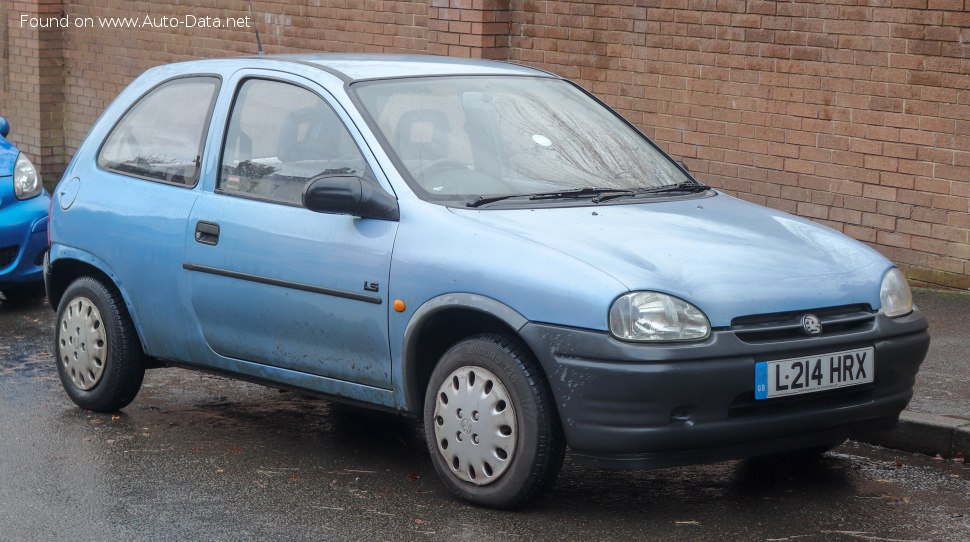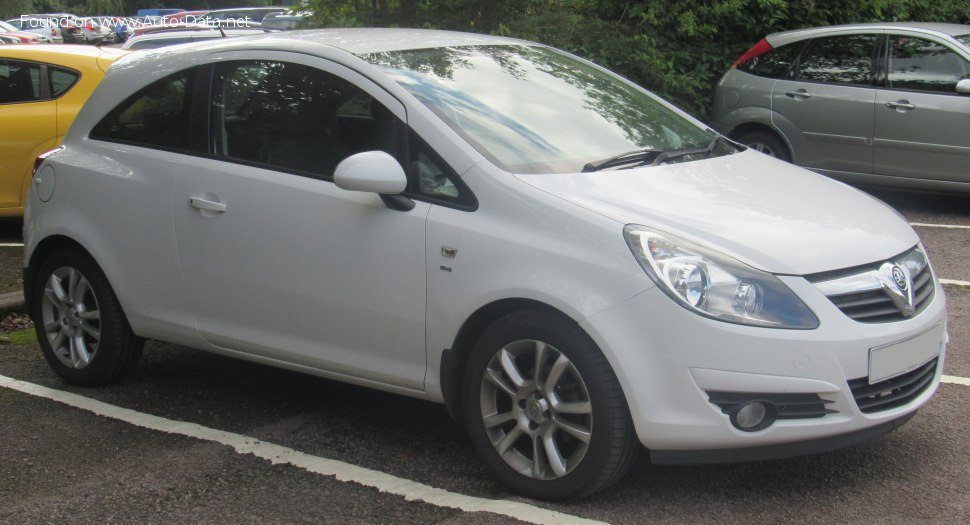
The Vauxhall Corsa D 1.7 CDTi, produced from 2006 to 2010, represented a significant offering in the subcompact hatchback segment. This variant, equipped with the 1.7-liter turbodiesel engine producing 125 horsepower, occupied a mid-range position within the Corsa D lineup, appealing to buyers seeking a balance between fuel efficiency, performance, and practicality. The Corsa D itself (2006-2014) was built on the General Motors Gamma platform, shared with other small Opel/Vauxhall and Chevrolet models. The 1.7 CDTi was a key engine option, providing a diesel alternative to the gasoline engines available.
The 1.7 CDTi Engine and its Role in the Corsa D Lineup
The 1.7 CDTi engine was a popular choice for European buyers, offering a compelling blend of economy and usability. Within the Corsa D range, it sat above the base 1.0 and 1.2-liter petrol engines in terms of performance and price, and below the more powerful (and typically more expensive) petrol variants. It was positioned as a sensible option for drivers covering higher mileages or those prioritizing fuel costs. Compared to the petrol engines, the 1.7 CDTi offered significantly more torque, making it more relaxed for motorway driving and easier to carry a full load of passengers and luggage. It also provided a noticeable advantage in fuel economy.
Powertrain & Engine Architecture
The heart of this Corsa D variant is the Z17DTR engine, a 1.7-liter inline four-cylinder diesel engine. This engine utilizes a common rail direct injection system, delivering fuel directly into the combustion chamber at extremely high pressure. This technology, coupled with a turbocharger and intercooler, allows for efficient combustion and increased power output. The engine boasts a displacement of 1686 cm³ (102.89 cubic inches) and a compression ratio of 18:1. The valvetrain is a Double Overhead Camshaft (DOHC) configuration with four valves per cylinder, optimizing airflow for improved performance. The engine’s oil capacity is 5.4 liters (5.71 US quarts / 4.75 UK quarts), and it requires a specific oil specification (refer to owner’s manual for details).
While a six-speed manual transmission was the most common pairing for the 1.7 CDTi, an optional automated manual transmission (Easytronic) was also available. The Easytronic transmission, while offering some of the convenience of an automatic, was not a traditional torque-converter automatic and often received mixed reviews due to its sometimes jerky shifting characteristics. The manual transmission featured gear ratios designed to maximize fuel efficiency and provide adequate acceleration.
Driving Characteristics
The Corsa D 1.7 CDTi delivers a respectable driving experience, particularly for urban and suburban environments. The 125 hp and 280 Nm (206.52 lb-ft) of torque, available from 2300 rpm, provide sufficient power for everyday driving. Acceleration from 0-100 km/h (0-62 mph) takes approximately 10.7 seconds, and the top speed is around 190 km/h (118 mph). While not a performance-oriented vehicle, the 1.7 CDTi offers a noticeable improvement in responsiveness compared to the smaller petrol engines. The turbocharger provides a boost in power during acceleration, making overtaking maneuvers relatively effortless. The manual transmission allows for precise control, while the optional Easytronic transmission offers convenience at the expense of some smoothness. The weight-to-power ratio of 9.4 kg/hp and weight-to-torque ratio of 4.2 kg/Nm contribute to a reasonably agile feel.
Equipment & Trim Levels
The Corsa D 1.7 CDTi was available in various trim levels, including S, SE, and SRi. The base ‘S’ trim typically included features such as central locking, power steering, and an adjustable steering column. The ‘SE’ trim added features like air conditioning, alloy wheels, and a CD player. The ‘SRi’ trim, positioned as the sportier option, included features like sports suspension, upgraded interior trim, and styling enhancements. Standard safety equipment included ABS (Anti-lock Braking System) and driver and passenger airbags. Optional extras included parking sensors, a panoramic sunroof, and upgraded audio systems.
Chassis & Braking
The Corsa D 1.7 CDTi utilizes a front-wheel-drive layout with a MacPherson strut front suspension and a torsion beam rear suspension. This setup provides a good balance between ride comfort and handling. The front brakes are ventilated discs, offering good stopping power, while the rear brakes are drums. The use of drum brakes on the rear was a cost-saving measure common in this class of vehicle. The steering is a worm-reduction unit, providing adequate feedback and precision. The standard tire size is 185/65 R15, mounted on 15-inch steel or alloy wheels.
Market Reception & Comparison
The Vauxhall Corsa D 1.7 CDTi was generally well-received by automotive critics. It was praised for its fuel efficiency, comfortable ride, and practical interior. However, some critics noted that the engine could be somewhat noisy and that the Easytronic transmission was not as refined as a traditional automatic. Compared to other diesel-powered subcompact hatchbacks of the time, such as the Ford Fiesta TDCi and the Volkswagen Polo TDI, the Corsa D 1.7 CDTi offered a competitive package in terms of price, fuel economy, and performance. The Corsa D generally offered a more affordable entry point than the Polo, while the Fiesta provided a slightly more engaging driving experience. Reliability reports suggest that the 1.7 CDTi engine is generally robust, although regular maintenance is essential to prevent issues with the turbocharger and fuel injection system.
Technical Specifications
| Brand | Vauxhall |
| Model | Corsa |
| Generation | Corsa D |
| Type (Engine) | 1.7 CDTi (125 Hp) |
| Start of production | 2006 |
| End of production | 2010 |
| Engine Model/Code | Z17DTR |
| Engine displacement | 1686 cm3 (102.89 cu. in.) |
| Number of cylinders | 4 |
| Engine configuration | Inline |
| Cylinder Bore | 79 mm (3.11 in.) |
| Piston Stroke | 86 mm (3.39 in.) |
| Compression ratio | 18:1 |
| Number of valves per cylinder | 4 |
| Fuel injection system | Diesel Commonrail |
| Engine aspiration | Turbocharger, Intercooler |
| Valvetrain | DOHC |
| Power | 125 Hp @ 4000 rpm |
| Torque | 280 Nm @ 2300 rpm (206.52 lb.-ft. @ 2300 rpm) |
| Fuel consumption (urban) | 6.2 l/100 km (37.9 US mpg / 45.6 UK mpg / 16.1 km/l) |
| Fuel consumption (extra urban) | 4 l/100 km (58.8 US mpg / 70.6 UK mpg / 25 km/l) |
| Fuel consumption (combined) | 4.8 l/100 km (49 US mpg / 58.9 UK mpg / 20.8 km/l) |
| Acceleration 0 – 100 km/h | 10.7 sec |
| Acceleration 0 – 62 mph | 10.7 sec |
| Acceleration 0 – 60 mph | 10.2 sec (Calculated) |
| Maximum speed | 190 km/h (118.06 mph) |
| Kerb Weight | 1170 kg (2579.41 lbs.) |
| Max. weight | 1670 kg (3681.72 lbs.) |
| Fuel tank capacity | 45 l (11.89 US gal / 9.9 UK gal) |
| Trunk (boot) space – minimum | 285 l (10.06 cu. ft.) |
| Trunk (boot) space – maximum | 1100 l (38.85 cu. ft.) |
Legacy
The Corsa D 1.7 CDTi remains a relatively common sight on used car lots today. The Z17DTR engine, when properly maintained, has proven to be a durable and reliable unit. However, potential buyers should be aware of potential issues with the turbocharger, fuel injectors, and the diesel particulate filter (DPF). The Easytronic transmission, if equipped, should be inspected carefully for smooth operation. Overall, the Corsa D 1.7 CDTi offers a practical and economical option for buyers seeking a small, fuel-efficient hatchback. Its affordability and relatively low running costs continue to make it an attractive choice in the used car market.