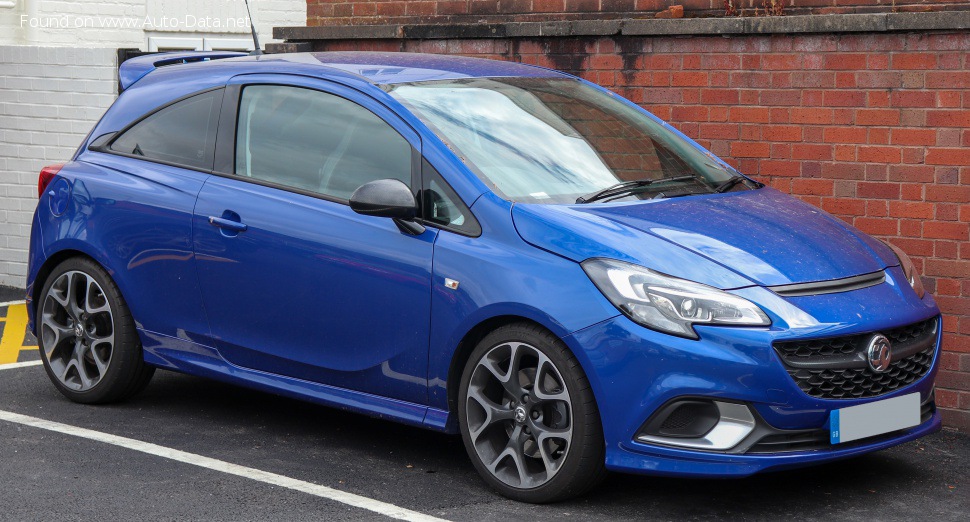
The Vauxhall Corsa E 1.4i Turbo (150 Hp) start/stop represents a key offering in the highly competitive European subcompact, or “supermini,” segment. Produced by the British automaker Vauxhall, a long-standing subsidiary of Opel (and at the time, General Motors), the Corsa E generation was a staple on European roads from its introduction in March 2015 until its production concluded in April 2018. This particular variant, powered by a lively 1.4-liter turbocharged engine, carved out a niche for drivers seeking a blend of everyday practicality, modern efficiency, and a dash of spirited performance, making it a compelling choice against its numerous rivals across the continent.
The Corsa E 1.4i Turbo: Positioning and Overview
While the Vauxhall brand itself is primarily recognized in the United Kingdom, its models, including the Corsa, are essentially rebadged versions of Opel vehicles sold throughout mainland Europe. The Corsa E succeeded the Corsa D and brought with it significant updates in design, interior quality, and powertrain technology, aiming to keep pace with an ever-evolving market. The 1.4i Turbo (150 Hp) start/stop model specifically targeted consumers who desired more than just basic transport, offering a genuinely engaging driving experience without straying into the full-blown hot hatch territory. Its five-door hatchback body style emphasized versatility, making it a suitable option for singles, couples, or small families navigating urban environments and longer journeys alike. This trim level sat in the mid-range of the Corsa E lineup, offering a step up in performance and features compared to the base 1.0-liter models, but remaining more accessible than the performance-oriented VXR/OPC.
Powertrain & Engine Architecture
At the core of this particular Corsa E variant is a robust 1.4-liter (1364 cm³ or 83.24 cu. in.) inline-four gasoline engine, designated with the model code B14NEH. This powerplant benefits from a turbocharger and intercooler, technology that allows it to punch above its displacement class. It generates a respectable 150 horsepower at 5000 revolutions per minute (rpm), translating to an impressive power-per-liter ratio of 110 Hp/l. Torque output is equally significant for a car of its size, peaking at 220 Nm (162.26 lb.-ft.) across a broad range from 2750 to 4500 rpm. This wide torque band contributes to the car’s flexible nature, providing strong acceleration from lower engine speeds and reducing the need for constant gear changes.
The B14NEH engine utilizes multi-port fuel injection and a relatively high compression ratio of 9.5:1. The engine features a double overhead camshaft (DOHC) valvetrain with four valves per cylinder, optimizing breathing and contributing to its power output. The turbocharger is a wastegate turbo, providing controlled boost pressure. Power is delivered to the front wheels via a precise 6-speed manual transmission, offering drivers an engaging and direct connection to the car’s performance. This setup allows the Corsa E 1.4i Turbo to accelerate from 0 to 60 mph in a brisk 8.7 seconds (0-100 km/h in 9.2 seconds), with a maximum speed of 128.62 mph (207 km/h).
Driving Characteristics
The Corsa E 1.4i Turbo offered a noticeable step up in driving enjoyment compared to the lower-powered variants. The broad torque band meant that strong acceleration was readily available in most driving situations, making overtaking and merging onto highways relatively effortless. While not a sports car, the 150 hp engine provided a spirited feel, particularly when utilizing the full range of the 6-speed gearbox. Compared to the base 1.0-liter engine, the 1.4i Turbo felt significantly more responsive and capable. The 6-speed transmission offered well-spaced gear ratios, allowing the engine to remain within its optimal power band. It wasn’t as raw or focused as the VXR/OPC model, but provided a more balanced and accessible driving experience for everyday use.
Equipment & Trim Levels
The Corsa E 1.4i Turbo typically came equipped with a reasonable level of standard features. These generally included air conditioning, power windows, power door locks, a basic audio system with USB connectivity, and ABS brakes. Higher trim levels, often denoted by names like “Energy” or “Design,” added features such as alloy wheels, a touchscreen infotainment system with Bluetooth connectivity, cruise control, and parking sensors. Interior upholstery was typically cloth, with options for upgraded materials and designs. Optional extras included a panoramic sunroof, heated seats, and a more advanced navigation system. The dashboard layout was generally functional and modern, with a focus on ergonomics and ease of use.
Chassis & Braking
The suspension system comprised an independent McPherson type at the front and a semi-independent coil spring setup at the rear, a typical configuration for balancing ride comfort and handling dynamics in a small car. This setup provided a reasonable level of comfort for everyday driving, while still offering decent body control in corners. Braking was handled by disc brakes at both the front and rear, providing confident stopping power. Standard tire sizes ranged from 185/70 R14 to 185/65 R15, fitted on 5.5J x 14 or 6.0J x 15 wheel rims, offering a balance of grip and ride comfort. The Corsa E’s chassis was tuned to provide a comfortable ride without sacrificing handling, making it suitable for both city driving and longer journeys.
Market Reception & Comparison
Critics generally viewed the Vauxhall Corsa E 1.4i Turbo as a competent and enjoyable supermini. It was praised for its responsive engine, comfortable ride, and well-equipped interior. However, some reviewers noted that the interior plastics felt somewhat low-rent compared to some rivals. Fuel economy was considered competitive, with the combined fuel consumption rated at 5.7 l/100 km (41.3 US mpg). In terms of reliability, the Corsa E generally proved to be a dependable vehicle, although some owners reported minor issues with the infotainment system. Compared to the 1.0-liter models, the 1.4i Turbo offered a significant performance boost, but at the cost of slightly higher fuel consumption and insurance costs. Compared to the VXR/OPC, it offered a more balanced and practical driving experience, sacrificing some outright performance for everyday usability.
Technical Specifications: Vauxhall Corsa E 1.4i Turbo (150 Hp) Start/Stop
| Category | Specification |
| General Information | |
| Brand | Vauxhall |
| Model | Corsa |
| Generation | Corsa E |
| Type (Engine) | 1.4i Turbo (150 Hp) start/stop |
| Start of Production | March, 2015 |
| End of Production | April, 2018 |
| Powertrain Architecture | Internal Combustion engine |
| Body Type | Hatchback |
| Seats | 5 |
| Doors | 5 |
| Performance Specs | |
| Fuel Consumption (urban) | 7.4 l/100 km |
| Fuel Consumption (extra urban) | 4.8 l/100 km |
| Fuel Consumption (combined) | 5.7 l/100 km |
| CO2 Emissions | 132 g/km |
| Fuel Type | Petrol (Gasoline) |
| Acceleration 0 – 60 mph | 8.7 sec |
| Acceleration 0 – 100 km/h | 9.2 sec |
| Maximum Speed | 207 km/h (128.62 mph) |
| Emission Standard | Euro 6 |
| Engine Specs | |
| Power | 150 Hp @ 5000 rpm |
| Power per liter | 110 Hp/l |
| Torque | 220 Nm @ 2750-4500 rpm (162.26 lb.-ft. @ 2750-4500 rpm) |
| Engine Layout | Front, Transverse |
| Engine Model/Code | B14NEH |
| Engine Displacement | 1364 cm³ (83.24 cu. in.) |
| Number of Cylinders | 4 |
| Engine Configuration | Inline |
| Cylinder Bore | 72.5 mm (2.85 in.) |
| Piston Stroke | 82.6 mm (3.25 in.) |
| Compression Ratio | 9.5:1 |
| Number of Valves per Cylinder | 4 |
| Fuel Injection System | Multi-port manifold injection |
| Engine Aspiration | Turbocharger, Intercooler |
| Space, Volume and Weights | |
| Kerb Weight | 1120-1199 kg (2469.18 – 2643.34 lbs.) |
| Max. Weight | 1605-1665 kg (3538.42 – 3670.7 lbs.) |
| Trunk (boot) Space – minimum | 280 l (9.89 cu. ft.) |
| Trunk (boot) Space – maximum | 1090 l (38.49 cu. ft.) |
| Fuel Tank Capacity | 45 l (11.89 US gal) |
| Dimensions | |
| Length | 4021 mm (158.31 in.) |
| Width | 1736 mm (68.35 in.) |
| Height | 1481 mm (58.31 in.) |
| Wheelbase | 2510 mm (98.82 in.) |
Legacy
The Vauxhall Corsa E, and particularly the 1.4i Turbo variant, has established itself as a reliable and affordable used car option. The B14NEH engine is generally considered to be durable, with proper maintenance. Common issues, when they arise, often relate to the turbocharger or the cooling system. The Corsa E’s relatively simple mechanical design makes it easier and more affordable to repair compared to some more complex modern vehicles. On the used car market, the 1.4i Turbo models command a slightly higher price than the base models, reflecting their increased performance and desirability. Its blend of practicality, efficiency, and driving enjoyment continues to appeal to a wide range of buyers, ensuring its continued presence on roads for years to come.