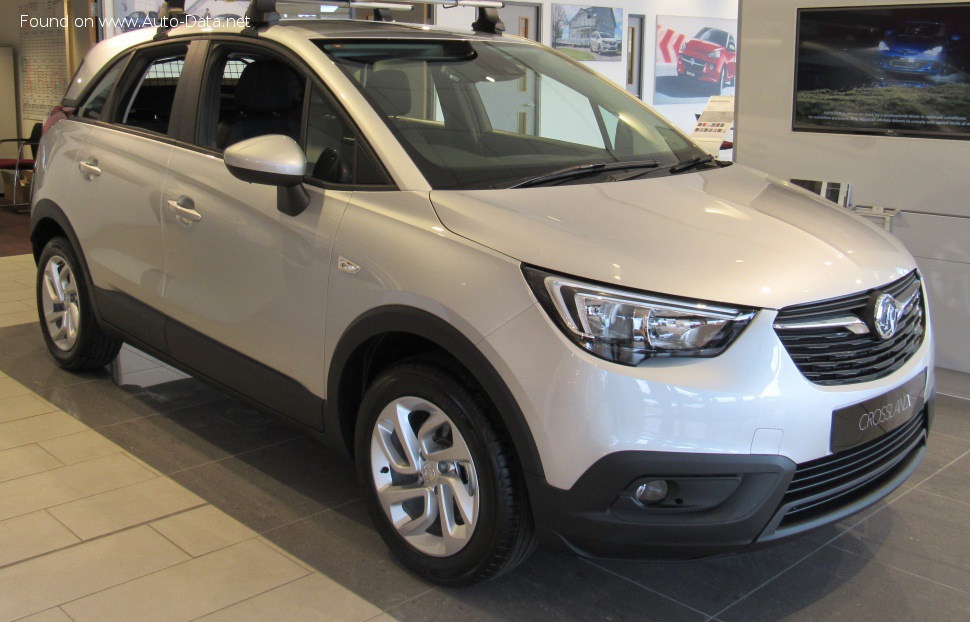
The Vauxhall Crossland (facelift 2020) represents a significant refresh of Vauxhall’s compact crossover SUV, originally introduced in 2017. As a key player in the highly competitive European B-segment SUV market, the Crossland serves as a versatile and practical option for families and urban drivers. Vauxhall, a British automobile manufacturer and a subsidiary of Stellantis (formerly part of General Motors and then PSA Group), primarily markets its vehicles in the United Kingdom, where they are often rebadged versions of Opel models sold in continental Europe. The 2020 facelift brought a sharper design language, updated technology, and refinements to its powertrain offerings, aiming to bolster its appeal against a growing array of rivals. This article specifically focuses on the 1.2-liter (83 Hp) variant, a foundational engine option designed for efficiency and accessibility within the Crossland lineup.
Positioning of the 1.2-liter 83 Hp Crossland
Positioned below the larger Grandland X in Vauxhall’s SUV hierarchy, the Crossland is not available in the United States market, where its segment is dominated by different brands and models. In its primary European markets, however, it competes by offering a compelling blend of compact dimensions, a surprisingly spacious interior, and a focus on practicality. The 2020 refresh, in particular, saw the “X” suffix dropped from its name, simplifying it to just “Crossland” and aligning it more closely with Vauxhall’s evolving brand identity. This 1.2-liter naturally aspirated gasoline engine variant is engineered to provide an economical entry point into the Crossland range, catering to drivers prioritizing fuel efficiency and lower running costs over outright performance. It represents the base trim level, appealing to budget-conscious buyers and those who primarily use the vehicle for urban commuting.
Powertrain & Engine Architecture
At the heart of this particular Vauxhall Crossland (facelift 2020) model is a modest yet efficient 1.2-liter (1199 cm³, or 73.17 cu. in.) naturally aspirated gasoline engine. This three-cylinder inline powerplant, designated with the F12XE engine code, is designed for urban driving and everyday commuting, where its focus on fuel economy and low emissions takes precedence. It delivers a peak power output of 83 horsepower (Hp) at 5750 rpm, providing adequate motivation for a vehicle of its size and intended purpose.
Torque figures for this engine stand at 118 Nm (87.03 lb.-ft.) available from a relatively low 1750 rpm. This early peak torque delivery is beneficial for city driving, offering decent responsiveness from a standstill and aiding in low-speed maneuverability. Power is sent to the front wheels via a standard 5-speed manual transmission, a choice that underscores the model’s emphasis on affordability and driver engagement, typical for this segment in Europe. The drivetrain architecture is straightforward: the internal combustion engine drives the front wheels, a common and cost-effective setup for compact crossovers.
The F12XE engine utilizes multi-port fuel injection, a relatively simple and reliable system for delivering fuel to the cylinders. The valvetrain features a Double Overhead Camshaft (DOHC) configuration with Variable Valve Timing (VVT), optimizing engine performance and efficiency across a wider range of engine speeds. The engine’s design prioritizes minimizing internal friction and weight, contributing to its fuel-saving characteristics. The 5-speed manual transmission is a conventional unit, offering a direct and engaging driving experience. Its gear ratios are optimized for fuel efficiency and urban driving, with a relatively tall fifth gear for highway cruising.
Driving Characteristics
From a performance standpoint, the 1.2-liter Crossland is not engineered for blistering acceleration. It achieves a 0 to 60 mph sprint in 14.0 seconds, which is leisurely by modern standards but perfectly acceptable for its target demographic. The maximum speed is rated at 106.25 mph (171 km/h). Where this powertrain truly shines is in its fuel efficiency. According to the WLTP (Worldwide Harmonized Light Vehicles Test Procedure) cycle, the combined fuel consumption ranges from 5.9-6.1 liters per 100 km, which translates to an impressive 39.9 to 38.6 US miles per gallon. This efficiency, combined with CO2 emissions of 135-137 g/km, allows the vehicle to meet the stringent Euro 6d emission standard, demonstrating Vauxhall’s commitment to environmental responsibility.
Compared to higher-output versions of the Crossland, such as those equipped with more powerful 1.2-liter turbocharged engines, the 83 Hp variant feels noticeably less responsive, particularly when accelerating onto highways or overtaking other vehicles. The manual transmission requires more frequent gear changes to maintain momentum, and the engine can feel strained when climbing hills. However, for typical urban driving conditions, the 1.2-liter engine provides sufficient power and torque. The inclusion of a Start & Stop System and a particulate filter further contributes to its eco-friendly credentials, reducing fuel consumption and emissions, especially in congested urban environments.
Equipment & Trim Levels
The 1.2-liter (83 Hp) Crossland typically serves as the entry point to the range, meaning it comes with a standard equipment list focused on essential features. Standard features generally include air conditioning, a basic infotainment system with Bluetooth connectivity, power windows, power door locks, and ABS (Anti-lock braking system). Safety features are comprehensive for its class, with ABS as standard, ensuring stable braking performance. Interior upholstery is typically cloth, and the dashboard features a functional, if somewhat basic, design.
Optional extras available for this trim level often include alloy wheels, upgraded infotainment systems with larger touchscreens and smartphone integration (Apple CarPlay and Android Auto), parking sensors, and a rearview camera. Higher trim levels build upon this foundation, adding features such as automatic climate control, heated seats, and more advanced safety systems. The interior trim materials are also upgraded in higher trims, offering a more premium feel.
Chassis & Braking
The Crossland’s chassis is designed to provide a comfortable and controlled ride. The suspension system comprises an independent McPherson strut setup with coil springs and an anti-roll bar at the front, offering a comfortable and controlled ride. The rear features a dependent spring suspension. This configuration balances ride comfort with handling stability. The steering system utilizes electric power steering with a rack and pinion setup, providing light and precise control, particularly at lower speeds.
Braking is handled by ventilated discs measuring 266 mm at the front and solid discs measuring 249 mm at the rear. This braking setup provides adequate stopping power for a vehicle of this weight class. Standard tire sizes range from 195/60 R16 to 215/50 R17, mounted on 16-inch or 17-inch wheel rims respectively. The relatively compact dimensions and lightweight construction of the 1.2-liter variant contribute to its agility and maneuverability.
Market Reception & Comparison
Critics generally viewed the 1.2-liter Crossland as a sensible and practical choice for buyers prioritizing fuel economy and affordability. While acknowledging its lack of outright performance, reviewers praised its comfortable ride, spacious interior, and user-friendly technology. Compared to other trims in the Crossland lineup, the 1.2-liter variant offers the lowest purchase price and the best fuel economy, making it an attractive option for budget-conscious buyers. However, it lags behind higher-output versions in terms of acceleration and overall driving enjoyment.
In terms of reliability, the 1.2-liter engine has proven to be generally dependable, with few reported issues. Its relatively simple design and low stress levels contribute to its longevity. Fuel economy is a key strength, consistently achieving around 40 US mpg in real-world driving conditions. Compared to competitors like the Nissan Juke and Renault Captur, the Crossland offers a similar level of practicality and fuel efficiency, but may not be as engaging to drive.
Technical Specifications
| Category | Specification |
| General Information | |
| Brand | Vauxhall |
| Model | Crossland |
| Generation | Crossland (facelift 2020) |
| Type (Engine) | 1.2 (83 Hp) |
| Start of Production | October, 2020 |
| Powertrain Architecture | Internal Combustion engine |
| Body type | SUV |
| Seats | 5 |
| Doors | 5 |
| Performance Specs | |
| Combined Fuel Consumption (WLTP) | 5.9-6.1 l/100 km |
| CO2 Emissions (WLTP) | 135-137 g/km |
| Fuel Type | Petrol (Gasoline) |
| Acceleration 0 – 60 mph | 14.0 sec |
| Maximum Speed | 171 km/h |
| Emission Standard | Euro 6d |
| Engine Specs | |
| Power | 83 Hp @ 5750 rpm |
| Power per liter | 69.2 Hp/l |
| Torque | 118 Nm @ 1750 rpm |
| Engine Layout | Front, Transverse |
| Engine Model/Code | F12XE |
| Engine Displacement | 1199 cm³ |
| Number of Cylinders | 3 |
| Number of Valves per Cylinder | 4 |
| Fuel Injection System | Multi-port manifold injection |
| Engine Aspiration | Naturally aspirated engine |
| Valvetrain | DOHC, VVT |
| Engine Oil Capacity | 3.25 l |
| Engine Oil Specification | Not specified |
| Coolant | 5 l |
| Engine Systems | Start & Stop System, Particulate filter |
| Space, Volume and Weights | |
| Max. Weight (GVWR) | 1690 kg |
| Trunk (boot) space – minimum | 410 l |
| Trunk (boot) space – maximum | 1255 l |
| Fuel Tank Capacity | 45 l |
| Permitted Trailer Load with Brakes (12%) | 650 kg |
| Permitted Trailer Load without Brakes | 560 kg |
| Dimensions | |
| Length | 4212 mm |
| Width | 1765 mm |
| Width including mirrors | 1976 mm |
| Height | 1605 mm |
| Wheelbase | 2604 mm |
| Front Overhang | 896 mm |
| Rear Overhang | 712 mm |
| Drag Coefficient (Cd) | 0.31 |
| Minimum Turning Circle (turning diameter) | 11.21 m |
| Drivetrain, Brakes and Suspension Specs | |
| Drivetrain Architecture | Internal combustion engine (ICE) drives the front wheels |
| Drive Wheel | Front-wheel drive |
| Number of Gears and Type of Gearbox | 5 gears, manual transmission |
| Front Suspension | Independent, McPherson with coil spring and anti-roll bar |
| Rear Suspension | Dependent spring suspension |
| Front Brakes | Ventilated discs, 266 mm |
| Rear Brakes | Disc, 249 mm |
| Assisting Systems | ABS (Anti-lock braking system) |
| Steering Type | Steering rack and pinion |
| Power Steering | Electric Steering |
| Tires Size | 195/60 R16; 215/50 R17 |
| Wheel Rims Size | 16; 17 |
Legacy
The Vauxhall Crossland, particularly after its 2020 facelift, holds a significant position in the European automotive landscape. As a product of Vauxhall (and its continental European counterpart, Opel), it benefits from the established brand recognition and widespread dealership networks across the UK and Europe. The Crossland’s role is to provide an accessible, practical, and efficient entry into the highly popular compact SUV/crossover segment, which has seen explosive growth over the past decade. It aims to attract buyers who appreciate the elevated driving position and rugged aesthetics of an SUV but require the compact footprint and fuel economy of a smaller car.
In its primary market, the Crossland competes against a formidable array of rivals, including the Nissan Juke, Renault Captur, Peugeot 2008 (with which it shares some underlying platform components, a legacy of the PSA Group acquisition of Opel/Vauxhall), Ford Puma, Skoda Kamiq, and Volkswagen T-Cross, among others. Against these competitors, the Crossland carved out its niche by emphasizing interior versatility, a comfortable ride, and straightforward, user-friendly technology. While not the most dynamically exciting vehicle in its class, its strengths lie in its practicality and value proposition.
The 1.2-liter (83 Hp) variant, in particular, is crucial for the Crossland’s market strategy. It serves as the entry-level engine, offering the lowest purchase price and the most economical running costs, making the Crossland accessible to a broader range of customers. For many European drivers, particularly those in urban or suburban settings, the blend of sufficient power for daily commutes, excellent fuel economy (nearly 40 US mpg), and low CO2 emissions is a compelling package. The manual transmission further enhances its appeal to a segment of the market that still values direct driver engagement and the cost savings associated with a simpler gearbox. The F12XE engine, while not a powerhouse, has proven to be a reliable unit, and well-maintained examples are likely to remain on the road for many years to come. On the used car market, this variant represents a particularly affordable and economical option for first-time buyers or those seeking a practical and efficient city car.