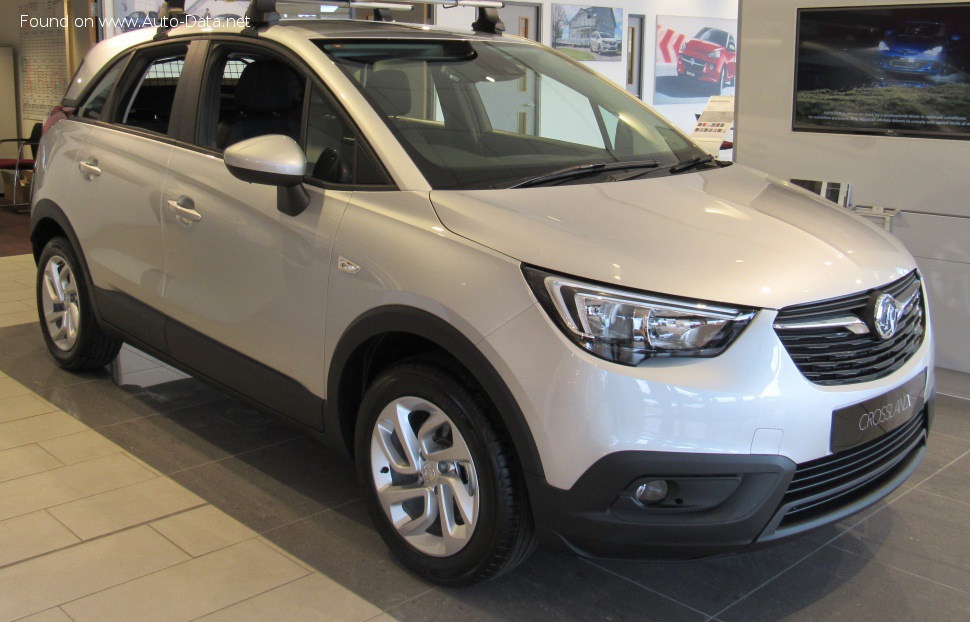
The Vauxhall Crossland, particularly its 2020 facelift model equipped with the 1.2-liter Turbo (110 Hp) engine, represents a key offering in the highly competitive European compact SUV segment. As a prominent British automotive brand, Vauxhall operates primarily within the United Kingdom, serving as the sister marque to Opel across continental Europe. The Crossland, a five-door, five-seat compact crossover utility vehicle (CUV), was initially introduced in 2017 as the Crossland X, replacing the Meriva mini MPV. The 2020 facelift dropped the “X” suffix, aligning it with Vauxhall’s updated nomenclature and introducing a refreshed design language, enhanced technology, and improved powertrain options. This specific iteration, with its efficient 1.2-liter turbocharged gasoline engine, is designed to appeal to urban families and individuals seeking a practical, economical, and stylish vehicle for daily commuting and light adventurous pursuits.
The Evolution of the Vauxhall Crossland
The Crossland’s journey began as a joint venture between Opel/Vauxhall and PSA Group (now part of Stellantis) prior to Opel/Vauxhall’s acquisition by PSA. This collaboration led to the Crossland sharing its platform with other PSA models, such as the Peugeot 2008 and Citroën C3 Aircross, emphasizing practicality, efficiency, and a compact footprint. The 2020 facelift brought significant visual updates, most notably the adoption of Vauxhall’s “Vizor” front fascia, a signature design element that integrates the grille, headlights, and brand logo into a single, sleek module. Beyond aesthetics, the refresh also introduced improvements to the chassis and steering for a more engaging driving experience, alongside updated infotainment and driver-assistance systems, solidifying its position as a modern contender in its segment.
Powertrain & Engine Architecture: The F12XHL 1.2 Turbo
At the heart of the Vauxhall Crossland 1.2 Turbo (110 Hp) lies a sophisticated F12XHL 1.2-liter (1199 cm3 or 73.17 cu. in.) inline three-cylinder gasoline engine. This powerplant benefits from modern engineering techniques, including a turbocharger and intercooler, direct fuel injection, and a Double Overhead Camshaft (DOHC) valvetrain with Variable Valve Timing (VVT). These technologies combine to deliver a robust 110 horsepower at 5500 revolutions per minute (rpm) and a healthy 151.2 lb.-ft. of torque available from a low 1750 rpm. The early availability of peak torque is crucial for a vehicle of this type, providing responsive acceleration and flexible in-gear performance, particularly beneficial in urban environments and for highway overtaking.
The F12XHL engine utilizes a multi-point direct injection system, ensuring precise fuel delivery and optimized combustion. The DOHC valvetrain, coupled with VVT, allows for optimized valve timing across the engine’s operating range, maximizing both power and efficiency. The turbocharger, a key component of the engine’s performance, utilizes a wastegate to regulate boost pressure, preventing overboost and ensuring reliable operation. The engine is paired with a six-speed automatic transmission, offering smooth and convenient gear changes. This transmission is a traditional torque-converter automatic, known for its smoothness and reliability, though it may not offer the same level of responsiveness as a dual-clutch transmission. The automatic transmission’s gear ratios are tuned for fuel efficiency and comfortable cruising, prioritizing drivability over outright performance.
Driving Characteristics
The 1.2-liter Turbo (110 Hp) with the automatic transmission delivers a comfortable and predictable driving experience. While not a performance-oriented setup, it provides adequate power for everyday driving situations. Acceleration from a standstill is reasonable, and the engine offers sufficient torque for merging onto highways and overtaking slower vehicles. The automatic transmission shifts smoothly, although it can sometimes feel hesitant during quick acceleration. Compared to the six-speed manual version, the automatic offers greater convenience, particularly in stop-and-go traffic. However, the manual transmission generally provides slightly better fuel economy and a more engaging driving experience. Compared to higher-output engine options available in the Crossland range, this 1.2L automatic is positioned as the entry-level choice, prioritizing fuel efficiency and affordability over outright performance. It’s geared towards drivers who prioritize ease of use and lower running costs.
Equipment & Trim Levels
The Vauxhall Crossland 1.2 Turbo (110 Hp) was typically offered in several trim levels, including SE, Design, and Elite. The SE trim served as the entry point, featuring standard equipment such as air conditioning, a touchscreen infotainment system with Bluetooth connectivity, alloy wheels, and a suite of safety features including ABS, ESP, and multiple airbags. The Design trim added features such as a larger touchscreen display, Apple CarPlay and Android Auto compatibility, rear parking sensors, and cruise control. The Elite trim, the highest specification, included features such as leather upholstery, heated front seats, a panoramic sunroof, and advanced driver-assistance systems like lane departure warning and automatic emergency braking. Optional extras available across the range included metallic paint, a navigation system, and a premium sound system. Interior upholstery typically consisted of cloth seats in the SE and Design trims, with leather options available on the Elite trim.
Chassis & Braking
The Vauxhall Crossland utilizes a McPherson strut front suspension and a torsion beam rear suspension. This setup provides a comfortable ride quality, absorbing bumps and imperfections in the road surface effectively. The torsion beam rear suspension is a cost-effective and space-saving solution, suitable for the vehicle’s weight class. The steering is electrically assisted, providing light and precise control. Braking duties are handled by ventilated disc brakes on the front wheels and solid disc brakes on the rear wheels. The braking system is equipped with ABS and ESP, enhancing stability and control during emergency braking maneuvers. The Crossland’s chassis is designed to prioritize comfort and stability over sporty handling, making it well-suited for everyday driving conditions. Stabilizer bars are fitted to both the front and rear axles to reduce body roll during cornering.
Market Reception & Comparison
Critics generally viewed the Vauxhall Crossland 1.2 Turbo (110 Hp) Automatic as a practical and well-rounded compact SUV. It was praised for its comfortable ride, spacious interior, and competitive fuel economy. However, some reviewers noted that the engine could feel underpowered when fully loaded or when tackling steep hills. Compared to other trims in the Crossland lineup, the 1.2-liter automatic offered a more affordable entry point, but it sacrificed some performance. The 1.5-liter diesel engine, for example, provided more torque and better fuel economy, while the higher-output gasoline engines offered quicker acceleration. In terms of reliability, the F12XHL engine has generally proven to be a dependable unit, although some owners have reported minor issues with the turbocharger and fuel injection system. Overall, the Crossland 1.2 Turbo Automatic represented a sensible and economical choice for buyers seeking a versatile and practical compact SUV.
Technical Specifications
| Category | Specification |
| Brand | Vauxhall |
| Model | Crossland (facelift 2020) |
| Type (Engine) | 1.2 Turbo (110 Hp) |
| Start of Production | October, 2020 |
| Body Type | SUV |
| Seats | 5 |
| Doors | 5 |
| Powertrain Architecture | Internal Combustion Engine (Front-wheel drive) |
| Fuel Type | Petrol (Gasoline) |
| Combined Fuel Consumption (WLTP) | 40.6 – 39.9 US mpg (5.8-5.9 l/100 km) |
| CO2 Emissions (WLTP) | 131-134 g/km |
| Emission Standard | Euro 6d |
| Acceleration 0 – 60 mph | 10.5 seconds |
| Maximum Speed | 116.2 mph (187 km/h) |
| Power | 110 Hp @ 5500 rpm |
| Power per liter | 91.7 Hp/l |
| Torque | 151.2 lb.-ft. @ 1750 rpm (205 Nm) |
| Engine Layout | Front, Transverse |
| Engine Model/Code | F12XHL |
| Engine Displacement | 1.2 liters (1199 cm3 / 73.17 cu. in.) |
| Number of Cylinders | 3 |
| Engine Configuration | Inline |
| Number of Valves per Cylinder | 4 |
| Fuel Injection System | Direct injection |
| Engine Aspiration | Turbocharger, Intercooler |
| Valvetrain | DOHC, VVT |
| Engine Oil Capacity | 3.7 US qt (3.5 l) |
| Coolant Capacity | 6.02 US qt (5.7 l) |
| Engine Systems | Start & Stop System, Particulate Filter |
| Max. Weight (Gross Vehicle Weight) | 3902.18 lbs. (1770 kg) |
| Trunk (boot) Space – Minimum | 14.48 cu. ft. (410 l) |
| Trunk (boot) Space – Maximum | 44.32 cu. ft. (1255 l) |
| Fuel Tank Capacity | 11.89 US gal (45 l) |
| Permitted Trailer Load with Brakes (12%) | 1851.88 lbs. (840 kg) |
| Permitted Trailer Load without Brakes | 1322.77 lbs. (600 kg) |
| Length | 165.83 in. (4212 mm) |
| Width | 69.49 in. (1765 mm) |
| Width Including Mirrors | 77.8 in. (1976 mm) |
| Height | 63.19 in. (1605 mm) |
| Wheelbase | 102.52 in. (2604 mm) |
| Front Overhang | 35.28 in. (896 mm) |
| Rear Overhang | 28.03 in. (712 mm) |
| Drag Coefficient (Cd) | 0.31 |
| Minimum Turning Circle (Turning Diameter) | 36.78 ft. (11.21 m) |
| Drive Wheel | Front-wheel drive |
| Number of Gears and Type of Gearbox | 6 gears, automatic transmission |
| Front Suspension | Independent, McPherson with coil spring and anti-roll bar |
| Rear Suspension | Dependent spring suspension |
| Front Brakes | Ventilated discs, 283 mm |
| Rear Brakes | Disc, 249 mm |
| Assisting Systems | ABS (Anti-lock Braking System) |
| Steering Type | Steering rack and pinion |
| Power Steering | Electric Steering |
| Tires Size | 195/60 R16; 215/50 R17 |
| Wheel Rims Size | 16; 17 inches |
Legacy
The Vauxhall Crossland 1.2 Turbo (110 Hp) Automatic, while not a groundbreaking vehicle, has established itself as a reliable and practical option in the used car market. The F12XHL engine, when properly maintained, has proven to be relatively durable, although regular servicing is crucial to prevent issues with the turbocharger and fuel injection system. The automatic transmission, while not the most advanced, is generally dependable. As a result, well-maintained examples of this variant continue to hold their value reasonably well. The Crossland’s appeal lies in its blend of affordability, practicality, and fuel efficiency, making it a popular choice for budget-conscious buyers seeking a versatile compact SUV. Its position as an entry-level trim within the Crossland range ensures continued demand in the used car market for years to come.