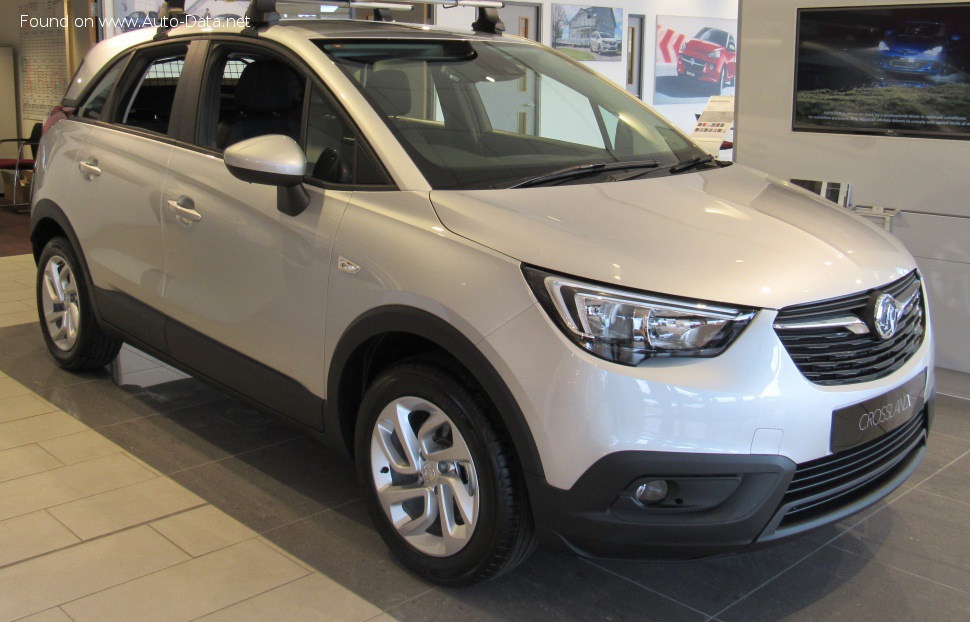
The Vauxhall Crossland (facelift 2020) 1.2 Turbo (130 Hp) represents a significant update to Vauxhall’s entry into the burgeoning B-segment (subcompact) SUV market. Launched in October 2020, this refreshed model, known simply as the Crossland (dropping the ‘X’ from its predecessor, the Crossland X), aimed to solidify its position as a practical, family-friendly crossover within the highly competitive European automotive landscape. Produced by the British marque Vauxhall, a subsidiary of Stellantis (formerly Groupe PSA), the Crossland shares its platform and many mechanical components with its Opel sibling, the Crossland, and other vehicles like the Citroën C3 Aircross and Peugeot 2008. While not sold in the United States, the Crossland is a staple in the United Kingdom and continental Europe, catering to buyers seeking a versatile, elevated driving position, and efficient urban vehicle without the larger footprint or fuel consumption of a full-size SUV. This particular variant, powered by a spirited 1.2-liter turbocharged engine delivering 130 horsepower, offers a compelling balance of performance and economy, making it a popular choice for daily commutes and family adventures across its primary markets.
Engine and Performance of the Vauxhall Crossland
At the heart of the Vauxhall Crossland (facelift 2020) 1.2 Turbo (130 Hp) lies a sophisticated 1.2-liter (1199 cm3 or 73.17 cu. in.) inline three-cylinder gasoline engine, designated with the F12XHT code. This powertrain benefits from a turbocharger and intercooler, ensuring robust performance for its class. Generating a respectable 130 horsepower at 5500 rpm, the engine demonstrates a strong power-to-liter ratio of 108.4 Hp/l. More crucially for everyday drivability, it delivers a healthy 169.64 lb.-ft. (230 Nm) of torque from a low 1750 rpm, providing excellent responsiveness and reduced need for frequent gear changes in city driving.
Power is channeled to the front wheels via a precise 6-speed manual transmission, offering engaging control for the driver. This setup allows the Crossland to accelerate from 0 to 60 mph in a brisk 9.5 seconds, with a maximum speed of 124.9 mph (201 km/h). Despite its lively performance, the Crossland maintains impressive fuel efficiency, with a combined WLTP rating of 41.3 – 40.6 US mpg (5.7-5.8 l/100 km). Its CO2 emissions are rated at 130-132 g/km, adhering to the stringent Euro 6d emission standard, underscoring its commitment to environmental responsibility. The engine also features a Start & Stop System and a particulate filter, further enhancing its efficiency and reducing emissions in urban environments. The DOHC valvetrain and multi-port manifold injection system contribute to its refined operation and reliability.
Design and Features of the Vauxhall Crossland
The 2020 facelift brought a refreshed aesthetic and enhanced practicality to the Vauxhall Crossland. Adopting Vauxhall’s new ‘Vizor’ front fascia, which integrates the grille and headlights into a single, sleek module, the Crossland presented a bolder and more modern appearance. This design language aligns it with newer Vauxhall models, giving it a distinctive road presence. As a 5-door SUV with seating for five, the Crossland maintains a compact footprint suitable for urban environments while offering the elevated driving position and practical interior space characteristic of a crossover.
Dimensionally, the Crossland measures 165.83 inches (4212 mm) in length, 69.49 inches (1765 mm) in width (77.8 inches or 1976 mm including mirrors), and 63.19 inches (1605 mm) in height, with a wheelbase of 102.52 inches (2604 mm). These dimensions contribute to its nimble turning circle of 36.78 feet (11.21 m), making it highly maneuverable in tight spaces. The vehicle’s drag coefficient (Cd) of 0.31 is commendable for an SUV, aiding both fuel efficiency and reducing wind noise.
Inside, the Crossland prioritizes comfort and versatility. It offers a generous minimum trunk (boot) space of 14.48 cu. ft. (410 liters), which can expand significantly to 44.32 cu. ft. (1255 liters) with the rear seats folded, catering to varying cargo needs. Key features include an independent McPherson front suspension with a coil spring and anti-roll bar, providing a comfortable and stable ride, complemented by a dependent spring rear suspension. Braking is handled by ventilated discs measuring 283 mm at the front and solid discs of 249 mm at the rear, supported by an Anti-lock Braking System (ABS) for enhanced safety. Electric power steering and a rack and pinion steering type ensure light and responsive handling. Standard tire sizes range from 195/60 R16 to 215/50 R17, mounted on 16 or 17-inch wheel rims, offering a balance of ride comfort and grip.
Powertrain & Engine Architecture
The F12XHT engine is a member of Stellantis’s “PureTech” family of three-cylinder gasoline engines. This engine utilizes a single-scroll turbocharger, designed for quicker response and reduced turbo lag. The engine block is constructed from aluminum alloy, contributing to weight reduction. Fuel is delivered via direct injection, optimizing combustion efficiency and reducing emissions. The engine employs variable valve timing on both the intake and exhaust camshafts, further enhancing performance and fuel economy across the rev range. The 6-speed manual transmission used in the Crossland is a conventional design, known for its durability and relatively low cost. It features a wide gear ratio spread, optimized for both fuel efficiency and responsive acceleration. The transmission’s shift linkage is cable-operated, providing a precise and tactile feel.
Driving Characteristics
The 1.2 Turbo (130 Hp) Crossland offers a surprisingly sprightly driving experience for a subcompact SUV. While not a performance-oriented vehicle, the engine’s ample low-end torque makes it feel responsive in everyday driving situations. Acceleration is adequate for merging onto highways and overtaking slower traffic. The 6-speed manual transmission allows drivers to maintain optimal engine speed for efficient cruising. Compared to lower-powered versions of the Crossland, the 130 hp variant provides a noticeable improvement in performance, particularly when fully loaded with passengers and cargo. Compared to the diesel variants, the 1.2 Turbo offers a smoother and quieter driving experience, albeit with slightly less fuel economy. The suspension provides a comfortable ride, absorbing bumps and imperfections in the road surface effectively. However, it’s not particularly sporty, with some body roll noticeable during cornering.
Equipment & Trim Levels
The Vauxhall Crossland (facelift 2020) 1.2 Turbo (130 Hp) was typically offered in several trim levels, including SE Nav, Elite Nav, and Ultimate Nav. The SE Nav trim served as the entry point, featuring standard equipment such as a 7-inch touchscreen infotainment system with Apple CarPlay and Android Auto compatibility, air conditioning, cruise control, and a rear parking sensor. The Elite Nav trim added features such as a larger 8-inch touchscreen, Vauxhall OnStar connectivity, heated front seats, and automatic climate control. The range-topping Ultimate Nav trim included premium features such as leather upholstery, a panoramic sunroof, and advanced safety systems like adaptive cruise control and lane keep assist. Optional extras included metallic paint, alloy wheels, and a premium sound system.
Chassis & Braking
The Crossland utilizes a front-wheel-drive configuration with a MacPherson strut front suspension and a torsion beam rear suspension. This setup provides a good balance of ride comfort and handling for a vehicle in its class. The front suspension features coil springs and an anti-roll bar to reduce body roll during cornering. The rear suspension is relatively simple, but effective at absorbing bumps and maintaining stability. The braking system consists of ventilated discs at the front and solid discs at the rear, providing adequate stopping power for everyday driving. The Crossland is equipped with ABS, electronic brakeforce distribution (EBD), and brake assist to enhance safety. The steering system is electric power-assisted, providing light and responsive steering feel.
Market Reception & Comparison
Critics generally praised the Vauxhall Crossland (facelift 2020) 1.2 Turbo (130 Hp) for its practicality, comfortable ride, and fuel efficiency. The 1.2-liter engine was considered a good compromise between performance and economy. However, some reviewers noted that the interior materials were not as premium as those found in some rivals. Compared to the lower-powered 1.2-liter versions, the 130 hp variant offered a noticeable improvement in performance, making it a more enjoyable driving experience. Compared to the diesel variants, the 1.2 Turbo offered a smoother and quieter ride, but with slightly higher fuel consumption. In terms of reliability, the Crossland has generally received positive reports, with few major issues reported. Its mechanical components are well-proven and shared with other Stellantis vehicles, contributing to its dependability.
Technical Specifications: Vauxhall Crossland (facelift 2020) 1.2 Turbo (130 Hp)
| Category | Specification |
| General Information | |
| Brand | Vauxhall |
| Model | Crossland |
| Generation | Crossland (facelift 2020) |
| Type (Engine) | 1.2 Turbo (130 Hp) |
| Start of production | October, 2020 |
| Powertrain Architecture | Internal Combustion engine |
| Body type | SUV |
| Seats | 5 |
| Doors | 5 |
| Performance Specs | |
| Combined fuel consumption (WLTP) | 5.7-5.8 l/100 km (41.3 – 40.6 US mpg) |
| CO2 emissions (WLTP) | 130-132 g/km |
| Fuel Type | Petrol (Gasoline) |
| Acceleration 0 – 60 mph | 9.5 sec |
| Maximum speed | 201 km/h (124.9 mph) |
| Emission standard | Euro 6d |
| Engine Specs | |
| Power | 130 Hp @ 5500 rpm |
| Power per liter | 108.4 Hp/l |
| Torque | 230 Nm @ 1750 rpm (169.64 lb.-ft. @ 1750 rpm) |
| Engine layout | Front, Transverse |
| Engine Model/Code | F12XHT |
| Engine displacement | 1199 cm3 (1.2 liters, 73.17 cu. in.) |
| Number of cylinders | 3 |
| Engine configuration | Inline |
| Number of valves per cylinder | 4 |
| Fuel injection system | Multi-port manifold injection |
| Engine aspiration | Turbocharger, Intercooler |
| Valvetrain | DOHC |
| Engine oil capacity | 3.5 l (3.7 US qt) |
| Coolant | 5.7 l (6.02 US qt) |
| Engine systems | Start & Stop System, Particulate filter |
| Space, Volume and Weights | |
| Max. weight (Gross Vehicle Weight Rating) | 1790 kg (3946.27 lbs.) |
| Trunk (boot) space – minimum | 410 l (14.48 cu. ft.) |
| Trunk (boot) space – maximum | 1255 l (44.32 cu. ft.) |
| Fuel tank capacity | 45 l (11.89 US gal) |
| Permitted trailer load with brakes (12%) | 840 kg (1851.88 lbs.) |
| Permitted trailer load without brakes | 600 kg (1322.77 lbs.) |
| Dimensions | |
| Length | 4212 mm (165.83 in.) |
| Width | 1765 mm (69.49 in.) |
| Width including mirrors | 1976 mm (77.8 in.) |
| Height | 1605 mm (63.19 in.) |
| Wheelbase | 2604 mm (102.52 in.) |
| Front overhang | 896 mm (35.28 in.) |
| Rear overhang | 712 mm (28.03 in.) |
| Drag coefficient (Cd) | 0.31 |
| Minimum turning circle (turning diameter) | 11.21 m (36.78 ft.) |
| Drivetrain, Brakes and Suspension Specs | |
| Drivetrain Architecture | The Internal combustion engine (ICE) drives the front wheels of the vehicle. |
| Drive wheel | Front wheel drive |
| Number of gears and type of gearbox | 6 gears, manual transmission |
| Front suspension | Independent, type McPherson with coil spring and anti-roll bar |
| Rear suspension | Dependent spring suspension |
| Front brakes | Ventilated discs, 283 mm |
| Rear brakes | Disc, 249 mm |
| Assisting systems | ABS (Anti-lock braking system) |
| Steering type | Steering rack and pinion |
| Power steering | Electric Steering |
| Tires size | 195/60 R16; 215/50 R17 |
| Wheel rims size | 16; 17 |
Legacy
The Vauxhall Crossland, particularly after its 2020 facelift, continued to play a crucial role in Vauxhall’s product lineup, serving as a practical and accessible option in the highly competitive subcompact crossover segment. In markets like the UK, where Vauxhall has a long-standing history, the Crossland appeals to a broad demographic, from young families to empty nesters, who value its combination of elevated driving position, generous interior space for its size, and economical running costs. The Crossland’s market impact is primarily felt in Europe, where it competes against a formidable array of rivals. The 1.2 Turbo (130 Hp) engine has proven to be a reliable and efficient powerplant, and well-maintained examples are likely to remain on the road for many years to come. On the used car market, the Crossland offers good value for money, providing a practical and well-equipped vehicle at an affordable price point. Its relatively simple mechanical design and readily available parts contribute to its low cost of ownership.