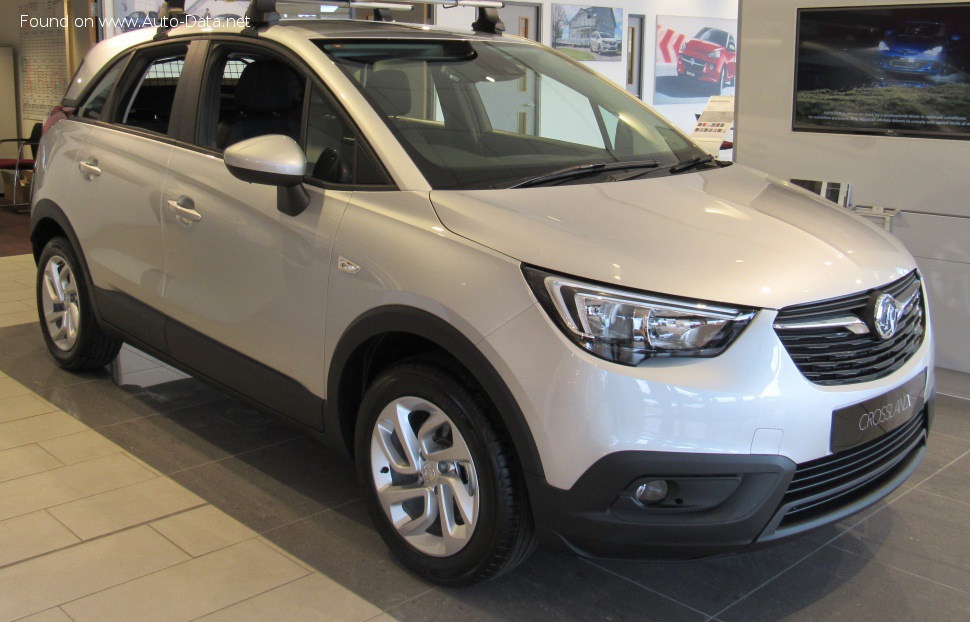
The Vauxhall Crossland X 1.2 Turbo (110 Hp) represents a significant offering in the highly competitive European B-segment compact crossover SUV market. Launched in June 2019 and produced until October 2020, this iteration of the Crossland X was a key model in Vauxhall’s strategy to capture a larger share of the burgeoning SUV segment. Positioned as a practical, family-friendly vehicle, it emphasized versatility, efficiency, and urban maneuverability. As a rebadged version of the Opel Crossland X, it shared its underpinnings with other PSA Group (now Stellantis) vehicles, showcasing a blend of French engineering with British branding tailored for the United Kingdom market. While not sold in the United States, its design philosophy and technical specifications reflect global trends in automotive development, particularly the move towards compact, turbocharged engines and elevated driving positions.
Engine and Performance: The Heart of the Vauxhall Crossland X 1.2 Turbo (110 Hp)
Under the hood, the Vauxhall Crossland X 1.2 Turbo (110 Hp) featured a modern and efficient powertrain designed to deliver a balance of performance and fuel economy. The engine, identified by codes D12XHL or EB2ADT, was a 1.2-liter (1199 cm3 or 73.17 cu. in.) inline three-cylinder unit. This compact engine benefited from advanced technologies, including a turbocharger and intercooler, which allowed it to produce a respectable 110 horsepower at 5500 rpm. Its power per liter stood at 91.7 Hp/l, an impressive figure for a non-performance-oriented engine of its size.
Crucially for a compact SUV, the engine also delivered substantial torque, peaking at 151.2 lb.-ft. (205 Nm) at a low 1500 rpm. This early availability of torque was instrumental in providing responsive acceleration and effortless driving, particularly in urban environments and during highway cruising, reducing the need for frequent gear changes. The engine’s architecture included a DOHC (Double Overhead Camshaft) valvetrain with VVT (Variable Valve Timing) and a direct injection fuel system, all contributing to optimized combustion and efficiency.
Power was sent to the front wheels via a precise 6-speed manual transmission, a common choice in the European market for its engagement and efficiency. This drivetrain configuration allowed the Crossland X to achieve a 0-60 mph acceleration time of 10.2 seconds and a top speed of 116.2 mph (187 km/h), making it adequately capable for daily driving and longer journeys.
Environmental considerations were also a priority, with the vehicle adhering to the stringent Euro 6d emission standard. It incorporated a Start & Stop System to minimize fuel consumption and emissions during idle, and a particulate filter to further reduce harmful exhaust outputs. The combined fuel consumption, measured under the WLTP cycle, ranged from 39.2 to 37.3 US mpg (6-6.3 l/100 km), with CO2 emissions around 108 g/km. These figures underscored its efficiency credentials, making it an economical choice for consumers.
Design and Features: Practicality Meets Modernity
The Vauxhall Crossland X adopted the popular SUV body type, characterized by its elevated ride height, robust styling cues, and practical five-door, five-seat configuration. With a length of 165.83 inches (4212 mm), a width of 69.49 inches (1765 mm), and a height of 63.19 inches (1605 mm), it struck a balance between compact dimensions for city driving and sufficient interior space for passengers and cargo. The wheelbase of 102.52 inches (2604 mm) contributed to a stable ride and maximized interior room within its footprint.
Design-wise, the Crossland X featured Vauxhall’s contemporary styling language, including a distinctive front grille and lighting signature. Its relatively high seating position offered improved visibility, a key appeal of SUVs. The interior was designed with practicality in mind, offering a versatile cabin. The trunk space ranged from a generous 14.48 cubic feet (410 liters) with all seats in place, expanding to an impressive 44.32 cubic feet (1255 liters) when the rear seats were folded, allowing for significant cargo flexibility. This adaptability made it suitable for diverse needs, from daily commutes to family trips.
The vehicle’s chassis and suspension setup were engineered for comfort and predictable handling. It featured an independent McPherson strut front suspension with coil springs and an anti-roll bar, a common and effective design for front-wheel-drive vehicles, providing good ride quality and stability. The rear utilized a dependent spring suspension, a cost-effective and space-efficient solution for this segment. Braking was handled by disc brakes on both the front and rear axles, complemented by an Anti-lock Braking System (ABS) for enhanced safety during emergency stops. Steering was managed by an electric power steering system with a rack and pinion setup, offering light and precise control, particularly beneficial for maneuvering in tight urban spaces, as evidenced by its minimum turning circle of 36.78 feet (11.21 m).
The Crossland X was available with tire sizes ranging from 195/60 R16 to 215/50 R17, mounted on 16-inch or 17-inch wheel rims, offering a choice between comfort and slightly sportier aesthetics. Its drag coefficient (Cd) of 0.31 was competitive for an SUV of its size, contributing to its fuel efficiency and reduced wind noise at higher speeds.
Vauxhall Crossland X 1.2 Turbo (110 Hp): Powertrain & Engine Architecture
The engine at the heart of the Crossland X 1.2 Turbo (110 Hp) is the PSA-developed EB2ADT, also known as the D12XHL. This is a 1.2-liter, inline three-cylinder gasoline engine. The three-cylinder configuration contributes to reduced weight and friction, enhancing fuel efficiency. The engine utilizes a single-scroll turbocharger with an intercooler to boost power output. Direct fuel injection is employed, delivering fuel directly into the combustion chamber for precise control and improved efficiency. The engine features a timing chain, reducing maintenance compared to timing belts. The valvetrain utilizes double overhead camshafts (DOHC) and variable valve timing (VVT) on both intake and exhaust valves, optimizing engine performance across the rev range.
The 6-speed manual transmission paired with this engine is a standard gearbox found in many PSA vehicles. It provides a balance between fuel economy and driver engagement. The gear ratios are tuned for everyday driving, prioritizing acceleration in lower gears and comfortable cruising at highway speeds. The transmission is a front-wheel-drive configuration, typical for this class of vehicle.
Driving Characteristics
The 1.2 Turbo (110 Hp) engine in the Crossland X delivers adequate performance for everyday driving. While not a sporty engine, the turbocharger provides a noticeable boost in power, making overtaking and merging onto highways manageable. The 151.2 lb-ft of torque available from 1500 rpm ensures responsive acceleration in urban environments. Compared to higher-output versions of the Crossland X, such as those with more powerful gasoline engines or diesel options, this variant feels less energetic. However, it offers a smoother and more refined driving experience than the base-level naturally aspirated engines. The manual transmission allows for greater driver control, but requires more driver involvement than an automatic transmission. The gear ratios are well-suited for fuel efficiency, but may require frequent shifting when driving uphill or with a full load.
Equipment & Trim Levels
The Crossland X 1.2 Turbo (110 Hp) was typically offered in several trim levels, including Energy, Design, and Elite. The base Energy trim included standard features such as air conditioning, a touchscreen infotainment system with Bluetooth connectivity, electric front windows, and remote central locking. The Design trim added features like alloy wheels, cruise control, and a leather-wrapped steering wheel. The top-of-the-line Elite trim included features such as automatic climate control, parking sensors, and a rearview camera. Optional extras available for this trim included a panoramic sunroof, heated seats, and a premium sound system. Interior upholstery typically consisted of cloth seats, with leather upholstery available as an option on higher trims. The dashboard configuration was relatively simple and functional, with a focus on ease of use.
Chassis & Braking
The Crossland X 1.2 Turbo (110 Hp) utilized a McPherson strut front suspension with coil springs and an anti-roll bar. The rear suspension employed a torsion beam setup, a cost-effective solution for this class of vehicle. The braking system consisted of disc brakes on all four wheels, providing adequate stopping power. An Anti-lock Braking System (ABS) and Electronic Stability Control (ESC) were standard features, enhancing safety. The front stabilizer bar thickness was approximately 22mm, contributing to reduced body roll during cornering. The steering system was an electric power steering (EPS) system, providing light and precise steering feel.
Market Reception & Comparison
Critics generally viewed the Vauxhall Crossland X 1.2 Turbo (110 Hp) as a practical and efficient crossover SUV. It was praised for its comfortable ride, spacious interior, and low running costs. However, some critics noted that the engine could feel underpowered when fully loaded or driving uphill. Compared to other trims in the Crossland X lineup, this variant offered a good balance between price and performance. The 1.2 Turbo engine provided better fuel economy than the more powerful gasoline engines, while offering more performance than the base-level engines. In terms of reliability, the 1.2 Turbo engine has generally proven to be a reliable unit, but some owners have reported issues with the turbocharger and fuel injectors.
Technical Specifications: Vauxhall Crossland X 1.2 Turbo (110 Hp)
| Category | Specification |
| General Information | |
| Brand | Vauxhall |
| Model | Crossland |
| Generation | Crossland X |
| Engine Type | 1.2 Turbo (110 Hp) |
| Production Start | June, 2019 |
| Production End | October, 2020 |
| Powertrain Architecture | Internal Combustion Engine |
| Body Type | SUV |
| Seats | 5 |
| Doors | 5 |
| Performance Specs | |
| Combined Fuel Consumption (WLTP) | 39.2 – 37.3 US mpg (6-6.3 l/100 km) |
| CO2 Emissions (NEDC, WLTP equivalent) | 108 g/km |
| Fuel Type | Petrol (Gasoline) |
| Acceleration 0 – 60 mph | 10.2 sec |
| Maximum Speed | 116.2 mph (187 km/h) |
| Emission Standard | Euro 6d |
| Engine Specs | |
| Power | 110 Hp @ 5500 rpm |
| Power per liter | 91.7 Hp/l |
| Torque | 151.2 lb.-ft. (205 Nm) @ 1500 rpm |
| Engine Layout | Front, Transverse |
| Engine Model/Code | D12XHL, EB2ADT |
| Engine Displacement | 1.2 liters (1199 cm3, 73.17 cu. in.) |
| Number of Cylinders | 3 |
| Engine Configuration | Inline |
| Number of Valves per Cylinder | 4 |
| Fuel Injection System | Direct Injection |
| Engine Aspiration | Turbocharger, Intercooler |
| Valvetrain | DOHC, VVT |
| Engine Oil Capacity | 3.7 US qt (3.5 l) |
| Coolant Capacity | 6.02 US qt (5.7 l) |
| Engine Systems | |
| Start & Stop System | Yes |
| Particulate Filter | Yes |
| Space, Volume and Weights | |
| Max. Weight (Gross Vehicle Weight) | 3902.18 lbs. (1770 kg) |
| Trunk (Boot) Space – Minimum | 14.48 cu. ft. (410 l) |
| Trunk (Boot) Space – Maximum | 44.32 cu. ft. (1255 l) |
| Fuel Tank Capacity | 11.89 US gal (45 l) |
| Permitted Trailer Load with Brakes (12%) | 1851.88 lbs. (840 kg) |
| Permitted Trailer Load without Brakes | 1322.77 lbs. (600 kg) |
| Dimensions | |
| Length | 165.83 in. (4212 mm) |
| Width | 69.49 in. (1765 mm) |
| Width Including Mirrors | 77.8 in. (1976 mm) |
| Height | 63.19 in. (1605 mm) |
| Wheelbase | 102.52 in. (2604 mm) |
| Front Overhang | 35.28 in. (896 mm) |
| Rear Overhang | 28.03 in. (712 mm) |
| Drag Coefficient (Cd) | 0.31 |
| Minimum Turning Circle (Turning Diameter) | 36.78 ft. (11.21 m) |
| Drivetrain, Brakes and Suspension Specs | |
| Drivetrain Architecture | Front-wheel drive (Internal Combustion Engine drives front wheels) |
| Drive Wheel | Front Wheel Drive |
| Number of Gears and Type of Gearbox | 6 gears, Manual Transmission |
| Front Suspension | Independent, type McPherson with coil spring and anti-roll bar |
| Rear Suspension | Dependent spring suspension |
| Front Brakes | Disc |
| Rear Brakes | Disc |
| Assisting Systems | ABS (Anti-lock braking system) |
| Steering Type | Steering rack and pinion |
| Power Steering | Electric Steering |
| Tires Size | 195/60 R16; 215/50 R17 |
| Wheel Rims Size | 16; 17 inches |
Legacy: Long-Term Reliability and Used Car Market Status
The Vauxhall Crossland X 1.2 Turbo (110 Hp) powertrain has generally proven to be relatively reliable, although some common issues have been reported. These include potential problems with the turbocharger, fuel injectors, and exhaust gas recirculation (EGR) valve. Regular maintenance, including oil changes and filter replacements, is crucial for ensuring long-term reliability. In the used car market, this variant of the Crossland X represents a good value proposition, offering a practical and efficient crossover SUV at an affordable price. Its fuel economy and relatively low running costs make it an attractive option for budget-conscious buyers. However, potential buyers should be aware of the potential issues mentioned above and thoroughly inspect the vehicle before making a purchase. Overall, the Crossland X 1.2 Turbo (110 Hp) remains a popular choice in the used car market, offering a compelling blend of practicality, efficiency, and affordability.