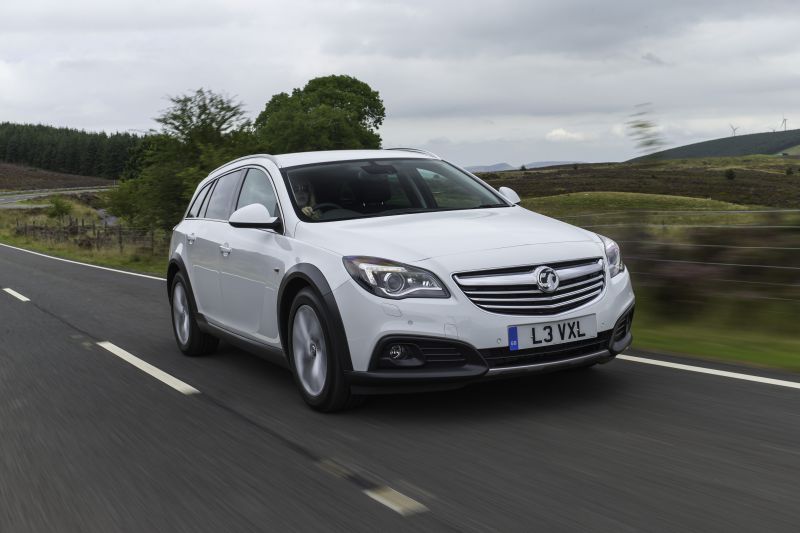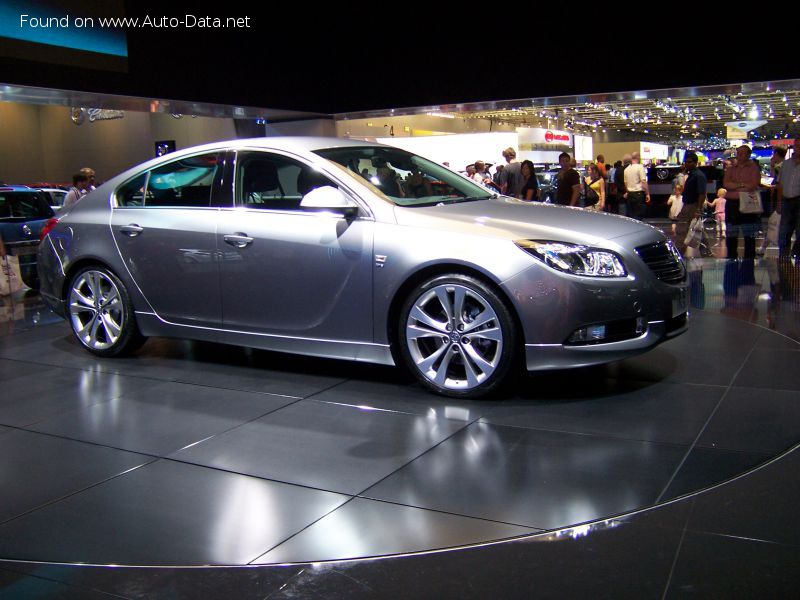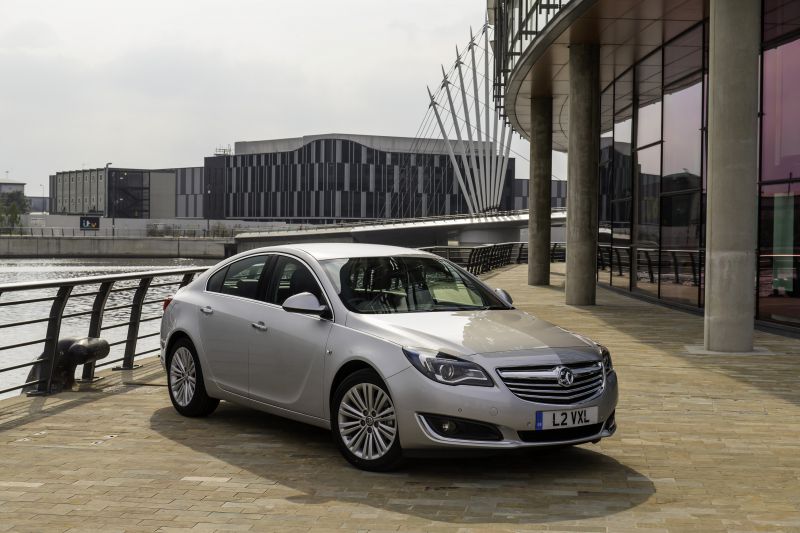
The Vauxhall Insignia I Hatchback (facelift 2013) represents a significant mid-cycle refresh for Vauxhall’s flagship D-segment offering in the United Kingdom and its Opel counterpart across continental Europe. Positioned as a direct competitor to popular family and executive saloons and hatchbacks, the Insignia aimed to blend sophisticated design with practical functionality and advanced technology. This particular variant, featuring the potent 2.0i Turbo ecoTEC engine with 250 horsepower and a Start/Stop system, was designed to appeal to buyers seeking a blend of performance, efficiency, and comfort in a spacious five-door hatchback body. Launched in 2013 and produced until 2017, the facelifted Insignia brought a host of updates to its styling, interior, and powertrain, solidifying its role as a strong contender in a highly competitive market segment dominated by established European marques.
Vauxhall Insignia I Hatchback (facelift 2013): Overview
The Insignia I, launched in 2008, was Vauxhall/Opel’s attempt to create a genuinely competitive offering in the crowded D-segment, traditionally dominated by the Ford Mondeo, Volkswagen Passat, and others. The 2013 facelift was a crucial update, addressing initial criticisms and enhancing the car’s appeal. The hatchback body style, favored in European markets, provided a practical alternative to the traditional saloon (sedan) while maintaining a stylish profile. This model, equipped with the 2.0i Turbo ecoTEC engine, targeted drivers who desired a spirited driving experience without sacrificing fuel economy or practicality.
Engine & Performance
At the heart of this specific Insignia model lies a robust 2.0-liter (1998 cm3, or 121.93 cubic inches) inline four-cylinder engine, designated by codes A20NHT or B20NHT. This powerplant features a turbocharger and intercooler, along with direct fuel injection and a DOHC valvetrain, to produce an impressive 250 horsepower at 5300 rpm. Torque output is equally noteworthy, delivering a substantial 400 Nm (295.02 lb.-ft.) across a broad rev range from 2500 to 4000 rpm. This wide torque band ensures responsive acceleration and flexible in-gear performance, making the Insignia adept at both urban driving and highway cruising.
Power is channeled to the front wheels via a precise 6-speed manual transmission, offering an engaging driving experience for those who prefer more control over gear selection. The combination of a powerful engine and manual gearbox allows the Vauxhall Insignia I Hatchback (facelift 2013) to achieve a rapid 0 to 60 mph acceleration time of just 7.1 seconds (0-100 km/h in 7.5 seconds). Its top speed is rated at 154.72 mph (249 km/h), placing it firmly in the performance territory for a mainstream family car.
Efficiency was also a key focus, despite the high power output. The integration of Vauxhall’s ecoTEC technology and a Start/Stop system contributes significantly to fuel economy. The vehicle achieves an estimated 23.3 US mpg in urban conditions, 42.8 US mpg on the extra-urban cycle, and a combined average of 32.7 US mpg (7.2 liters per 100 km). With CO2 emissions of 169 g/km, this variant met the Euro 5 emission standard, reflecting a commitment to environmental performance for its era. The Start/Stop system automatically shuts off the engine when the vehicle is stationary, reducing fuel consumption and emissions, particularly in city traffic.
Design & Features
The 2013 facelift brought a refreshed aesthetic to the Insignia, enhancing its already sleek and aerodynamic profile. The hatchback body style, featuring five doors and seating for five occupants, offered a practical yet stylish alternative to traditional sedans. Exterior updates included redesigned front and rear fascias, a wider, lower grille, and updated lighting signatures, giving the car a more contemporary and assertive stance. The overall length of 190.63 inches (4842 mm) and a width of 73.07 inches (1856 mm) contributed to its imposing road presence.
Inside, the facelift focused on improving material quality, ergonomics, and technology. The dashboard was redesigned, featuring a cleaner layout and an updated infotainment system. Vauxhall aimed to create a more premium feel, with soft-touch materials and improved switchgear. The instrument cluster was updated, often including a configurable digital display in higher trims. Practicality remained a strong point, with a generous trunk capacity ranging from 18.72 cubic feet (530 liters) with the rear seats up, expanding to an impressive 51.91 cubic feet (1470 liters) when the 60/40 split-folding rear seats were stowed, making it highly versatile for family use or hauling cargo.
The Insignia’s chassis was engineered for a balanced ride and handling. It featured an independent McPherson strut front suspension with coil springs and an anti-roll bar, paired with an independent multi-link rear suspension. This setup aimed to provide a comfortable ride while maintaining composure during dynamic driving. Braking duties were handled by ventilated discs at the front and solid discs at the rear, complemented by an Anti-lock Braking System (ABS) for enhanced stopping power and stability. The vehicle rode on 225/55 R17 tires, mounted on 17-inch wheel rims.
Standard safety features for the 2013 Insignia included multiple airbags, electronic stability control, and traction control, in addition to ABS. For a car of its segment and era, the Insignia provided a comprehensive suite of safety technologies designed to protect occupants. Convenience features, depending on the trim level, could include advanced climate control, power-adjustable seating, and various connectivity options through the updated infotainment system.
Technical Specifications
| Category | Specification |
| General Information | |
| Brand | Vauxhall |
| Model | Insignia |
| Generation | Insignia I Hatchback (facelift 2013) |
| Engine Type | 2.0i Turbo ecoTEC (250 Hp) Start/Stop |
| Production Start | 2013 |
| Production End | 2017 |
| Powertrain Architecture | Internal Combustion Engine |
| Body Type | Hatchback |
| Seats | 5 |
| Doors | 5 |
| Performance Specs | |
| Fuel Consumption (Urban) | 10.1 l/100 km |
| Fuel Consumption (Extra Urban) | 5.5 l/100 km |
| Fuel Consumption (Combined) | 7.2 l/100 km |
| CO2 Emissions | 169 g/km |
| Fuel Type | Petrol (Gasoline) |
| Acceleration 0-60 mph | 7.1 sec |
| Acceleration 0-100 km/h | 7.5 sec |
| Maximum Speed | 249 km/h |
| Emission Standard | Euro 5 |
| Engine Specs | |
| Power | 250 Hp @ 5300 rpm |
| Torque | 400 Nm @ 2500-4000 rpm |
| Engine Displacement | 1998 cm3 |
| Number of Cylinders | 4 |
| Engine Configuration | Inline |
Legacy and Market Impact
The Vauxhall Insignia, and specifically the facelifted first generation from 2013 to 2017, played a crucial role in Vauxhall’s product lineup, serving as its mainstream large family car and a popular choice for fleet operators in the UK. While not sold in the United States under the Vauxhall badge (its Opel Insignia sibling was briefly rebadged as the Buick Regal for the North American market), the Insignia was a significant player in the European D-segment, a category known for its fierce competition and high expectations for quality, efficiency, and driving dynamics.
In its primary markets, the Vauxhall Insignia I Hatchback (facelift 2013) competed head-to-head with established rivals such as the Ford Mondeo, Volkswagen Passat, Skoda Superb, and Mazda6. Its strengths lay in its competitive pricing, distinctive styling (especially after the facelift), spacious interior, and a strong range of engines, with the 2.0i Turbo ecoTEC (250 Hp) variant offering a compelling blend of performance and everyday usability. For many, it represented a sensible yet aspirational choice, offering executive car aesthetics and features without the premium price tag of German luxury brands.
The introduction of the Start/Stop system and the ecoTEC engine range underscored Vauxhall’s commitment to improving fuel efficiency and reducing emissions, a growing priority for consumers and regulators alike during this period. The facelift also addressed some of the earlier generation’s criticisms, particularly regarding interior ergonomics and material quality, helping to maintain its competitive edge against newer models. Ultimately, the Insignia I (facelift) helped to maintain Vauxhall’s presence in the critical D-segment, offering a well-rounded package that appealed to both private buyers and company car users. Its legacy is one of a practical, stylish, and increasingly refined family car that offered a strong value proposition, contributing to Vauxhall’s brand image as a provider of accessible, modern vehicles in the demanding European automotive landscape.