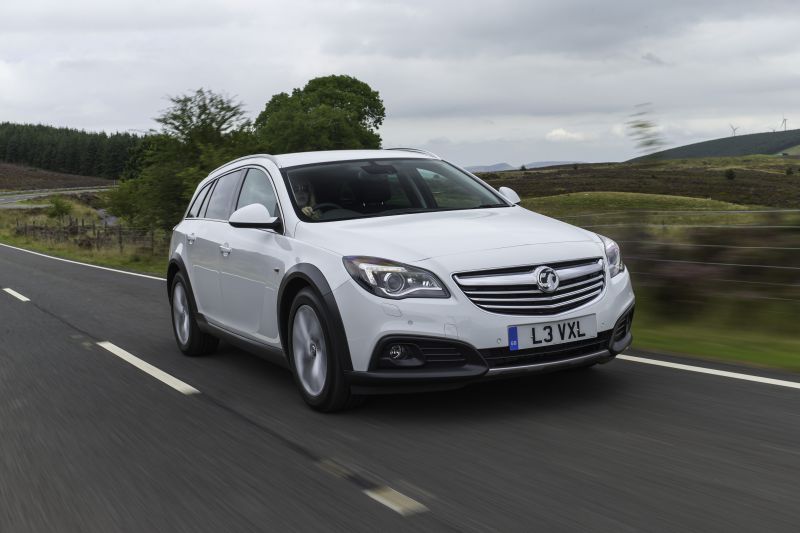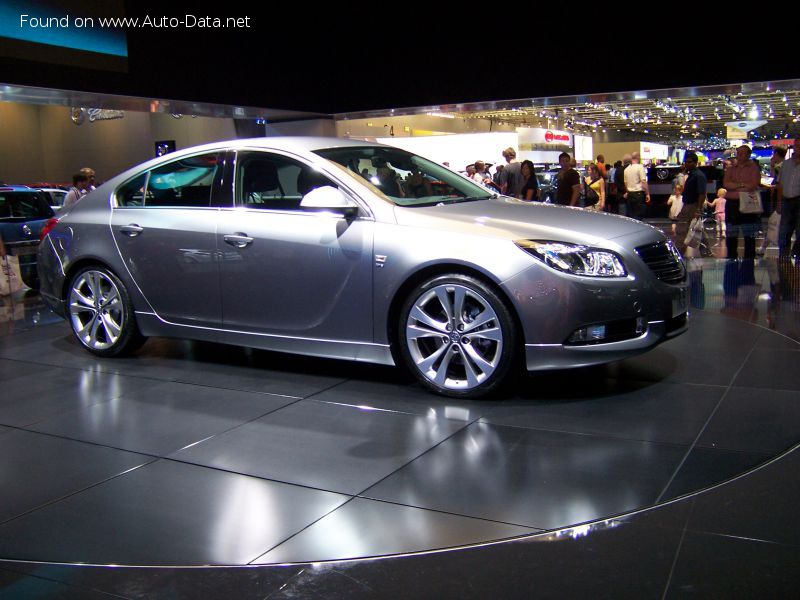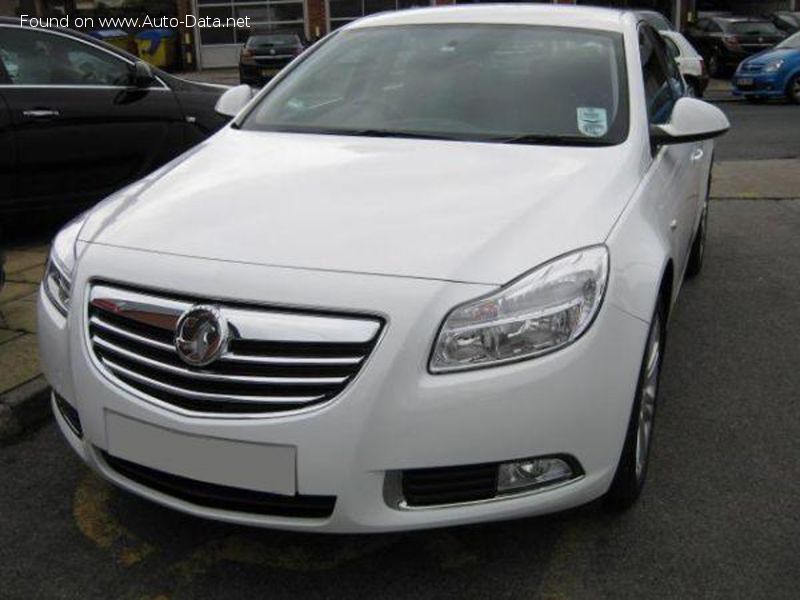
The Vauxhall Insignia I Saloon 2.0i Turbo ecoTEC (220 Hp), produced between 2008 and 2013, marked a pivotal moment in Vauxhall’s design and engineering evolution. As the successor to the Vectra, this model was central to General Motors’ European strategy, primarily marketed as the Opel Insignia throughout continental Europe and the Vauxhall Insignia in the United Kingdom. The first-generation Insignia aimed to elevate the brand’s standing in the competitive mid-size (D-segment) market, offering a more refined experience, sophisticated styling, and advanced technology compared to its predecessor. The 2.0i Turbo ecoTEC variant specifically targeted buyers seeking a blend of performance and efficiency within its class.
The Vauxhall Insignia I Saloon: A European Executive Car
The Insignia was a key component of GM’s global product planning, showcasing a new design language that would influence future models worldwide. This strategic approach was also evident in its North American counterpart, the Buick Regal, which brought a European-engineered sedan to the U.S. market. The Vauxhall Insignia I Saloon 2.0i Turbo ecoTEC (220 Hp) distinguished itself with a sleek, coupé-like silhouette, a departure from the more conventional designs prevalent in the segment. It combined contemporary aesthetics with a focus on driver engagement and comfort, establishing new standards for Vauxhall in terms of perceived quality and refinement.
Engine & Performance
The Vauxhall Insignia I Saloon 2.0i Turbo ecoTEC (220 Hp) featured a technologically advanced powertrain designed for both spirited performance and reasonable efficiency. The vehicle was powered by a 2.0-liter (1998 cm³ or 121.93 cu. in.) inline-four gasoline engine, designated A20NHT. This engine incorporated a modern architecture with a twin-scroll turbocharger and an intercooler, maximizing power output while maintaining a compact size. Direct fuel injection further optimized fuel delivery, contributing to both power and efficiency.
The engine produced 220 horsepower at 5300 rpm, resulting in a power-per-liter ratio of 110.1 horsepower per liter. Torque figures were equally impressive, with 258.15 lb.-ft. (350 Nm) available across a broad rev range from 2000 to 4000 rpm. This wide torque band ensured excellent responsiveness and flexibility in various driving conditions. Paired with a precise 6-speed manual transmission, the powertrain propelled the Insignia from 0 to 60 mph in 6.8 seconds, with a top speed of 149.75 mph (241 km/h).
Despite its performance capabilities, the “ecoTEC” designation highlighted Vauxhall’s commitment to environmental considerations. The engine met Euro 5 emission standards, and its fuel consumption figures were competitive for its class and power output. Combined fuel economy was rated at 26.4 US mpg (8.9 l/100 km), with extra-urban driving achieving 35.1 US mpg (6.7 l/100 km) and urban driving at 18.7 US mpg (12.6 l/100 km). CO2 emissions were 208 g/km, representing a balance between performance and environmental responsibility.
Design & Features
The design of the Vauxhall Insignia I Saloon represented a significant departure from its predecessor, embodying Opel/Vauxhall’s “sculptural artistry meets German precision” design philosophy. The four-door sedan body style projected a dynamic and elegant presence, characterized by flowing lines, a prominent grille, and distinctive “blade” side surfacing. Its sleek profile wasn’t solely aesthetic; it contributed to an excellent drag coefficient (Cd) of 0.27, enhancing both fuel efficiency and high-speed stability.
Inside, the Insignia offered a sophisticated and driver-focused cabin designed for comfort and practicality. It accommodated five occupants, with an emphasis on ergonomic layout and quality materials. The trunk space was generous, offering a minimum of 17.3 cu. ft. (490 liters) with the rear seats up, expanding to 35.67 cu. ft. (1010 liters) with the rear seats folded down, making it suitable for both daily use and longer journeys. Key features included hydraulic power steering for direct feedback, and an advanced chassis setup. The front suspension utilized an independent McPherson strut system with coil springs and an anti-roll bar, while the rear featured an independent multi-link suspension, providing a refined ride and agile handling. Stopping power came from ventilated disc brakes at the front and disc brakes at the rear, complemented by an Anti-lock Braking System (ABS) for enhanced safety during emergency braking. The vehicle rode on 215/60 R16 tires mounted on 16-inch wheel rims, a standard setup balancing comfort and grip.
Technical Specifications
| Brand | Vauxhall |
| Model | Insignia |
| Generation | Insignia I Saloon |
| Type (Engine) | 2.0i Turbo ecoTEC (220 Hp) |
| Start of production | 2008 |
| End of production | 2013 |
| Powertrain Architecture | Internal Combustion engine |
| Body type | Sedan |
| Seats | 5 |
| Doors | 4 |
| Fuel consumption (economy) – urban | 18.7 US mpg (12.6 l/100 km) |
| Fuel consumption (economy) – extra urban | 35.1 US mpg (6.7 l/100 km) |
| Fuel consumption (economy) – combined | 26.4 US mpg (8.9 l/100 km) |
| CO2 emissions | 208 g/km |
| Fuel Type | Petrol (Gasoline) |
| Acceleration 0 – 60 mph | 6.8 sec |
| Acceleration 0 – 100 km/h | 7.2 sec |
| Maximum speed | 149.75 mph (241 km/h) |
| Emission standard | Euro 5 |
| Power | 220 Hp @ 5300 rpm |
| Torque | 258.15 lb.-ft. (350 Nm) @ 2000-4000 rpm |
| Engine displacement | 2.0 liters (1998 cm³ / 121.93 cu. in.) |
| Kerb Weight | 3390.71 lbs. (1538 kg) |
| Trunk (boot) space – minimum | 17.3 cu. ft. (490 l) |
| Trunk (boot) space – maximum | 35.67 cu. ft. (1010 l) |
| Length | 190.16 in. (4830 mm) |
| Width | 73.07 in. (1856 mm) |
| Height | 58.98 in. (1498 mm) |
| Drag coefficient (Cd) | 0.27 |
The Vauxhall Insignia I Saloon 2.0i Turbo ecoTEC (220 Hp) significantly impacted the European automotive market. It successfully repositioned Vauxhall as a brand capable of producing stylish, high-quality, and dynamically capable vehicles. The Insignia’s striking design, refined driving dynamics, and competitive pricing made it a popular choice for both private buyers and fleet operators. Furthermore, its platform and engineering were adapted for the Buick Regal in North America, demonstrating GM’s global strategy and bringing European driving characteristics to the U.S. market. The first-generation Insignia remains a testament to a period of positive change for General Motors’ European operations, proving that a mainstream brand could deliver a compelling and sophisticated driving experience.