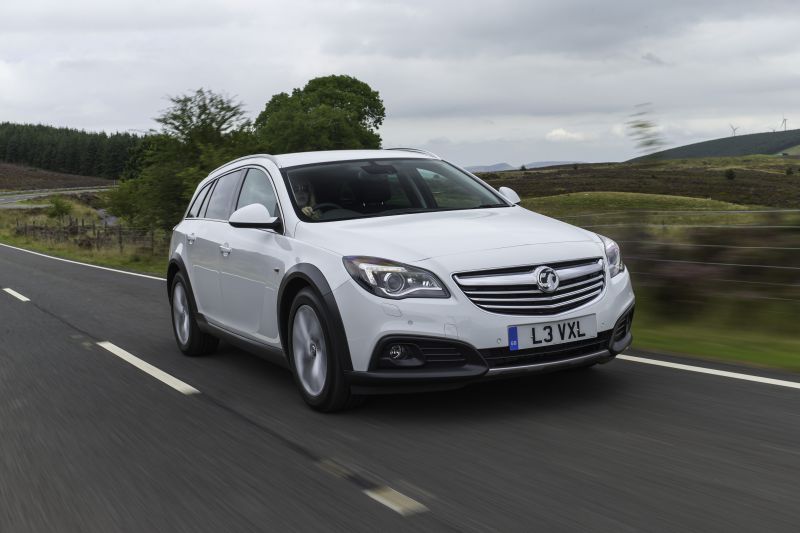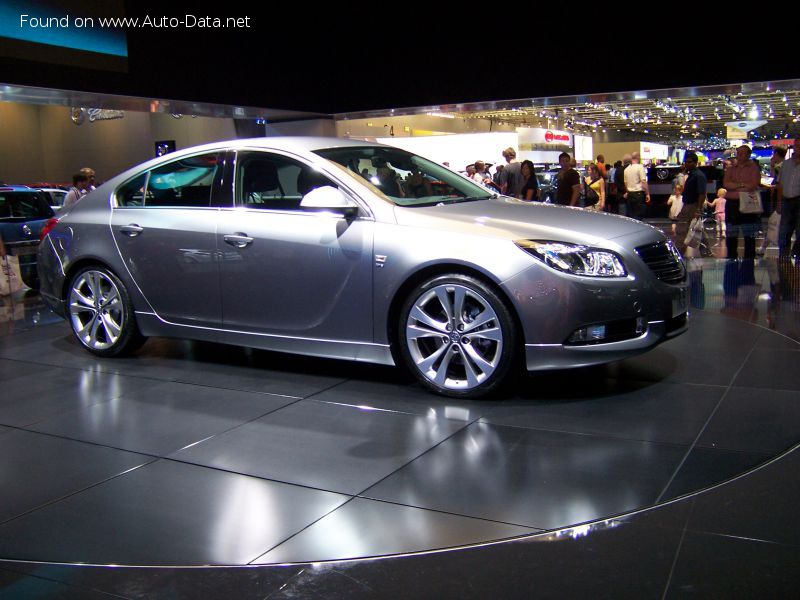
The Vauxhall Insignia I Saloon (facelift 2013) represents a significant refresh of Vauxhall’s flagship D-segment offering, a mid-size family sedan designed primarily for the European market. Launched in 2013, this iteration of the Insignia built upon the success of the original model introduced in 2008, bringing updated styling, enhanced technology, and improved powertrain options. As a key player in the competitive European executive sedan segment, the Insignia aimed to blend sophisticated design with practical functionality and efficient performance. This particular variant, the 2.0i Turbo ecoTEC (250 Hp) Start/Stop, stood out as a potent yet relatively fuel-conscious option within the Insignia lineup, offering a compelling blend of power and modern efficiency features. While Vauxhall is a British marque, part of the wider General Motors (GM) family at the time, the Insignia platform was globally recognized, underpinning models such as the Opel Insignia in mainland Europe and the Buick Regal in the United States, providing a testament to its robust engineering and international appeal.
Engine & Performance: The 2.0i Turbo ecoTEC (250 Hp) Start/Stop
The Vauxhall Insignia I Saloon (facelift 2013) 2.0i Turbo ecoTEC (250 Hp) Start/Stop is powered by a 2.0-liter (1998 cm3 or 121.93 cu. in.) inline-four gasoline engine. Designated with engine codes A20NHT or B20NHT, this powerplant incorporates direct fuel injection, a turbocharger, and an intercooler to optimize power and efficiency. The engine produces 250 horsepower at 5300 rpm, with a torque output of 295.02 lb.-ft. (400 Nm) available between 2500 and 4000 rpm, providing strong performance across a wide range of driving conditions.
Power is delivered to the front wheels through a 6-speed manual transmission, offering a direct and engaging driving experience. This configuration allows the Insignia to accelerate from 0 to 60 mph in 7.1 seconds (as calculated by Auto-Data.net), or 0 to 62 mph (100 km/h) in 7.5 seconds. The vehicle’s top speed is electronically limited to 154.72 mph (249 km/h). The “ecoTEC” designation highlights a focus on fuel efficiency, and the inclusion of a Start/Stop system further contributes to reduced fuel consumption and emissions, especially in city driving. Combined fuel economy is rated at 32.7 US mpg (7.2 l/100 km), with urban consumption at 23.3 US mpg (10.1 l/100 km) and extra-urban at 42.8 US mpg (5.5 l/100 km). This model meets Euro 5 emission standards.
Design & Features: Refined Aesthetics and Modern Comfort
The 2013 facelift brought a refreshed aesthetic to the Vauxhall Insignia Saloon. Exterior updates included redesigned headlamps and taillamps, a wider, lower grille, and updated chrome accents, resulting in a more contemporary and premium appearance. The vehicle measures 190.63 inches (4842 mm) in length, 73.07 inches (1856 mm) in width, and 58.98 inches (1498 mm) in height, providing a commanding road presence. The 107.76-inch (2737 mm) wheelbase offers ample interior space for five passengers.
The interior of the facelifted Insignia features higher-quality materials, a redesigned center console, and an improved infotainment system. While specific infotainment details vary, this generation typically included larger touchscreens, navigation, and enhanced connectivity options. Safety features were comprehensive, including multiple airbags, ABS (Anti-lock Braking System), and potentially advanced driver-assistance systems depending on the trim level. The suspension system, with an independent McPherson setup at the front and an independent multi-link setup at the rear, provides a balanced ride quality. Ventilated disc brakes at the front and disc brakes at the rear ensure strong stopping power. The vehicle is equipped with 225/55 R17 tires mounted on 17-inch wheel rims.
Practicality is enhanced by a generous trunk space of 17.66 cu. ft. (500 liters), expandable to 35.84 cu. ft. (1015 liters) with the rear seats folded. A fuel tank capacity of 18.49 US gallons (70 liters) allows for extended driving ranges. The kerb weight of 3558.26 lbs. (1614 kg) contributes to a favorable weight-to-power ratio of 6.5 kg/Hp (154.9 Hp/tonne).
Technical Specifications
| Category | Specification |
| General Information | |
| Brand | Vauxhall |
| Model | Insignia |
| Generation | Insignia I Saloon (facelift 2013) |
| Type (Engine) | 2.0i Turbo ecoTEC (250 Hp) Start/Stop |
| Start of Production | 2013 year |
| End of Production | 2017 year |
| Powertrain Architecture | Internal Combustion engine |
| Body Type | Sedan |
| Seats | 5 |
| Doors | 4 |
| Performance Specs | |
| Fuel Consumption (Economy) – urban | 10.1 l/100 km (23.3 US mpg) |
| Fuel Consumption (Economy) – extra urban | 5.5 l/100 km (42.8 US mpg) |
| Fuel Consumption (Economy) – combined | 7.2 l/100 km (32.7 US mpg) |
| CO2 Emissions | 169 g/km |
| Fuel Type | Petrol (Gasoline) |
| Acceleration 0 – 62 mph (0 – 100 km/h) | 7.5 sec |
| Acceleration 0 – 60 mph (Calculated) | 7.1 sec |
| Maximum Speed | 154.72 mph (249 km/h) |
| Emission Standard | Euro 5 |
| Weight-to-power ratio | 6.5 kg/Hp (154.9 Hp/tonne) |
| Weight-to-torque ratio | 4 kg/Nm (247.8 Nm/tonne) |
| Engine Specs | |
| Power | 250 Hp @ 5300 rpm |
| Power per liter | 125.1 Hp/l |
| Torque | 295.02 lb.-ft. (400 Nm) @ 2500-4000 rpm |
| Engine Layout | Front, Transverse |
| Engine Model/Code | A20NHT, B20NHT |
| Engine Displacement | 1998 cm3 (121.93 cu. in.) |
| Number of Cylinders | 4 |
| Engine Configuration | Inline |
| Cylinder Bore | 86 mm (3.39 in.) |
| Piston Stroke | 86 mm (3.39 in.) |
| Number of Valves per Cylinder | 4 |
| Fuel Injection System | Direct injection |
| Engine Aspiration | Turbocharger, Intercooler |
| Valvetrain | DOHC |
| Engine Oil Capacity | 6 l (6.34 US qt) |
| Coolant | 8 l (8.45 US qt) |
| Engine Systems | Start & Stop System |
| Space, Volume and Weights | |
| Kerb Weight | 1614 kg (3558.26 lbs.) |
| Trunk (boot) Space – minimum | 500 l (17.66 cu. ft.) |
| Trunk (boot) Space – maximum | 1015 l (35.84 cu. ft.) |
| Fuel Tank Capacity | 70 l (18.49 US gal) |
| Permitted Trailer Load with brakes (12%) | 1800 kg (3968.32 lbs.) |
| Permitted Trailer Load without brakes | 750 kg (1653.47 lbs.) |
| Dimensions | |
| Length | 4842 mm (190.63 in.) |
| Width | 1856 mm (73.07 in.) |
| Width including mirrors | 2084 mm (82.05 in.) |
| Height | 1498 mm (58.98 in.) |
| Wheelbase | 2737 mm (107.76 in.) |
| Front Overhang | 1027 mm (40.43 in.) |
| Rear Overhang | 1078 mm (42.44 in.) |
| Minimum Turning Circle (turning diameter) | 11.4 m (37.4 ft.) |
| Drivetrain, Brakes and Suspension Specs | |
| Drivetrain Architecture | The Internal combustion engine (ICE) drives the front wheels of the vehicle. |
| Drive Wheel | Front wheel drive |
| Number of Gears and Type of Gearbox | 6 gears, manual transmission |
| Front Suspension | Independent, type McPherson with coil spring and anti-roll bar |
| Rear Suspension | Independent multi-link suspension |
| Front Brakes | Ventilated discs |
| Rear Brakes | Disc |
| Assisting Systems | ABS (Anti-lock braking system) |
| Tires Size | 225/55 R17 |
| Wheel Rims Size | 17 |
Legacy and Market Impact
The Vauxhall Insignia I Saloon (facelift 2013) was a key model in Vauxhall’s lineup, serving as its mainstream large family car and executive sedan in the United Kingdom. It offered a compelling alternative to more premium German rivals while providing more space and refinement than popular mid-size offerings. In Europe, the Insignia competed with the Ford Mondeo, Volkswagen Passat, Skoda Superb, and entry-level BMW (3 Series) and Audi (A4) models. Its appeal stemmed from its sophisticated design, comfortable ride, comprehensive features, and competitive pricing.
The 2.0i Turbo ecoTEC (250 Hp) Start/Stop variant appealed to buyers seeking strong performance with modern efficiency. This engine’s combination of power and ecoTEC technologies, including the Start/Stop system, made it a smart choice for both private owners and fleet operators. The Insignia’s global platform sharing with the Opel Insignia and Buick Regal further underscored its engineering soundness and adaptability. In the US, the Buick Regal benefited from the same robust architecture and technological advancements.
Throughout its production run from 2013 to 2017, the facelifted Insignia reinforced Vauxhall’s reputation for building practical, well-equipped, and stylish vehicles. It was praised for its comfortable interior, refined highway manners, and the strong performance of its turbocharged engines. While the Insignia model line transitioned to its second generation, the Insignia I Saloon (facelift 2013) remains a notable example of a modern European D-segment sedan that successfully combined performance, efficiency, and elegant design, leaving a lasting mark on its segment and solidifying Vauxhall’s position in the automotive landscape.