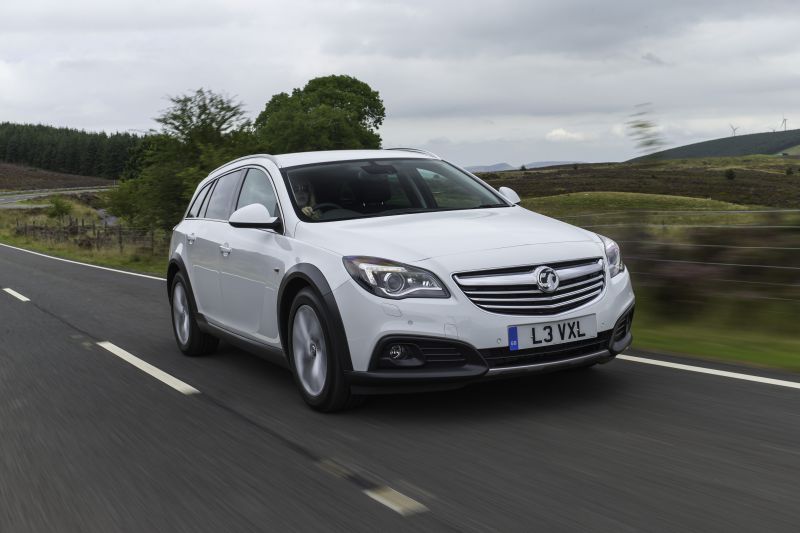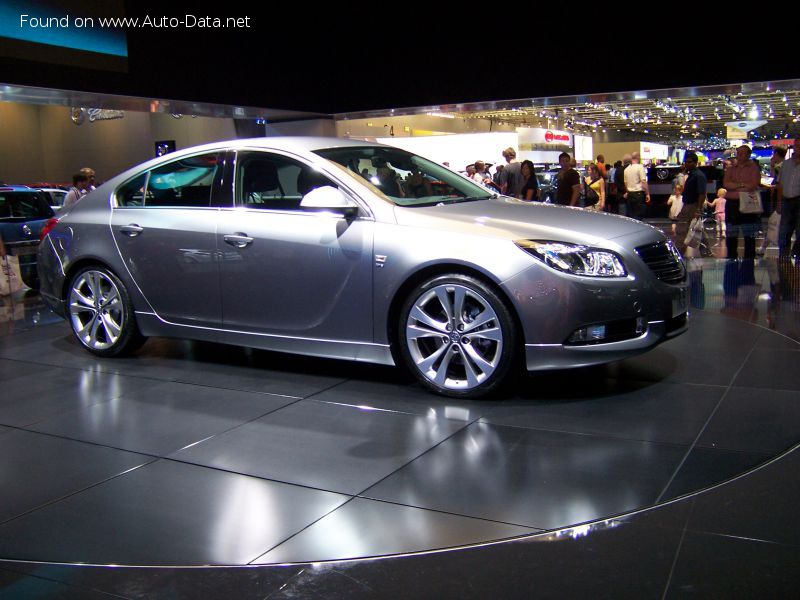
The Vauxhall Insignia I Sports Tourer, particularly the facelifted version introduced in 2013, represents a significant offering in the European D-segment (mid-size) station wagon market. While not officially sold in the United States, the Insignia was a key model for Vauxhall (a subsidiary of Stellantis, formerly General Motors) in the United Kingdom and across continental Europe. Positioned as a practical and stylish alternative to rivals like the Ford Mondeo Estate and Volkswagen Passat Variant, the Sports Tourer combined a spacious interior, modern technology, and a range of efficient engine options. The 2013 facelift brought revised styling, improved interior materials, and the introduction of the ecoTEC engine family, focusing on fuel economy and reduced emissions. This specific model, equipped with the 2.0 CDTi ecoTEC engine producing 163 horsepower, was a popular choice for drivers prioritizing both performance and efficiency.
Vauxhall Insignia I Sports Tourer: Overview
The Insignia I, launched in 2008, was Vauxhall’s attempt to move upmarket and compete with more established brands in the family car segment. The Sports Tourer, the station wagon variant, offered increased practicality without sacrificing the Insignia’s sleek design. The 2013 facelift was a crucial update, addressing some criticisms of the original model and enhancing its appeal. The ecoTEC engine range, including the 2.0 CDTi featured here, was central to Vauxhall’s strategy of offering competitive fuel economy and lower running costs. The inclusion of a Start/Stop system further contributed to these goals.
Engine & Performance
The heart of this Insignia Sports Tourer is the 2.0 CDTi ecoTEC turbocharged diesel engine. This inline-four cylinder engine displaces 1,956 cubic centimeters (119.36 cubic inches) and produces 163 horsepower at 4,000 rpm. More importantly for many drivers, it generates a substantial 350 Newton-meters (258.15 lb.-ft.) of torque between 1,750 and 2,500 rpm, providing strong acceleration and effortless cruising. This engine is paired with a six-speed manual transmission, driving the front wheels. Performance figures include a 0-100 km/h (0-62 mph) time of 9.9 seconds and a maximum speed of 214 km/h (132.97 mph). The engine’s power-to-weight ratio is 10.6 kg/Hp, and its torque-to-weight ratio is 5 kg/Nm. The engine incorporates a turbocharger and intercooler to optimize performance and efficiency. The ecoTEC designation signifies improvements in combustion efficiency and reduced internal friction, contributing to lower fuel consumption and emissions.
Design & Features
The Insignia Sports Tourer is a five-door, five-seat station wagon (estate). The 2013 facelift brought subtle but noticeable changes to the exterior styling, including a revised front grille, headlights, and bumper. These updates aimed to give the car a more contemporary and premium appearance. Inside, the cabin benefited from improved material quality and a more refined design. Key features of this model include the Start/Stop system, which automatically shuts off the engine when the vehicle is stationary to save fuel, and a particulate filter to reduce harmful emissions. The spacious interior offers ample headroom and legroom for passengers, while the large trunk provides a generous 540 liters (19.07 cubic feet) of cargo space with the rear seats up, expanding to 1,530 liters (54.03 cubic feet) when the seats are folded down. Safety features include ABS (Anti-lock Braking System) and a comprehensive airbag system. The vehicle’s dimensions are: length 4913 mm (193.43 in), width 1856 mm (73.07 in), and height 1513 mm (59.57 in).
Technical Specifications
| Brand | Vauxhall |
| Model | Insignia |
| Generation | Insignia I Sports Tourer (facelift 2013) |
| Type (Engine) | 2.0 CDTi ecoTEC (163 Hp) Start/Stop |
| Start of production | 2013 |
| End of production | 2015 |
| Powertrain Architecture | Internal Combustion engine |
| Body type | Station wagon (estate) |
| Seats | 5 |
| Doors | 5 |
| Fuel consumption (urban) | 5.6 l/100 km (42 US mpg, 50.4 UK mpg, 17.9 km/l) |
| Fuel consumption (extra urban) | 3.9 l/100 km (60.3 US mpg, 72.4 UK mpg, 25.6 km/l) |
| Fuel consumption (combined) | 4.5 l/100 km (52.3 US mpg, 62.8 UK mpg, 22.2 km/l) |
| CO2 emissions | 119 g/km |
| Fuel Type | Diesel |
| Acceleration 0 – 100 km/h | 9.9 sec |
| Acceleration 0 – 62 mph | 9.9 sec |
| Acceleration 0 – 60 mph | 9.4 sec |
| Maximum speed | 214 km/h (132.97 mph) |
| Emission standard | Euro 5 |
| Weight-to-power ratio | 10.6 kg/Hp |
| Weight-to-torque ratio | 5 kg/Nm |
| Power | 163 Hp @ 4000 rpm |
| Torque | 350 Nm @ 1750-2500 rpm (258.15 lb.-ft. @ 1750-2500 rpm) |
| Engine layout | Front, Transverse |
| Engine Model/Code | A20DTH |
| Engine displacement | 1956 cm3 (119.36 cu. in.) |
| Number of cylinders | 4 |
| Engine configuration | Inline |
| Cylinder Bore | 83 mm (3.27 in.) |
| Piston Stroke | 90.4 mm (3.56 in.) |
| Number of valves per cylinder | 4 |
| Fuel injection system | Diesel Commonrail |
| Engine aspiration | Turbocharger, Intercooler |
| Valvetrain | DOHC |
| Engine oil capacity | 4.5 l (4.76 US qt | 3.96 UK qt) |
| Coolant | 9 l (9.51 US qt | 7.92 UK qt) |
| Kerb Weight | 1733 kg (3820.61 lbs.) |
| Max. weight | 2275 kg (5015.52 lbs.) |
| Max load | 542 kg (1194.91 lbs.) |
| Trunk (boot) space – minimum | 540 l (19.07 cu. ft.) |
| Trunk (boot) space – maximum | 1530 l (54.03 cu. ft.) |
| Fuel tank capacity | 70 l (18.49 US gal | 15.4 UK gal) |
| Permitted trailer load with brakes (12%) | 1600 kg (3527.4 lbs.) |
| Permitted trailer load without brakes | 750 kg (1653.47 lbs.) |
| Length | 4913 mm (193.43 in.) |
| Width | 1856 mm (73.07 in.) |
| Width including mirrors | 2084 mm (82.05 in.) |
| Height | 1513 mm (59.57 in.) |
| Wheelbase | 2737 mm (107.76 in.) |
| Front overhang | 1020 mm (40.16 in.) |
| Rear overhang | 1156 mm (45.51 in.) |
| Minimum turning circle | 11.4 m (37.4 ft.) |
| Drive wheel | Front wheel drive |
| Number of gears | 6 gears, manual transmission |
| Front suspension | Independent, type McPherson with coil spring and anti-roll bar |
| Rear suspension | Independent multi-link suspension |
| Front brakes | Ventilated discs |
| Rear brakes | Disc |
| Tires size | 215/60 R16 |
| Wheel rims size | 16 |