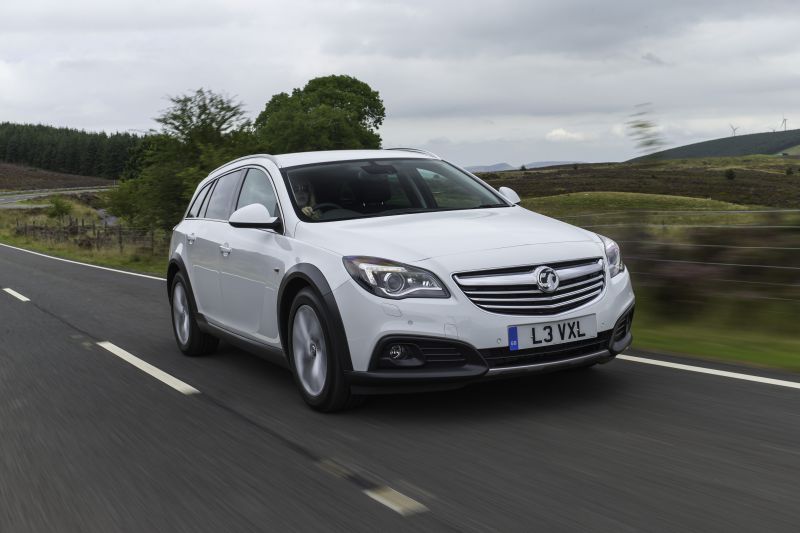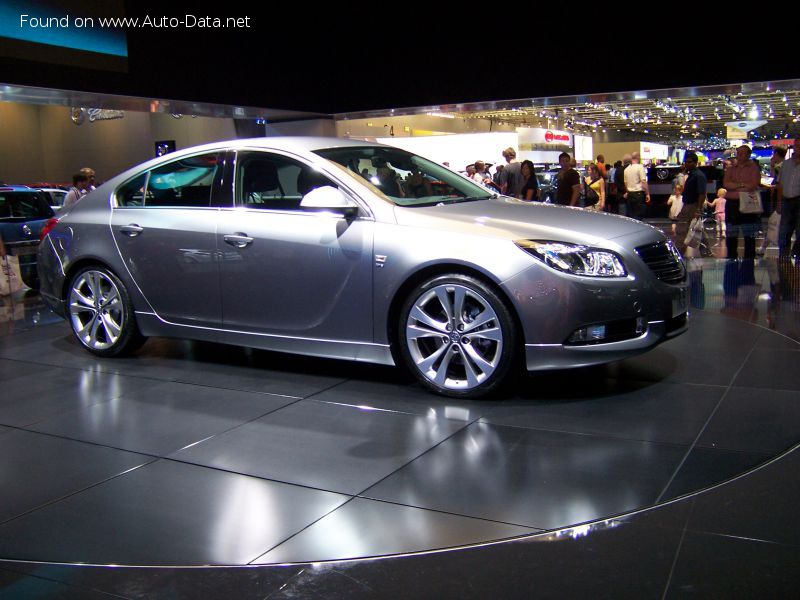
The Vauxhall Insignia I Sports Tourer, particularly the facelifted version introduced in 2013, represents a significant offering in the European D-segment (mid-size) station wagon market. While the Vauxhall brand is not directly marketed in the United States, the Insignia – sold as the Opel Insignia in mainland Europe – was a popular alternative to vehicles like the Ford Mondeo, Volkswagen Passat, and Peugeot 508. The Sports Tourer body style, essentially a station wagon or estate car, provided increased practicality and cargo space compared to the standard Insignia hatchback. This specific variant, equipped with the 2.0i Turbo ecoTEC engine producing 250 horsepower, aimed to balance performance with reasonable fuel efficiency, incorporating start/stop technology to further reduce emissions.
Vauxhall Insignia I Sports Tourer: Overview
The Insignia I, launched in 2008, was a crucial model for Vauxhall/Opel, intended to replace the Vectra and Signum. The 2013 facelift brought revised styling, improved interior materials, and updated technology, including the introduction of the ecoTEC engine family. The Sports Tourer version, with its extended roofline and larger cargo area, catered to buyers prioritizing versatility. The 2.0i Turbo ecoTEC 250 PS model was positioned as a higher-performance option within the range, appealing to drivers seeking a more engaging driving experience without sacrificing practicality.
Engine & Performance
The heart of this Insignia Sports Tourer is the 2.0-liter inline four-cylinder turbocharged gasoline engine, designated as the A20NHT or B20NHT. This engine produces a maximum power output of 250 horsepower at 5300 rpm and 400 Newton-meters (295 lb-ft) of torque available between 2500 and 4000 rpm. The direct injection system and turbocharger with intercooler contribute to both power delivery and efficiency. The engine’s specific output is 125.1 horsepower per liter. Power is delivered to the front wheels via a six-speed manual transmission. This configuration allows for a 0-100 km/h (0-62 mph) acceleration time of 7.8 seconds, and a 0-60 mph time of 7.4 seconds, with a top speed of 245 km/h (152.24 mph). The inclusion of a Start/Stop system helps to minimize fuel consumption in urban driving conditions.
Design & Features
The Insignia Sports Tourer is a five-door, five-seat station wagon. Its exterior design features a sloping roofline that extends to the rear, maximizing cargo space while maintaining a relatively sleek profile. The 2013 facelift brought changes to the front fascia, including a revised grille and headlights, as well as updated taillights. Inside, the cabin was designed with a focus on ergonomics and practicality. Standard features typically included air conditioning, power windows, and a basic audio system. Higher trim levels offered features such as leather upholstery, navigation system, and advanced safety technologies. The trunk (boot) space is a key selling point, offering 540 liters (19.07 cubic feet) with the rear seats up and expanding to 1530 liters (54.03 cubic feet) with the seats folded down. Safety features included ABS (Anti-lock Braking System) and a comprehensive airbag system.
Technical Specifications
| Brand | Vauxhall |
| Model | Insignia |
| Generation | Insignia I Sports Tourer (facelift 2013) |
| Type (Engine) | 2.0i Turbo ecoTEC (250 Hp) Start/Stop |
| Start of production | 2013 |
| End of production | 2017 |
| Powertrain Architecture | Internal Combustion engine |
| Body type | Station wagon (estate) |
| Seats | 5 |
| Doors | 5 |
| Fuel consumption (urban) | 10.3 l/100 km (22.8 US mpg, 27.4 UK mpg, 9.7 km/l) |
| Fuel consumption (extra urban) | 5.8 l/100 km (40.6 US mpg, 48.7 UK mpg, 17.2 km/l) |
| Fuel consumption (combined) | 7.4 l/100 km (31.8 US mpg, 38.2 UK mpg, 13.5 km/l) |
| CO2 emissions | 174 g/km |
| Fuel Type | Petrol (Gasoline) |
| Acceleration 0 – 100 km/h | 7.8 sec |
| Acceleration 0 – 62 mph | 7.8 sec |
| Acceleration 0 – 60 mph | 7.4 sec |
| Maximum speed | 245 km/h (152.24 mph) |
| Emission standard | Euro 5 |
| Weight-to-power ratio | 6.8 kg/Hp, 147 Hp/tonne |
| Weight-to-torque ratio | 4.3 kg/Nm, 235.2 Nm/tonne |
| Power | 250 Hp @ 5300 rpm |
| Power per litre | 125.1 Hp/l |
| Torque | 400 Nm @ 2500-4000 rpm (295.02 lb.-ft. @ 2500-4000 rpm) |
| Engine layout | Front, Transverse |
| Engine Model/Code | A20NHT, B20NHT |
| Engine displacement | 1998 cm3 (121.93 cu. in.) |
| Number of cylinders | 4 |
| Engine configuration | Inline |
| Cylinder Bore | 86 mm (3.39 in.) |
| Piston Stroke | 86 mm (3.39 in.) |
| Number of valves per cylinder | 4 |
| Fuel injection system | Direct injection |
| Engine aspiration | Turbocharger, Intercooler |
| Valvetrain | DOHC |
| Engine oil capacity | 6 l (6.34 US qt | 5.28 UK qt) |
| Coolant | 8 l (8.45 US qt | 7.04 UK qt) |
| Kerb Weight | 1701 kg (3750.06 lbs.) |
| Max. weight | 2280 kg (5026.54 lbs.) |
| Max load | 579 kg (1276.48 lbs.) |
| Trunk (boot) space – minimum | 540 l (19.07 cu. ft.) |
| Trunk (boot) space – maximum | 1530 l (54.03 cu. ft.) |
| Fuel tank capacity | 70 l (18.49 US gal | 15.4 UK gal) |
| Permitted trailer load with brakes (12%) | 1800 kg (3968.32 lbs.) |
| Permitted trailer load without brakes | 750 kg (1653.47 lbs.) |
| Length | 4913 mm (193.43 in.) |
| Width | 1856 mm (73.07 in.) |
| Width including mirrors | 2084 mm (82.05 in.) |
| Height | 1513 mm (59.57 in.) |
| Wheelbase | 2737 mm (107.76 in.) |
| Front overhang | 1020 mm (40.16 in.) |
| Rear overhang | 1156 mm (45.51 in.) |
| Minimum turning circle (turning diameter) | 11.4 m (37.4 ft.) |
| Drivetrain Architecture | The Internal combustion engine (ICE) drives the front wheels of the vehicle. |
| Drive wheel | Front wheel drive |
| Number of gears and type of gearbox | 6 gears, manual transmission |
| Front suspension | Independent, type McPherson with coil spring and anti-roll bar |
| Rear suspension | Independent multi-link suspension |
| Front brakes | Ventilated discs |
| Rear brakes | Disc |
| Assisting systems | ABS (Anti-lock braking system) |
| Tires size | 225/50 R17 |
| Wheel rims size | 17 |
The Vauxhall Insignia I Sports Tourer 2.0i Turbo ecoTEC (250 Hp) Start/Stop offered a compelling package for buyers seeking a practical, efficient, and reasonably powerful station wagon. While not sold in the US market, it represented a significant competitor in the European D-segment, showcasing Vauxhall/Opel’s engineering capabilities and design flair.