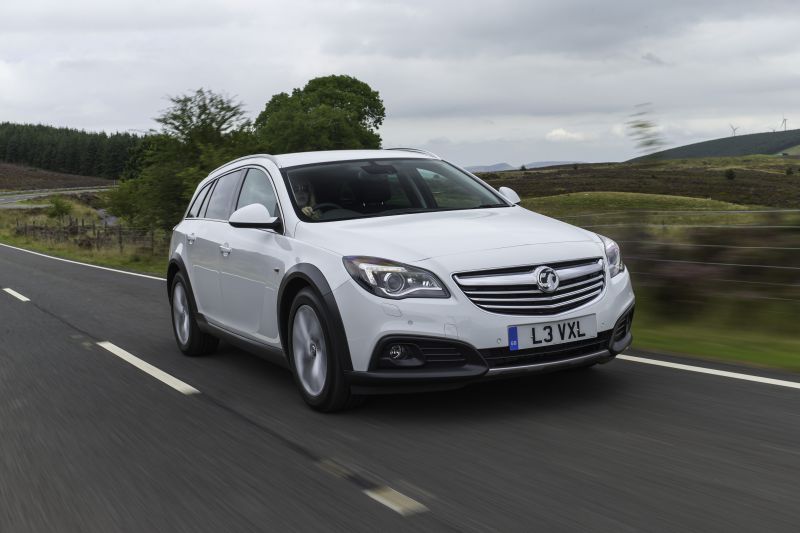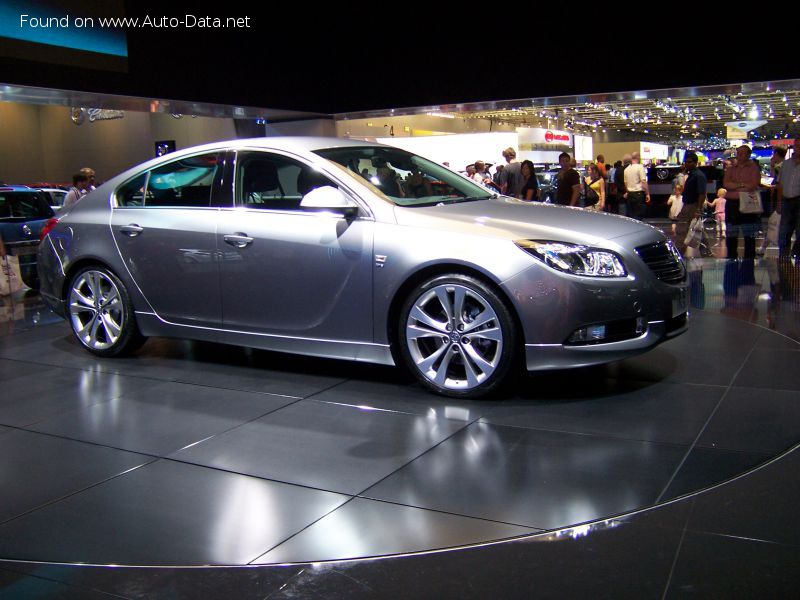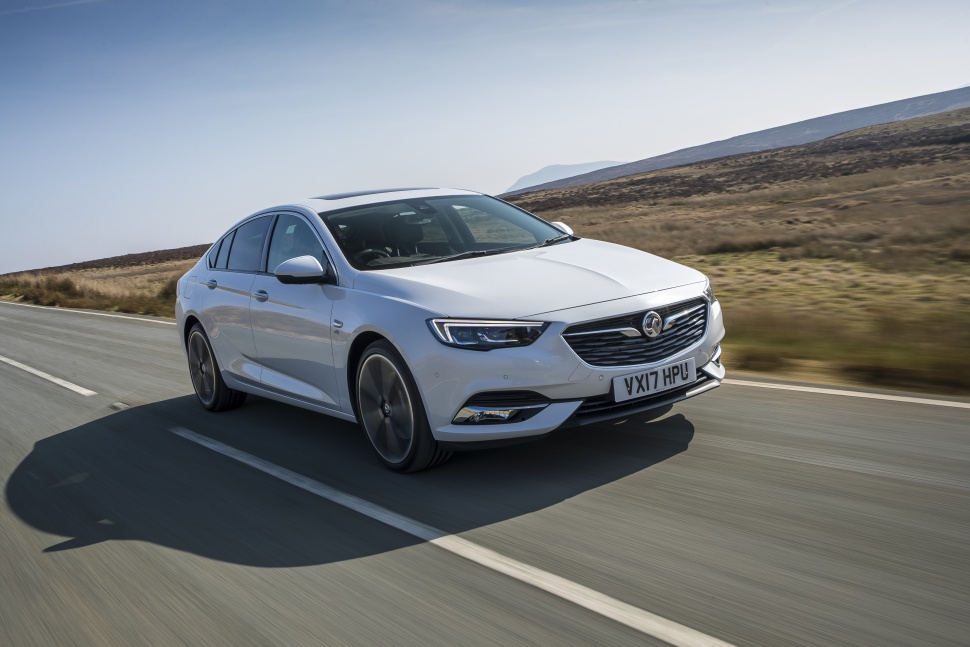
The Vauxhall Insignia II Grand Sport 1.5 Turbo (165 Hp) Automatic, produced from 2018 to 2020, represents a significant evolution in Vauxhall’s mid-size vehicle offerings. As a liftback, it competes within the family car segment, prioritizing practicality, comfort, and modern technology. While the Vauxhall brand is primarily known in the United Kingdom and Europe, the Insignia II Grand Sport aimed to provide a more refined and spacious alternative to traditional saloons and estates. This model specifically, with its 1.5-liter turbocharged engine, focused on balancing fuel efficiency with adequate performance for everyday driving.
Vauxhall Insignia II Grand Sport: A Detailed Overview
The Insignia II Grand Sport was part of a broader effort by Vauxhall (owned by Stellantis) to modernize its lineup and appeal to a wider customer base. The “Grand Sport” designation highlights the vehicle’s extended body style, offering increased rear passenger space and a larger boot compared to the standard Insignia. The introduction of the 1.5 Turbo engine marked a shift towards smaller, more efficient powertrains, aligning with increasingly stringent European emission standards. This generation of Insignia aimed to deliver a more premium experience, incorporating advanced safety features and a contemporary interior design.
Engine & Performance
The heart of the Insignia II Grand Sport 1.5 Turbo is a 1.5-liter inline four-cylinder gasoline engine, designated D15XFL. This engine produces 165 horsepower at 5600 rpm and 250 Nm (184.39 lb.-ft.) of torque between 2000 and 4500 rpm. The engine utilizes direct fuel injection and a turbocharger with an intercooler to enhance power output and efficiency. The power-to-liter ratio is a respectable 110.7 hp/l. Power is delivered to the front wheels via a six-speed automatic transmission. This powertrain configuration allows for a maximum speed of 216 km/h (134.22 mph). Fuel economy is rated at 6.7-7.4 liters per 100 kilometers (35.1 – 31.8 US mpg, 42.2 – 38.2 UK mpg, 14.9 – 13.5 km/l), and CO2 emissions are rated at 123 g/km, meeting Euro 6d-TEMP emission standards. The inclusion of a Start & Stop system further contributes to improved fuel efficiency in urban driving conditions.
Design & Features
The Insignia II Grand Sport boasts a sleek, liftback body style characterized by a sloping roofline and a large rear hatch. This design provides both aesthetic appeal and enhanced practicality, offering easy access to the spacious cargo area. The vehicle seats five passengers comfortably and features a generous boot capacity of 490 liters (17.3 cu. ft.) with the rear seats up, expanding to 1450 liters (51.21 cu. ft.) when folded down. Exterior dimensions include a length of 4897 mm (192.8 in.), a width of 1863 mm (73.35 in.), and a height of 1455 mm (57.28 in.). The wheelbase measures 2829 mm (111.38 in.).
Inside, the Insignia II Grand Sport offers a modern and well-equipped cabin. Standard features typically include air conditioning, a touchscreen infotainment system, and a range of safety technologies such as ABS (Anti-lock Braking System). Higher trim levels may include features like leather upholstery, heated seats, and advanced driver-assistance systems. The focus on safety is evident in the vehicle’s construction and the inclusion of multiple airbags. The vehicle’s drag coefficient of 0.26 contributes to improved aerodynamic efficiency and reduced fuel consumption. The Insignia II Grand Sport is designed to be a comfortable and practical family vehicle, offering a blend of style, space, and technology.
Technical Specifications
| Brand | Vauxhall |
| Model | Insignia |
| Generation | Insignia II Grand Sport |
| Type (Engine) | 1.5 Turbo (165 Hp) Automatic |
| Start of production | July, 2018 |
| End of production | 2020 |
| Powertrain Architecture | Internal Combustion engine |
| Body type | Liftback |
| Seats | 5 |
| Doors | 5 |
| Fuel consumption (combined) | 6.7-7.4 l/100 km |
| Fuel consumption (US mpg) | 35.1 – 31.8 |
| Fuel consumption (UK mpg) | 42.2 – 38.2 |
| Fuel consumption (km/l) | 14.9 – 13.5 |
| CO2 emissions | 123 g/km |
| Fuel Type | Petrol (Gasoline) |
| Maximum speed | 216 km/h (134.22 mph) |
| Emission standard | Euro 6d-TEMP |
| Power | 165 Hp @ 5600 rpm |
| Power per litre | 110.7 Hp/l |
| Torque | 250 Nm @ 2000-4500 rpm (184.39 lb.-ft. @ 2000-4500 rpm) |
| Engine layout | Front, Transverse |
| Engine Model/Code | D15XFL |
| Engine displacement | 1490 cm3 (90.93 cu. in.) |
| Number of cylinders | 4 |
| Engine configuration | Inline |
| Number of valves per cylinder | 4 |
| Fuel injection system | Direct injection |
| Engine aspiration | Turbocharger, Intercooler |
| Valvetrain | DOHC, VVT |
| Engine oil capacity | 4 l (4.23 US qt | 3.52 UK qt) |
| Coolant | 5.4 l (5.71 US qt | 4.75 UK qt) |
| Max. weight | 2040 kg (4497.43 lbs.) |
| Trunk (boot) space – minimum | 490 l (17.3 cu. ft.) |
| Trunk (boot) space – maximum | 1450 l (51.21 cu. ft.) |
| Fuel tank capacity | 62 l (16.38 US gal | 13.64 UK gal) |
| Max. roof load | 100 kg (220.46 lbs.) |
| Permitted trailer load with brakes (12%) | 1405 kg (3097.49 lbs.) |
| Permitted trailer load without brakes | 700 kg (1543.24 lbs.) |
| Length | 4897 mm (192.8 in.) |
| Width | 1863 mm (73.35 in.) |
| Width including mirrors | 2093 mm (82.4 in.) |
| Height | 1455 mm (57.28 in.) |
| Wheelbase | 2829 mm (111.38 in.) |
| Front overhang | 990 mm (38.98 in.) |
| Rear overhang | 1078 mm (42.44 in.) |
| Drag coefficient (Cd) | 0.26 |
| Minimum turning circle (turning diameter) | 11.5 m (37.73 ft.) |
| Drive wheel | Front wheel drive |
| Number of gears and type of gearbox | 6 gears, automatic transmission |
| Front suspension | Independent, type McPherson with coil spring and anti-roll bar |
| Rear suspension | Independent multi-link suspension |
| Front brakes | Ventilated discs, 300 mm |
| Rear brakes | Disc, 288 mm |
| Assisting systems | ABS (Anti-lock braking system) |
| Steering type | Steering rack and pinion |
| Power steering | Electric Steering |
| Tires size | 215/55 R17; 225/55 R17; 245/45 R18 |
| Wheel rims size | 17; 18 |